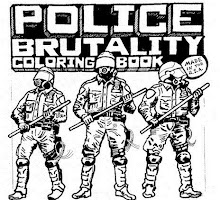
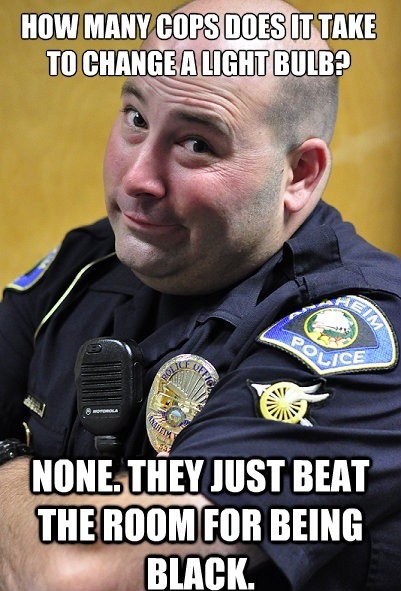
on sale now at amazon

on sale now at amazon
"I don't like this book because it don't got know pictures" Chief Rhorerer

“It’s becoming a disturbingly familiar scene in America - mentally unstable cops”

“It’s becoming a disturbingly familiar scene in America - mentally unstable cops”

House arrest for ex-officer who took bribe


Joseph A. Slobodzian, Inquirer Staff Writer

The judge said he couldn't believe the sentence he was imposing. A "gift," he called it - three months' house arrest and six years' probation for a former Philadelphia police officer who took $5,000 and skipped court so a man he arrested on gun charges could skate free.
"It was an honest mistake, but the worst decision I ever made," Jonathan Lazarde said Thursday before his sentencing by Common Pleas Court Judge Robert P. Coleman.
The judge seemed surprised by the statement and, before sentencing Lazarde, seemed to be reconsidering. Coleman told defense attorney Jack McMahon, "I'm still stuck on 'honest mistake.' "
McMahon argued that Lazarde had pleaded guilty and was sorry for what he did: "Don't hold against him a poor choice of words that were not that articulate."
Lazarde, 28, resigned last April after almost six years of duty. One month later, the officer, who had been assigned to the 35th District in the Olney area, was arrested after city prosecutors alleged that he offered to skip a court appearance for the gun defendant, guaranteeing acquittal.
The man contacted authorities, who monitored a meeting in which the man met Lazarde and handed him $5,000 in cash.
The officer was stopped by Internal Affairs officers as he left the meeting. Police said Lazarde's hands and pants pocket tested positive for an ultraviolent dye with which police treated the money before the meeting.
Lazarde - the son of a retired city police officer, and married with four children and a fifth on the way - pleaded guilty in January to a count of using a communication device, his phone, to commit a crime. The District Attorney's Office dropped bribery and extortion charges.
Assistant District Attorney Frank Fina told the judge that Lazarde's conduct "was a serious matter" but said he did not object to Lazarde serving his sentence on house arrest because his position as a former police officer might put him in danger in prison.
Coleman said conduct like Lazarde's tarnished the reputation of the department and makes prosecuting criminals more difficult.
"I've had two trials where I considered there was overwhelming evidence of guilt and the verdicts were not guilty," Coleman said. "The only argument they had was the police had to be lying."


Police commissioners weigh Beck’s decision not to fire officer who lied


By Adam Poulisse, Los Angeles Daily News

Los Angeles Police Chief Charlie Beck’s decision to suspend an LAPD officer with strong family ties, overruling a disciplinary board’s recommendation to fire him, has sparked criticism.
Shaun Hillman, 33, was suspended for 65 days by Beck for denying a heated altercation at a Norco bar that was caught on tape in January, according to several media reports. Hillman allegedly used a racial slur and pulled a handgun during the fight but later lied about it in an LAPD internal investigation.
The board unanimously recommended that Hillman be fired.
The issue was brought up by L.A. Police Commission president Steve Soboroff at Tuesday’s Los Angeles Police Commission meeting, but he didn’t mention anybody specifically other than Beck. State law prohibits going into specific details of a disciplinary case.
“The question is, do we, in evaluating the direct reports ... take into account all aspects of what’s going on, including the areas that we may disagree? The answer is, of course we do,” Soboroff said.
The situation has elicited questions of favoritism, as Hillman’s father is a former LAPD officer and his uncle is former Deputy Police Chief Michael Hillman. The discussions align with the commission’s evaluation of extending Beck’s contract another five years.
“In the evaluation, of course this information comes up, (as well as) all the other information we collect,” Soboroff said. “Our evaluation is happening right on the cusp (of the situation), so are we asking for more and more information to do the evaluation right? Of course we are.”
Beck was on a scheduled vacation at the time of Tuesday’s meeting. Soboroff declined to comment further.
The Los Angeles Police Protective League, which represents LAPD’s rank-and-file officers, also wouldn’t comment on the personnel issue.
The disciplinary board weighs evidence and recommends ways to deal with disciplined officers, then their decision goes to the chief.
“The chief of police can lessen the penalty but cannot give a penalty that is greater than what is recommended,” LAPD spokesman Commander Andy Smith said.
According to several reports, Beck has agreed with 98 of the past 100 disciplinary board decisions to fire an officer.

“Chief Beck occasionally disagrees with the board,” Smith said.

Ex-girlfriend: Bunnell officer used daughter's identity to lure teen boys on Facebook


By Jason Wheeler, Flagler County Reporter

BUNNELL --

Michael Stavris, the Bunnell police officer who was arrested and accused of setting up a fake Facebook account to solicit young boys for sexually explicit pictures, was using his daughter's identity, according to his ex-girlfriend.
Stavris' ex-girlfriend also has an injunction for protection against domestic violence placed against the police officer, who has been suspended without pay. The woman claims Stavris has threatened suicide unless she agreed to continue their relationship.
Stavris, 30, was arrested and charged Tuesday on two counts of computer pornography and one count of criminal use of personal identification information. His bond was set at $125,000. He has been released from the Flagler County Inmate Facility.
The injunction is temporary, and a judge is expected to issue a ruling on April 3.
Stavris was a police officer in Edgewater from 2008 to 2009 before leaving to take a position with the Duval County School District, where he worked as a school security officer from 2009 to 2010. His job had him patrolling school campuses after school hours and on the weekends. He had no interaction with children.


Rockport officer accused of sending lewd photos speaks out


ROCKPORT, IN (WFIE) -
A 14 News Update on the story about a Rockport police officer who was suspended after allegations she sent lewd pictures of herself.
A Rockport Police Officer has been suspended following allegations of sending lewd photos of herself.
Officer Dawn Krantz has been suspended for three weeks without pay for conduct unbecoming a police officer.

In addition to this, Krantz is to be evaluated at Southern Hills Mental Health or an equivalent facility.

No one from Mayor Harold Goffinet to Police Chief Dale Meredith is ready to give any kind of official statement on this matter.
The notice does not specify what was in those texts. It also doesn't specify whether those texts were made while on duty or in Krantz' personal time.
We tried to reach out to Krantz, police Chief Dale Meredith, Mayor Goffinet and Hargis, but no one is willing to make an official comment on the matter right now.
That officer is speaking out.
Officer Dawn Krantz posted on our 14 News Facebook page overnight.
As we reported on Wednesday, Krantz was suspended for three weeks without pay for conduct unbecoming a police officer.
According to a disciplinary notice from the Rockport City attorney-- there are allegations that last September, Officer Krantz texted inappropriate images and messages to someone in the community.
Last week a report of that activity was taken by the city attorney and submitted to the City of Rockport for review- the suspension is a result of that review.
Krantz took to our Facebook page to thank everyone who has supported her.
She writes:
"I accept full responsibility for my actions and I want to assure everyone this incident occurred on my personal time with my personal phone.
I do realize my actions have affected my family, my friends and my community. My actions have also affected my Police Departments reputation, which we all have worked very long and hard to build.
I want to thank Rockport Mayor Harold Goffinet, Rockport Board of Public Works/Safety and Rockport Police Chief Dale Meredith for handling this incident the way that they did.
I look forward to returning to work and continuing to serve the City of Rockport."

In addition to that 21 day unpaid suspension, Officer Krantz is supposed to be evaluated at Southern Hills Mental Health or an equivalent facility.

Oklahoma Cop Shoots, Kills Family’s Dog, Says it Was ‘Awesome’


“Did you see her collar fly off when I shot her? That was awesome!”

Adan Salazar

An Oklahoma police officer shot and killed a family’s dog and later laughed about it to a responding animal control unit, reports claim.

On Wednesday, Ardmore resident Sarah Jo Ellen Brown reportedly arrived home to news that her family’s pit bull dog “Cali” was dead.
“When the owner, Sarah, got there, the officer said, ‘We shot your dog, she’s dead,” a Change.org petition launched in Cali’s honor states.
According to multiple sources, Ardmore Police Sergeant Brice Woolley responded to a call regarding a dog that had escaped and was wandering the neighborhood.
“I’m not waiting for animal control,” Sgt. Woolley allegedly stated as he grabbed his shotgun to confront the doomed pooch.
As pictures show, Sgt. Woolly, who works the day shift patrol in Ardmore, next shot the dog, killing it immediately. “She had done nothing to provoke the officer,” the Change petition, which has been signed over 2,900 times, notes.
“Did you see her collar fly off when I shot her? That was awesome,” Brown claims Woolly bragged to the responding animal control officer, who supposedly replied, “We’ll just write in the report that it tried to attack you and others in the neighborhood.”
Sgt. Woolly has a checkered past with the department. Woolly’s name last year appeared in a complaint lodged by one of his fellow officers, who claimed he suffered “intentional infliction of emotional distress,” among other trauma, at the hands of the department.
Last year, Woolly was also specifically named in a complaint by an Ardmore citizen accusing him of multiple violations, including conducting a warrantless entry and search of the citizen’s home.
“Fuck you bitch! What do you think about this? I hope you enjoy jail bitch. I’ve finally got you on something and you’re going back to prison,” Woolly is reported to have told the person.
Way back in November 2000, Woolly, who at the time worked for the Tishomingo Police Department, also shot and killed 36-year-old Jeff Wayne Baxter, who he claimed had attacked him. “Facts came out in the lawsuit and Brice Woolly’s account of the murder didn’t correspond with the dash cam footage. The City of Tishomingo settled that lawsuit in the murder of Jeff Baxter,” an article at TheFreeThoughtProject.com claims.
“During the lawsuit proceedings, it was discovered officer Brice Woolly failed multiple psychological exams required to be a police officer. At some point, Woolly was allowed to join the ranks.”
In the days since the incident transpired, a Facebook page has been created dedicated to seeking “Justice for Cali.” A walk in memory of Cali is scheduled to take place tonight, and a group is also planning to assemble at the Ardmore police department Saturday, with over 580 people already pledging to attend. As for legal remedies, the page’s admin says it “is being handled.”


Tulsa Police Chief speaks out after the arrest of one of his officers


Reported by: Sharon Phillips


Tulsa Police Chief, Chuck Jordan sat down with FOX23 to talk about the accusations against one of his officers.

Tyrone Jenkins was arrested Monday for conspiracy to sell cocaine. He was booked into the Tulsa County Jail on complaints of possession of a firearm in the commission of a felony, conspiracy to traffic cocaine and violation of the computer crimes act.

His arrest and booking report states that a confidential informant was used to help catch him.

Early Tuesday afternoon, FOX23 sat down with Tulsa police chief, Chuck Jordan to talk about Jenkin's arrest.

“I trained officer Jenkins in the academy when I was a sergeant and of course it hits you right in the stomach, and you don’t think officers would ever do that and when it happens it’s hard,” said Jordan.

So far, Jenkins has not been charged with anything and has since bonded out of jail.

The police chief told FOX23 that Jenkins is on paid leave, but that his status with the department could change pending an arraignment or any charges being filed.

“Obviously, he hasn’t been through the court process yet, and I’m not going to make any comments about his guilt or his innocence,” Jordan said.

Court records show a confidential informant reached out to Jenkins about trying to collect money officers had missed during a recent investigation.
The police report says Jenkins accessed two law enforcement databases and obtained information that possibly helped the informant take money. At a later meeting the report goes on to state that Jenkins met up with the informant and took money from him and offered to help sell 34 grams of Cocaine.

FOX23 asked the police chief if any policies and procedures would be changing because of this.

“No what we had in place worked. I’ll say that. He was not a drug cop and he was not in charge of drug enforcement or anything else. This happened through contacts he knew actually outside of the police department," says Jordan.

So far, no charges have been filed against the officer and the police chief wants to remind the public that everyone is innocent until proven guilty. In the meantime – he’s working to keep up the moral of his other officers.

“I try to let them know this is not a black eye to them and I let the public know when they see a cop out here on the street, that’s not what they're about. That man or woman are dedicated to this community and they're going to do everything they can to keep this community safe," says Jordan.

As the department continues to investigate if there was any wrongdoing by Officer Jenkins, Jordan has an important message for the city of Tulsa.

“Our department not just the chief but all the way to the boots on the ground are committed to making sure we have a complete department that our public can trust,” he says.


Man Sues Cop Who Arrested Him for Filming Officers Making Another Arrest


By Michael Allen, Wed, March 19, 2014

Alberto Troche is suing the city of Orlando, Fla., and a police officer for arresting him because he was filming police making another arrest on Dec. 7, 2013.
According to Troche's lawsuit, he heard a man yelling for help, was worried that police officers were using excessive force and started filming the arrest in downtown Orlando on his cell phone, noted WESH.
During the arrest, Orlando police told Troche and other citizens not to film (video below).
When one woman refused to stop filming, Officer Peter Delio took “the cell phone by force without requesting consent from the bystander to seize the cell phone,” claims Troche's lawsuit.
Delio then reportedly told the crowd, "Listen to me, anybody else want to keep videotaping and I’ll take your phone for evidence as well! Please! Continue videotaping! I encourage it!”

When Troche continuing filming with his cell phone, Delio walked up to him and said, “Good, I’ll be taking that.”
After Troche refused to give up his cell phone, Delio took the phone by force, arrested him and placed Troche in a police cruiser.

Delio’s arrest report claimed that he told Troche that his phone contained evidence of a crime and that the video would need to be taken for evidence. "Troche said he was not going to provide the phone to me and thrust his left hand forward into my chest,” Delio said.

However, according to the cell phone video, those statements were not made by Delio.
Troche claims he was in jail for 15 hours on charges of “resisting arrest without violence,” reports the Orlando Sentinel.
Ultimately, the state attorney's office dropped the case against Troche.
He is suing the city of Orlando and Delio for violation of constitutional rights, false arrest and false imprisonment.

Sources: Orlando Sentinel and WESH

Cop fired after domestic-abuse arrest


BY DAVID GAMBACORTA, Daily News Staff Writer gambacd@phillynews.com, 215-854-5994
POSTED: MARCH 20, 2014

PHILADELPHIA police Officer Robbi Huff, fresh off an arrest for domestic violence, has been given her walking papers.
Police spokesman Lt. John Stanford confirmed yesterday that Police Commissioner Charles Ramsey suspended Huff, 35, for 30 days with the intent to dismiss.
The Daily News reported Saturday that Huff was arrested Thursday when Cheltenham Township cops were called to her boyfriend's house on Arboretum Road near Rock Creek Drive on a report of a domestic dispute.
Cheltenham Township police Chief John Norris said Huff was "out of control" at the house, and that her boyfriend had "visible injuries to his face."
She was charged with simple assault and resisting arrest, and is expected to face a preliminary hearing in Montgomery County District Court next week, Norris said.
Huff was arrested at the same location in 2012 after an alleged domestic dispute. She had been scheduled for a hearing before the Police Board of Inquiry because of the 2012 arrest before she was dismissed.

Huff, a 15-year veteran of the force, previously was assigned to the Highway Patrol.

Cop arrested again, fired


PANAMA CITY — The officer arrested by Lynn Haven police on felony domestic violence charges has been arrested again — this time by the police department he worked for — for a similar incident that allegedly occurred six months ago.
Former Panama City Police officer Durandell Daniels, 37, was arrested last week by Lynn Haven Police for a felony and a misdemeanor stemming from allegations that he choked and beat his girlfriend. He was arrested again Monday afternoon by Panama City Police, and he was fired Tuesday, according to his personnel file.
“We are extremely suspicious of the timing and nature of these allegations, and Officer Daniels is looking forward to having his day in court, said Rusty Shepard, the attorney representing Daniels.
The new charges against Daniels, a five-year veteran of the PCPD, are felony aggravated stalking and felony domestic battery by strangulation. The felony domestic battery charge stems from an incident in Panama City on Sept. 8, 2013, and is very similar to the incident in Lynn Haven for which he was arrested last week.
Both felony domestic violence by strangulation charges are for allegedly choking his girlfriend, Shay Dorsey, during arguments. Daniels is accused of driving through the parking lot at Dorsey’s workplace and following her.
Lynn Haven charged him with both misdemeanor domestic battery and felony domestic battery by strangulation for allegedly choking and punching Dorsey, who declined to comment Tuesday.
Panama City Police Lt. Mark Laramore didn’t return a call for comment, so it was not clear why the charge was filed six months after the incident.

Judge Thomas Welch ordered Daniels into the pretrial release program during a bond hearing Tuesday. Welch also ordered Daniels into the PTRP during his first court appearance last week

Former San Diego Police Detective Pleads Guilty in Campaign Finance Conspiracy


U.S. Attorney’s Office March 18, 2014     Southern District of California (619) 557-5610
SAN DIEGO, CA—Former San Diego Police Detective Ernesto Encinas pled guilty today to charges that he conspired to commit campaign finance crimes in connection with a series of elections at the local and federal level. At the same hearing, Encinas also pled guilty to charges that he made false statements to the Internal Revenue Service when filing tax returns on behalf of his private security business, Coastline Protection and Investigations Inc.
As part of his plea agreement, Encinas admitted to a range of allegations first brought to light on January 21, 2014, when prosecutors unsealed a complaint against him. Speaking under oath before U.S. Magistrate Judge William V. Gallo, Encinas admitted that he and his co-conspirators agreed to make illegal contributions on behalf of Jose Susumo Azano Matsura, a foreign national who was arrested by FBI agents on related campaign finance charges in February. Foreign nationals cannot lawfully contribute to any campaign at the federal, state, or local level. Also as part of the plea, Encinas confirmed that he and others, including Azano, Ravneet Singh, and Marco Polo Cortes, agreed to make conduit contributions in connection with a federal election, as well as falsify records with the intent to impede a federal investigation—both of which are felonies regardless of whether the source is a citizen or foreign national. (Azano, Singh, and Cortes, who were charged earlier this year, have pleaded not guilty to the charges filed against them.)
Encinas’s plea agreement detailed other aspects of the scheme not previously disclosed in public filings. For example, Encinas admitted to FBI agents that Azano induced a series of individuals to donate directly to Candidate 1, described as a candidate for the office of mayor of San Diego during the 2012 primary election cycle. Encinas stated that Azano provided cash, which the straw donors each used to make the maximum possible donation to Candidate 1.
In addition, as part of his plea agreement, Encinas admitted that during tax years 2011 and 2012, Azano paid Encinas approximately $10,000 in cash “off the books.” Encinas failed to report approximately $147,300 of such cash payments in tax year 2011 and approximately $74,900 in cash payments in tax year 2012, for a total of approximately $222,200 in unreported cash income. This resulted in a tax loss of $69,394.36 over two years, which Encinas agreed to pay back as restitution.
First Assistant United States Attorney Cindy M. Cipriani said, “To secretly inject foreign money into our elections is an affront to the transparency and integrity of our electoral system. In obtaining this guilty plea, we demonstrate our continuing efforts to investigate and prosecute campaign finance crimes in San Diego and beyond.”
FBI Special Agent in Charge Daphne Hearn said, “Illegal campaign contributions from foreign sources undermines our electoral process and ultimately our democracy. The FBI is committed to working with our law enforcement partners to identify and root out public corruption wherever it may be happening.”
Special Agent in Charge of Internal Revenue Service Criminal Investigation (IRS CI) Erick Martinez commented, “Retired San Diego Police Detective Ernesto Encinas intentionally failed to report over $222,000 in cash received by keeping this money ‘off the books.’ Today’s guilty plea should serve as a reminder—all of us have an obligation to file an accurate and truthful tax return. Failure to do so could result in criminal prosecution.”
Encinas’s sentencing hearing has been set for June 9, 2014, at 9 a.m. before United States District Judge Michael M. Anello.
Defendant in Case Number: 14CR0344-MMA
Ernesto Encinas
Age: 57
San Diego, California
Summary of Charges and Maximum Penalties
Count one: conspiracy to commit offenses against the United States—18 U.S.C. § 371
Maximum penalties: five years in prison, three years of supervised release, $250,000 fine, and a $100 special assessment
Count two: false tax return—26 U.S.C. § 7206(1): three years in prison, one year of supervised release, $250,000 fine, and a $100 special assessment
Investigating Agencies
Federal Bureau of Investigation
Internal Revenue Service, Criminal Investigation
San Diego Police Department


Former Sabinal Police Officer Sentenced to 15 Years in Federal Prison for Distribution of Child Pornography


U.S. Attorney’s Office March 21, 2014     Western District of Texas (210) 384-7100
Former Sabinal (Texas) Police Officer Jason Lee Villasana will serve 15 years in federal prison, followed by 10 years of supervised release, after pleading guilty to distributing child pornography announced United States Attorney Robert Pitman and Federal Bureau of Investigation Acting Special Agent in Charge Aaron C. Rouse, San Antonio Division.
On August 21, 2013, Villasana, age 36, pleaded guilty to one count of distribution of child pornography. According to court records, from May 2011 until November 15, 2012, Villasana received, stored, and sent images and videos of minors engaged in sexually explicit conduct. On November 15, 2012, FBI agents and investigators from the Texas Attorney General’s Law Enforcement Division executed a search warrant at the defendant’s residence and seized various electronic media belonging to the defendant. A subsequent forensics examination of the seized items revealed the presence of approximately 250 images, seven videos, and 64 thumbnail images of child pornography.
Villasana has remained in federal custody since his arrest on December 18, 2012. The sentence was handed down yesterday afternoon in Del Rio by U.S. District Judge David A. Ezra.
This matter was investigated by the Federal Bureau of Investigation together with the Texas Attorney General’s Law Enforcement Division and Homeland Security Investigations (HSI). Assistant United States Attorneys Meghan M. McCalla and Matthew Watters prosecuted this case on behalf of the government.


Former San Antonio Police Officer Sentenced to Federal Prison


U.S. Attorney’s Office March 17, 2014     Western District of Texas (210) 384-7100

This afternoon, 37-year-old former San Antonio Police Officer Curtis W. Lundy was sentenced to 18 months in federal prison, followed by two years of supervised release, for theft of honest services by wire fraud, announced United States Attorney Robert Pitman, Federal Bureau of Investigation Acting Special Agent in Charge Aaron C. Rouse, and San Antonio Police Chief William McManus.
According to court records, on December 15, 2012, then Officer Lundy responded to a call concerning an assault in progress at a Northside apartment complex. At the scene, Lundy detained an individual in connection with the assault after that individual admitted to Lundy that he was in possession of a user amount of marijuana. While the subject was detained, Lundy indicated that he would hold off on filing the possession of marijuana charge in exchange for a $400 payment. During subsequent phone conversations, Lundy raised the payment to $500.
The subject subsequently contacted the FBI and at the agency’s direction, the subject was able to make multiple audio recordings of cellular telephone conversations with Lundy. During one of those conversations, Lundy instructed the subject to meet in order to collect the $500. Surveillance observed Lundy, the sole occupant, arrive in a marked SAPD patrol vehicle and collect an envelope from the subject that contained $500.
Lundy pleaded guilty to the charge on October 10, 2013.
This case was investigated by agents with the Federal Bureau of Investigation, together with San Antonio Police Department Internal Affairs. Assistant United States Attorney Greg Surovic prosecuted this case on behalf of the government.


Foster teen alleging sex with cop provides salacious details


Investigation involving a veteran Miami Beach detective continues
Author: Andrea Torres,

PEMBROKE PINES, Fla. -
A foster teen's allegations included in a search warrant the Pembroke Pines clerk’s office released Monday read like a script for porn.
The characters: A veteran Miami Beach detective and a teenage girl with a criminal record trying to graduate from high school.  The dark twist: She was in foster care and was living in Miami Beach Det. Oldy Ochoa's home with his wife -- a retired Miami Beach police officer. They have three sons and two step-sons.
Pembroke Pines Police Capt. Al Xiques said the investigation is ongoing.

It was a day before Valentine’s Day. The two were in an unmarked 2013 silver Ford Fusion Miami Beach police car with dark tinted windows. Ochoa was taking the teen to Florida Career College, 7891 Pines Blvd., in Pembroke Pines, when he allegedly decided to park "in a secluded alley."
They kissed "in a passionate manner," the girl said. Oral sex followed.  The girl "straddled on top" of the officer who was in the driver's seat.  He didn't wear a condom and used a towel to clean himself.
The girl said she and the detective, a 24-year-veteran with Miami Beach police, "were often flirtatious with each other" via e-mail and Facebook. He also used his mobile phone to take pictures of her "while she posed," a search warrant said.
There was a second time when he used a condom, but he dropped it on the floor, the girl told police March 4. Six days later, Pembroke Pines police detectives took DNA swabs and a towel from the Miami Beach police car.
"We are cooperating with the Pembroke Pines Police Department to make sure there is a thorough investigation," Miami Beach Chief Raymond Martinez said in a statement earlier this month.
The Department of Children and Families spokeswoman Paige Patterson-Hughes said in an e-mail earlier this month the abuse report and the girl's status were confidential.

The Ochoa family declined to comment. And Miami Beach police said the detective remains suspended with pay pending the results of the investigation.

Los Angeles school police still ticketing thousands of young students Even as negotiations continue on new policies, school police still citing kids as young as


By Susan Ferriss 

Even as Los Angeles authorities continue efforts to reform school-discipline standards, fresh data show that police from the city’s biggest school district are continuing to ticket thousands of young students, especially minorities, at disproportionate rates that critics charge are putting them on a track for dropping out.
Citation rates for this year are little changed from 2011 data. Disclosure of the 2011 data this past spring led to federal civil-rights scrutiny and promises that policies at the Los Angeles Unified School District would be reviewed, and likely changed.
In 2011, children 14 or younger in the school district, the area’s biggest, were issued 43 percent of the nearly 10,200 tickets school police handed out to students for fighting, daytime-curfew violations and other minor infractions — indiscretions that community groups and judges have maintained might better be handled by school officials or referred directly to community-based counseling.
But during the first six months of 2012, even as local juvenile judges’ skepticism about ticketing grew, the share of younger students issued citations increased — to about 48 percent of approximately 4,000 tickets issued, according to a review of the data by the Center for Public Integrity.
Critics concede there has been some progress. Data from September and October reveal district school police officers issued fewer daytime curfew tickets than a year before — the result of new rules adopted last February that stopped police “sweeps” ticketing kids as they arrived to school, even a few minutes late. But records also show that during these two months, school police still wrote up more than 1,000 citations to students mostly for other infractions, including disturbing-the-peace allegations and suspected marijuana smoking.
Since last school year, community and parent representatives have met occasionally with school police officials to discuss their concerns about police involvement in discipline matters. Some school administrators also say they’d like to see clarification as to when an incident merits police officers citing — or arresting — students. L.A. Unified’s school police force is the nation’s biggest such agency, with about 350 sworn officers and 125 school safety officers.
“I think you have to save [police action] for really egregious things, like assault,” said Jorge Cortez, the principal at Judith Baca Arts Academy, a Los Angeles Unified elementary school.
Cortez told the Center that a mom’s complaint last April led to school police issuing tickets to two African-American first-graders who had gotten into a pushing match at his school. The mother of one child called 911, Cortez said.
Sheriff’s deputies declined to get involved, Cortez said. School police officers responded and issued “disturbing the peace” tickets for “mutual fighting” to the six- and seven-year-old boys. The citations were referred to the Los Angeles County Probation Department.
Knowledge of right and wrong?
L.A. Unified School Police Chief Steven Zipperman called citations of children as young as six and seven “an anomaly.”
“When we take a look at citing any student or arresting anybody for a crime,” the chief said, “it is all going to be based on whether they have the knowledge of whether what they were doing is right or wrong.”
Records show that in September and October, tickets were issued to children as young as 10 years old. They also show that that 13-year-olds were cited more often than 14-year-olds, or 17-year-olds. Zipperman explained that kids in the middle-school age group are “probably one of our largest populations [involved]  in a fighting-type activity.”
The chief said he and district officials are continuing to discuss standards for when officers should refer cases back to administrators, rather than issuing tickets —especially for incidents like fighting. Zipperman said he still believes, however, that school police officers need to have the discretion to make decisions on a “case-by-case basis.”
Additional findings from September-October school-police data show:
A 10-year-old African-American child was ticketed in September for trespassing at the Menlo Avenue Elementary School.
At the Bret Harte Preparatory Middle School, seven African-American students between 11 and 13 were given disturbing-the-peace citations by police for fighting, also in September.
Black students were ticketed at twice the rate of their percentage of  school population.
District officials did not respond to inquiries about these and other specific incidents, but issued a statement that the school police force “has not, and will not, engage in any form of biased or discriminatory enforcement activities.”
The statement says the district “will continue to work with our internal and external stakeholders to identify and evaluate non-penal alternatives to various minor violations.”
But concerns remain. Los Angeles Delinquency Court Judge Donna Quigley Groman, in an interview, noted that “if the approach was the same now when we went to school, a lot of us wouldn’t be where we are now.” 
Groman credits Zipperman with a positive response to concerns about the role of school police, who are obviously critical to student and staff safety. Both the judge and the chief have joined a reform “partnership” that first met in September in the wake of protests over police intervention in discipline matters and Center and Southern California Public Radio stories analyzing previously undisclosed police citation records.
The School-based Arrest Reform Partnership is attempting to negotiate a protocol for when it’s appropriate for police to arrest students in situations that don’t necessarily require it. The talks include representatives of L.A. Unified and its school police force; the city of Los Angeles’ police department; and the L.A. County’s sheriff’s department, probation department, district attorney’s office, public defender’s office and parents and civil rights groups.
Three meetings have taken place and another is planned for January. The first goal is to reach consensus on which offenses might be candidates for an alternative series of responses before resorting to arrest. Such steps could include written warnings and referrals to counseling, said Ruth Cusick, an attorney with  Public Counsel, a pro bono law firm in Los Angeles.
Cusick said the partnership would also like to bring in a representative of United Teachers of Los Angeles, a union representing district teachers. A union representative said the group hasn’t heard from Public Counsel yet.
The meetings come on the heels of other changes that occurred last year, when the L.A. unified district struck an agreement with the civil rights division of the U.S. Department of Education to reduce suspensions of black students, especially.
The district is pressing all its schools to start practicing “positive behavioral” support methods that emphasize frequent praise to help engage students in school. Some schools have started peer “courts” in school to sort out disputes, as well as referrals to community-based counseling.
“Citations, we need them in there, but we also need to educate our kids as well,” said Earl Perkins, L.A. Unified’s assistant superintendent of school operations.
Positive change, but complaints remain
The efforts to set new standards for police action are a function of both a desire for clarity and new fiscal realities.
This summer, budget cuts led to the closure of low-level juvenile courts in Los Angeles County, which had adjudicated cases involving ticketed students. Children were obliged, ironically, to miss school to go to court with parents so they could answer to truancy or other offenses that carried fines. If they hid a ticket from parents and skipped going to court — as many did — the result was a misdemeanor record.
With those courts now closed, all initial citations for daytime curfew violations are now referred back to schools, or to one of a new series of L.A. community centers with after-school counseling options.
All other types of tickets are going to probation officials, who decide on a course of action. Hopefully, probation officials say, most of the kids currently referred to them will resolve their problems by successfully completing mandated counseling services, sometimes with their families.
Children who are arrested or whose offenses are judged more serious still face higher-level delinquency court.
Groman said she’s been troubled to see kids as young as 11 referred to her court when they’re charged with criminal offenses at school.
Recalling her own youth, Groman related a story of scaring a teacher by running around a classroom with a scissors. “I didn’t know how to express myself any better,” said Groman. “But would I be where I am today if the school had expelled me for being in possession of a weapon? I highly doubt it.”
Similar concerns were aired nationally Dec. 12 at the first congressional hearing on the “school to prison pipeline,” and the impact of zero-tolerance discipline policies. It was held before the Senate Judiciary Committee’s Subcommittee on the Constitution, Civil Rights and Human Rights.
Schools have increasingly become “a gateway” to the criminal-justice system, said Sen. Dick Durbin, an Illinois Democrat who presided over the hearing.
Federal justice and education officials testified that research clearly shows that placing students in the criminal-justice system for relatively minor offenses only increases their risk of dropping out and going on to more trouble.
Within the Los Angeles district, some schools are struggling with dropout rates higher than 50 percent.
Age limit needed, some argue
Some community activists would like to see an age limit on kids who could be issued police citations, or a civilian review board to monitor school police.
Hostile contact with school police can have a very profound impact on kids, said Manuel Criollo, an organizer with the Labor/Community Strategy Center in Los Angeles, which led the charge to rein in daytime-curfew sweeps around inner-city Los Angeles schools.
Many students are struggling in school or at home, Criollo said. Even those who are doing well, he said, get discouraged if police treat them as potential troublemakers.
The Strategy Center helped file complaints with Zipperman on behalf of two boys who were stopped by officers near their school, minutes late, and were searched, handcuffed and allegedly intimidated inside a squad car before officers took them into school and wrote them curfew tickets. The complaints, reported by the Center earlier this year, are still under review, Strategy Center lawyer Zoe Rawson and police said.
The national picture
U.S. schools have only recently been required to disclose ticket and arrest numbers to the U.S. Department of Education’s Office for Civil Rights, which is trying to measure the extent of student referrals to police and courts.
L.A. Unified, along with other districts, failed to submit its data last year. District officials explained that calculating referrals is daunting because multiple police agencies operate in the L.A. district.
But records reviewed by the Center suggest that L.A. Unified’s school force, which by far has the most contact with students, tickets them at higher rates than police assigned to New York City’s schools. With about 1 million students, New York’s system is the only U.S. school district bigger than L.A. Unified, which has fewer than 700,000 students.
The American Civil Liberties Union — which is suing New York police for alleged excessive force in schools — regularly obtains and reviews quarterly figures for that district’s school-based citations and arrests.
During the 2011-2012 academic year, the ACLU recently said, New York police issued 1,666 citations to students. By comparison, L.A. Unified school police issued more than 1,000 tickets in September and October of this year alone.
New York police made 882 arrests in schools during the 2011-2012 academic year. L.A. school police made 4,333 arrests over the course of three calendar years, from 2009 through 2011, according to data that the Center for Public Integrity reviewed.
More than 1,960, or 45 percent, of the Los Angeles arrests were of students 14 or younger.
The single biggest type of offense for which L.A. students were arrested was battery, including battery on school staff and police officers, said Cusick of Public Counsel. She said it is not uncommon for students to become emotional and struggle if they are grabbed during an encounter with police. First-time battery incidents, with no serious injury involved, Cusick said, are among the offenses that authorities could consider putting on a list for referral to prompt professional counseling rather than to court. 
For Groman, the case of an 11-year-old accused of battery on a teacher sums up flaws in the current court-referral system.
“I don’t condone any kind of physical violence against a teacher,” she said. “However, to send an 11-year-old boy to juvenile court, where he’s sitting in the waiting room with many more sophisticated youth, gang-related youth, it’s just not the place for an 11-year-old.”
Like many kids, Groman added, the 11-year-old’s day in court did not take place until 60 days after the incident — too late for a child to effectively make a connection to what he or she did two months ago.
“This young boy needed some therapy,” Groman said. “The family needed some counseling. Yet none of that was done because the case, instead of being handled at the school level, was referred to the juvenile-justice system, which does not move very fast at all.”
Alternative ideas
In September, a team of justice authorities from Clayton County, Ga., traveled to Los Angeles to talk to Groman and others about a protocol they follow for referring students to court. Clayton County has emerged as a model for reformers.
Until firm standards were set, Clayton County Chief Juvenile Court Judge Steven Teske said, more than 90 percent of referrals to his court came from schools.
Lt. Francisco Romero, former Clayton County school resource officer, accompanied Teske to L.A. Romero told the Center that he supported instituting a protocol after realizing that he had arrested more students  than any other officer in his county during one period of time.
“I never had any positive engagement with the kids. All they saw me as was an arresting machine,” Romero said. Some school staff resisted a formal protocol at first. But ultimately, Romero said, schools accepted it and Romero found he could focus on serious crimes. Kids grew to trust him. Teske testified at the recent congressional hearing that the protocol helped drive up graduation rates and reduce felonies.
Zipperman said that in Los Angeles, the citations his officers write don’t always lead to “punitive” action against a student. For many, he said, it’s a path to getting the counseling they need.
Hellen Carter, juvenile field services chief of the Los Angeles County Probation Department, praised Zipperman as a “tremendous problem solver.” But she said it still takes weeks to get kids processed and into counseling, which isn’t ideal. Schools could accomplish a lot more, she said, with more “teen courts” and mediation on campus. And school staff could benefit, she said, from training to distinguish between what is truly a serious incident and what is not. 
“We know that kids are going to do some dumb things,” Carter said. “And we want to give them the opportunity to make amends for what they’ve done, learn from what they’ve done, but also not put them in a position where it can literally destroy their future.”
Center for Public Integrity data editor David Donald contributed to this report.