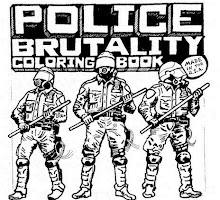
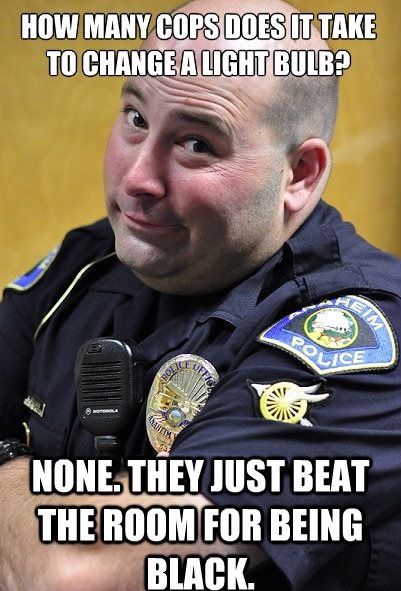
We called the Fairfax County police for help....the punks they sent threatened to arrest us. One cop tells my wife that if she keeps crying he'll arrest her and the other cop, La Forge or something, says to me "You call the police this what you get"
I said that was wrong and he said
"Go ahead, say more fuck'n thing prick" and I thought "Well if you insist".
on sale now at amazon
"I don't like this book because it don't got know pictures" Chief Rhorerer
“It’s becoming a disturbingly familiar scene in America - mentally unstable cops”
“It’s becoming a disturbingly familiar scene in America - mentally unstable cops”
Greensboro police officer
charged with possession of child porn
Corey S. Daniel
GREENSBORO, N.C. — A Greensboro
Police Department officer has been charged in connection with child
pornography.
The Greensboro Police
Department became aware that Officer Corey S. Daniel was a person of interest
to the Randolph County Sheriff’s Office in October in connection with a child
pornography case. He was placed on administrative leave on Oct. 24.
Daniel was arrested on Nov. 6
and charged with possession of child pornography.
SANDUSKY, Ohio — A police
officer involved in a controversial traffic stop has been suspended for 60 days
and ordered to sign a last chance agreement.
Sandusky Police Chief John
Orzech said Officer Chris Denny received the discipline Thursday after he was
found guilty of several administrative charges, including insubordination and
failing to be honest.
According to the last chance
agreement, if the officer violates any part of the agreement he could be
terminated.
The last chance agreement also
states the officer must get additional training in report writing and search
and seizure. He most also perform 208 hours of community service.
The discipline stems from
Denny’s handling of the October traffic stop of Andre Stockett.
Stockett videotaped the stop
and the video soon went viral on social media. Stockett said the police were
harassing him.
Stockett and his girlfriend,
who was driving the car, where both charged with obstructing official business.
They have both plead not guilty and their cases are pending.
Police departments across
California spent more than $45 million on surveillance equipment over the
course of a decade with little to no legislative or public oversight – and
without the public's knowledge, according to the American Civil Liberties Union.
The ACLU report, titled 'Making
Smart Decisions about Surveillance: A Guide for Communities,' reveals how
California law enforcement took advantage of millions of dollars’ worth of
federal surveillance gear to sidestep city council oversight and boards of
supervisors. Police also avoided consideration of costs and benefits and left
the public in the dark as to how law enforcement was using the equipment to
track their lives.
“After revelations of mass
surveillance by the NSA, the public isn’t buying the ‘just trust us’ approach
anymore. The public expects to know why surveillance is being considered, how
it is going to be used and what safeguards are in place to guard against misuse
before any decisions are made,” Nicole Ozer, technology and civil liberties
policy director for the ACLU of California, said in a statement.
The report surveyed 118
California cities and towns and found that 90 were using surveillance
technology. Only five had carried out public debate before acquisition, and
four had public policies concerning use and limits. In total, the 118 cities
and towns had spent over $45 million on equipping their police departments.
The majority of police units were using
license plate readers (57) and video surveillance (62), but many were using a multitude
of devices to track and survey people.
For example, the automatic
license plate readers (ALPR) is a camera system mounted to a police car or
light that scans license plates that come into view. They are often used to
look for stolen vehicles, but they can record the time and place of every
single vehicle that drives by.
Facial recognition software,
meanwhile, identifies a person in photos or video based on various
characteristics of the person’s face. The accuracy of facial recognition,
however, can vary widely.
Automated social media
monitoring consists of software tools that collect posts and other information
on sites such as Twitter and Facebook. These tools may also analyze the
collected data in order to learn information such as the social connections or
political views of individuals.
Another device – the
International Mobile Subscriber Identity catcher (IMSI) – emulates the
functionality of a cell phone tower in order to interact with a nearby mobile
phone. Commonly known as Stingrays, a popular brand name, they can be used to
capture and intercept the contents of communications, including calls, text
messages, or internet activity. Many IMSI are used in dragnet fashion, scooping
up information about every phone in range.
In one instance, the report
said the San Jose Police Department obtained a drone with federal funding with
no public debate and no policy safeguards in place. After protests, the police
department apologized, grounded the drone, and initiated public outreach.
ACLU California is proposing a
measure called the Surveillance and Community Ordinance to provide
transparency, accountability, and oversight. The ordinance is being drafted and
will be introduced in the coming weeks.
The Council on American-Islamic
Relations, as well as the Asian Americans Advancing Justice-Asian Law Caucus,
have also both joined the ACLU to endorse the need for oversight ordinances.
They are quite familiar with how unchecked surveillance often has a
disproportionate impact on communities of color and religious minorities.
“Communities are increasingly
concerned about making sure that time, energy and resources are not spent on
expensive, ineffective and overly intrusive surveillance systems that create
more problems than they solve,” San Francisco supervisor John Avalos told the
ACLU. “That’s why public transparency and engagement are key to any decision
about whether to use surveillance technology. If surveillance technology is to
be used, clear rules must be in place to ensure transparency, oversight and
accountability.”
State law allows county
officials to seize money or property believed to be connected to crime. The
practice is called civil forfeiture and here, as across the country, it's on
the rise. The Lancaster County District Attorney's Office has generated
millions in forfeiture proceeds in recent years and has a $1.75 million
surplus. The proceeds help to fund the Lancaster County Drug Task Force, which
the DA says still is underfunded.
In theory, the idea of seizing
cash and other assets from drug dealers and then using the proceeds to fight
the drug scourge seems like a perfect kind of justice.
But as critics across the
country are pointing out, the practice of civil forfeiture is ripe for abuse.
And even two former Justice
Department officials who helped create the asset forfeiture initiative in the
1980s have expressed alarm at the way it’s being used.
Writing in The Washington Post,
John Yoder and Brad Cates maintained that civil forfeiture has become a
fundraising activity for some law enforcement agencies, rather than “an
even-handed effort to enforce the law.”
Lancaster County District
Attorney Craig Stedman acknowledged the potential for abuse in an interview
with LNP.
“If it’s being abused as a
means of generating revenue, then you have a problem,” Stedman said.
He said that Lancaster County —
unlike many other counties — waits until a person is convicted and a direct
appeal is denied before it files forfeiture petitions to allow the county to
keep the assets.
The reality is, though, that
property once seized seldom goes back to its owner.
In many cases that’s
appropriate; the money or assets are connected to the sale of drugs. Where
that’s not the case, there is a process to file for the return of your
property. If your request is denied, you’ll likely need to hire an attorney.
If you’ve lost hundreds of
dollars, and you don’t have much to begin with, are you likely to chance losing
hundreds more by hiring an attorney?
Most people don’t even try to
get their assets back; some feel powerless to fight for their return.
Consider the case of Theresa
Campbell, whose son pleaded guilty to possession of drugs with intent to
distribute.
In the course of raiding the
family home, police took $300 from Campbell’s purse.
Police said Campbell helped her
son to hide drugs during the raid but she wasn’t charged with any crime.
She never got her money back.
Consider, too, Barbara and
Ralph Spring, who are raising their grandsons after their daughter Jessica died
of a drug overdose.
They would have liked to have
had their daughter’s Jeep Cherokee to transport their grandkids. Or they might
have sold it and put the proceeds toward their grandkids’ college savings.
But a drug dealer they don’t
even know ended up with the vehicle. After he was arrested, he surrendered the
Jeep to the police.
It was later sold by Lancaster
County.
The District Attorney’s Office
published a brief legal notice stating that anyone with a legal claim to the
vehicle should come forward.
But the Springs didn’t see the
notice. County officials might have tried calling them — they’ve had the same
phone number for 20 years, they told LNP — but the brief legal notice was the
only notice that’s required.
Sometimes, it seems, legal and
right are not the same.
Stedman defends civil
forfeiture as an effective way of stripping assets from drug dealers, and of
funding enforcement.
Critics, however, call the
practice “policing for profit.”
It turns on its head a basic
tenet of American justice: Law enforcement doesn’t have to prove that cash and
other property are connected to crime.
The property’s owner has to
prove that it is not.
In other words, the property is
guilty until proven innocent.
Civil forfeiture feeds the
perception that the rights of ordinary citizens are trumped by law enforcement.
And that perception leads to
cynicism and distrust of our legal system.
There’s a way to counter that
perception: Appoint an independent ombudsman to review civil forfeitures, and
streamline the appeal procedures.
No one is going to cry for the
convicted drug dealer whose assets were seized and then used for the excellent
purpose of investigating and charging other drug dealers.
Seizing the property of those
who are convicted — or at least charged — seems entirely appropriate.
But those who live with
criminals, or care for them, shouldn’t be viewed as guilty by association.
And neither should their
assets.
Gerry Hyland, working to make the cops even more unaccountable
A federal prosecutor opened the
trial of two San Francisco police officers Monday by telling jurors the case
was about “corruption with a badge.” Defense lawyers countered that it was
about a third policeman who cut a deal with prosecutors to frame their clients.
Reynaldo Vargas, who pleaded
guilty to four felony charges last month and agreed to testify against his
former colleagues, is a man with an “evil nature” whose testimony was “bought
and paid for,” Brian Getz, attorney for police Sgt. Ian Furminger, said in an
opening statement to the U.S. District Court jury in San Francisco.
Teresa Caffese, lawyer for
Officer Edmond Robles, said Robles “had no knowledge of what Vargas was doing”
and “didn’t help Vargas commit any of the crimes.” Vargas, she said, “is a liar
and he is a convicted criminal” who “is now pointing fingers at Ed Robles
because he wants to save his own skin.”
But Assistant U.S. Attorney
Rodney Villazor said Vargas and other witnesses would describe a series of
thefts of money, drugs and other property from criminal suspects by the three
officers, who worked in the plainclothes unit at the Mission Station.
$30,000 in cash
In a May 2009, during a search
of a home in Newark, where the officers were assisting the U.S. Drug
Enforcement Administration, Villazor said, Vargas found a shovel in the
backyard, dug up $30,000 in cash and split it with Furminger and Robles. The
next day, the prosecutor said, Robles deposited $6,000 in his bank account.
In another 2009 search,
Villazor said, Vargas found two Apple gift cards, one for $500 and the other
for $53.17, in the hotel room of a suspected drug dealer. “Vargas looked at Ed
Robles and said, 'Let’s go shopping,’” Villazor said, and one of the gift cards
was used to buy an iPod for Robles’ girlfriend.
“That’s what this case is
about, a cop stealing money,” the prosecutor said. He said the items police
seize during searches belong in evidence lockers, “not in their bank accounts.”
Caffese said Robles, when he
gave the iPod as a gift,did not know it had been purchased with a stolen gift
card.
Furminger and Robles are
charged with theft from suspects and from the city and with depriving the
public of their honest services. The criminal charges against all three
officers followed an investigation by San Francisco police and the FBI that
concluded they had stolen marijuana that had been seized from suspects in 2009,
and that Vargas had delivered the drugs to a pair of informants, who sold it in
return for 25 percent of the proceeds.
Furminger and Robles have been
suspended without pay.
Ex-officer’s admissions
Vargas was a police officer
from 1999 until he was fired in 2012 for allegedly falsifying his time sheets.
In a plea agreement Oct. 21, he admitted stealing computers, gift cards, money
and other property and keeping them for personal use. He also said he,
Furminger and Robles had taken marijuana from a seized UPS package in 2009, and
that he later gave the drugs to two people whom the three officers had been
trying to recruit as informants.
Vargas will testify later in
the trial, which is scheduled to last several weeks. One prosecution witness
Monday, the girlfriend of a suspected drug dealer, described being handcuffed
and interrogated by the three officers, who then allegedly offered her a
kickback if she would implicate her boyfriend.
The officers trashed the
couple’s hotel room and took her to the police station, said the witness,
Kelsey Stewart, where they asked her about her boyfriend’s bank account and
motor vehicles, and said “whatever money they got they would split with me.”
Stewart said she didn’t
remember which officer asked the question, but all of them were within earshot.
They later released her without charges.
Another prosecution witness,
Ian Elliott, a friend of Stewart’s, said he heard Robles question her outside
the hotel room and offer to “split the proceeds with her” if she helped them
find her boyfriend’s vehicles.
The trial resumes Thursday.
Gerry Hyland wants to increase the cops power in Fairfax County
Few details of his death 14 months ago have been released
By Tom Jackman
Sen. Charles E. Grassley
(R-Iowa), likely to be the next chairman of the Senate Judiciary Committee,
joined a growing chorus of voices Thursday demanding to know why Fairfax County
and federal authorities have offered no explanation, and made no decisions,
about the August 2013 police killing of an unarmed Springfield man.
Grassley sent letters to
Fairfax Police Chief Edwin C. Roessler Jr. and U.S. Attorney Dana Boente in
Alexandria saying that even if the shooting of John Geer “was justified, family
members and the public are entitled to a credible, independent accounting of
exactly what happened at Geer’s residence on Aug. 29, 2013, and why.”
Grassley sent a series of
specific questions to Roessler and Boente and asked that both respond by Dec.
1.
“How long will it be before a
decision is made to either pursue an indictment or drop the case?” Grassley
asked Boente about the now 14-month-long investigation.
“Please explain why FCPD
refuses to disclose even basic information concerning this case,” Grassley
wrote to the police chief.
Roessler said he could not
comment on the letter or say whether he would respond. Boente’s spokesman,
Joshua Stueve, said that the Justice Department’s Legislative Affairs Office
handles all correspondence from congressional officials and that he could not
discuss the case.
On the day he was shot, Geer,
46, was standing unarmed in the doorway of his Springfield townhouse, his arms
on the frame of the storm door, and talking to Fairfax officers after tossing
his longtime partner’s belongings out of the house upon learning she was moving
out. Witnesses, including his father and his best friend, said that after about
50 minutes, an officer suddenly fired one shot into Geer’s chest from a
distance of 10 to 20 feet, with no apparent provocation.
Geer turned, closed the door
and collapsed, witnesses said. Police waited another hour, while calling to him
to respond, before knocking down the door. By then, Geer had bled to death.
Following department policy,
police declined to reveal the name of the officer or any details of why he
fired until the Fairfax prosecutor ruled on whether a crime had been committed.
But after five months, during which Fairfax prosecutor Raymond F. Morrogh
reportedly tried and failed to obtain the internal affairs files from previous
cases in which the officer was involved, Morrogh shifted the case in February
to the U.S. attorney’s office in Alexandria for federal investigation. That
office has not offered any details on the case in the nine months since.
Grassley has been the ranking
member of the Judiciary Committee and is expected to be named chairman with the
Republican takeover of the Senate. The committee has oversight of the Justice
Department and its U.S. attorneys.
Grassley said he sent the
letters because the Geer case “has received little attention, except in The
Washington Post, and at least the known facts are concerning. It’s unacceptable
for the U.S. attorney and the police department to leave a case like this
languishing for so long, keeping Geer’s family and the public in the dark.”
Geer’s father, Don Geer, said of
the letters, “I thought he did a wonderful job. I wish he’d done it a year ago.
He certainly has asked the right questions.”
Don Geer said he has heard “not
a word” from federal authorities “for a long, long time.” In September, Geer’s
former partner, Maura Harrington, filed a wrongful death civil suit against the
Fairfax police in hopes of learning more information about why Geer was shot.
Supervisor Gerry Hyland said nothing and did nothing when
the Fairfax County cops framed a grammer school teacher and murdered two
unarmed citizens….and got away with it ……Opps Deary Hyland is the cops loudest
supporter.
SOMEBODY PLEASE run against this coward. He’s beatable.
The people of Fairfax
County are sick and tired of the cops murdering unarmed citizens.
Don’t worry, Opps
Dearie Hyland will probably run into the closet to get his things and then not
come out of the closet. He’s beatable.
The Palm Beach Sheriff's Office
has been selectively taking names of police officers who get arrested off the
booking blotter, effectively giving busted cops special treatment over regular
folks who get their names, mug shots, and personal information put online for
all to see when they get thrown in jail.
A story published Sunday by the
Palm Beach Post revealed the practice, which PBSO officials have since admitted
to doing. Their excuse is that their computer program doesn't allow them to
scrub officers' home addresses and birth dates, which is not allowed to be
released to the public under state law. And since they can't take off that
information, they decided to just leave police off the record entirely.
The PBSO has done this for all
five officers (that we know of) arrested this year, including the recent arrest
of Boynton Beach officer Stephen Maiorino, who is accused of raping a woman at
gunpoint on the hood of his patrol car.
See also: Boynton Cop Stephen
Maiorino Arrested for Raping Woman at Gunpoint
But as the Post points out, the
PBSO was able to scrub addresses and birth dates of officers before -- like how
they did for Boynton Beach Police Officer Alex Lindsey in 2011 when he was
arrested for falsifying documents.
Interestingly, the PBSO's
booking blotter was offline Monday night and the link instead goes straight the
site's homepage. The PBSO tells the Post it will continue to be offline
"until further notice."
Records of the officer arrests
are still available to the public under Florida's open records law, but for
now, a request to the PBSO must be made to obtain them. But with the booking
blotter currently down, even non-police officers will enjoy the privilege of
not having their mug shot and private information published online for all to
see and use for money-making purposes like charging a fee to take to take the
information off private websites. For now, at least.
Jerry Hyland won't come out of the closet and speak up against police murders of unarmed citizens in Fairfax County
Longtime lawman arraigned on
misconduct, harassment charges
By Lauren Stanforth
A Saratoga County sheriff's
sergeant abruptly resigned Monday as he was charged with official misconduct
and harassment after a video was posted on the Internet over the weekend that
purportedly captured him slapping a man whose car he wanted to search.
Sheriff Michael H. Zurlo said
his office began an investigation into the actions of Sgt. Shawn R. Glans
immediately after they learned the video was posted on the department's
Facebook page around 9 p.m. Friday. The video shows Glans demanding to search
the vehicle of a young man, Colin Fitch, who was standing next to the deputy in
the parking lot of a Wal-Mart store in Halfmoon. Fitch refused to consent to
the search as Glans peppered him with expletives and said they could get a
search warrant if he didn't turn over his keys.
Glans grows increasingly
agitated during the encounter, which was being secretly filmed by Fitch's
friend Adam Roberts, who was standing next to the pair. "You want to
(expletive) resist?" Glans tells Fitch as the deputy steps toward him and
the video captures a loud slapping sound. The video camera was pointed downward
at the time of the alleged strike. Glans then grabs Fitch's keys, throwing them
to another deputy. "Search the (expletive) car," Glans tells the
other deputy, who has not been identified.
Zurlo acknowledged Glans struck
the young man. Glans, 48, was arraigned in Halfmoon Town Court on Monday afternoon
on one count of official misconduct, a misdemeanor, and second-degree
harassment, a violation. The charges state that while on-duty and in uniform
Glans "did knowingly commit unauthorized physical acts in seeking to
secure and expedite the search of a vehicle with an intent to benefit
himself," according to court records. The harassment charge says Glans
slapped Fitch "in the back of the head with an open hand."
"His actions both as a
police officer and a sergeant were completely inappropriate," Zurlo said
at a news conference Monday at which he announced that Glans had resigned.
"I am very disturbed. I have zero tolerance for that type of
activity."
Glans, who said he's been a
police officer for 27 years, was immediately suspended after the video surfaced
Friday. Zurlo said the sergeant reported in on Monday morning and then
voluntarily resigned. Glans' attorney, Matthew Chauvin of Clifton Park, said he
didn't know if Glans was informed of the criminal charges against him before he
resigned.
"The video is difficult to
place in the context of the person we know," Chauvin said. "I hope
the 20-plus years he's put into the community doesn't go unnoticed," he
said adding, "There are two sides to every story."
Glans also has worked as a
part-time South Glens Falls police officer. South Glens Falls police declined
to comment on his status with that department.
Glans told the Times Union
Saturday that he was concerned about public safety after seeing the gun in the
car, but that he would have acted differently if he knew it was being
videotaped. "If I had to do it all over again ... I'd probably do the same
thing. If I knew the camera was there, no, because it does look bad," he
said.
The sheriff said an internal
investigation is ongoing regarding the actions of the two other deputies who
were at the scene with Glans but did not intervene as their sergeant allegedly
slapped the young man. Zurlo declined to identify the other deputies. With
Glans' resignation, the internal investigation into his actions is closed,
Zurlo said.
Halfmoon Town Justice Lester
Wormuth granted an order of protection on behalf of Fitch and Roberts that
prohibits Glans from contacting them.
Zurlo said Glans and other
deputies approached the two in the parking lot of the Wal-Mart on Route 9
around 2:30 a.m. Friday after receiving a call of suspicious people parking at
another business and entering woods on Route 236 near the Wal-Mart.
When deputies arrived at the
business on Route 236 the car was gone, but they said they found a vehicle matching
the description in the Wal-Mart parking lot a short time later. Glans saw a
.22-caliber rifle in the car's back seat and wanted to search the vehicle.
After the video captured Glans
allegedly slapping Fitch, Roberts kept filming and can be heard telling Glans
that what just happened was "intense" and he asks the sergeant if he
was going strike him next. The sergeant responded that he could "rip your
(expletive) head off and (expletive) down your neck." Glans is due back in
Halfmoon court on Dec. 9.
Demand Jerry Hyland to come out of the closet and address the murder of unarmed citizen by the Fairfax County cops
PITTSBURGH — A jury has been selected to
decide whether a western Pennsylvania police officer violated a suspect's civil
rights by repeatedly zapping him with a stun gun, even after he was handcuffed
— an encounter recorded on another person's cellphone.
The attorney for Millvale
Officer Nicole Murphy doesn't dispute she used the stun gun on Thomas Jason
James Smith after his arrest for public drunkenness in September 2012. Rather,
he contends the 30-year-old officer was justified in using it because she was
trying to stop Smith from banging his head.
"This guy was out of
control. They believed he was on some other kind of substance," defense
attorney Robert Stewart said after Murphy's arraignment in June. "She had
a choice of Tasering him to subdue him or letting him split his head
open." Stewart didn't immediately return a call seeking comment following
jury selection Wednesday.
Opening statements in the case
are scheduled to begin Monday morning in federal court.
The FBI began investigating
after someone leaked a 52-second cellphone video of the incident to
Pittsburgh-area media outlets in early 2013.
The video shows a shirtless
Smith, then 28, sitting on the floor of the police station while he banged his
head on the edge of a desk. Murphy then zaps him with the stun gun. Murphy
reported in a criminal complaint that she used the stun gun to subdue Smith
when he became violent, but Smith isn't seen attacking her in the video.
The video also shows some
emergency responders smiling and laughing at Smith's behavior.
The prosecution and defense
haven't specified who took the video. Court documents filed in recent weeks
suggest the case will boil down to the testimony of Murphy — who remains on
unpaid leave — and another officer, part-timer Casey Bonincontro.
Prosecutors have asked the
court for permission to raise issues relating to Murphy's character if she
testifies.
According to pretrial motions,
prosecutors want to ask Murphy about a 2011 drunken driving arrest and about a
man Murphy allegedly befriended or dated "who was known to her to have a
drug-related criminal record." Stewart has argued neither is relevant.
Prosecutors, meanwhile, are concerned
that Stewart plans to use Bonincontro's personnel files with the borough and
other departments to allegedly show she violated various on-the-job rules.
The judge has yet to rule
whether any of that can be used at trial.
The charge Murphy faces carries
up to 10 years in prison and, because it's a felony, would end her law
enforcement career even if she avoids incarceration.
Jerry "opps dearie" Hyland won't stand up to the cops
The police chief in Colchester,
Vt., is calling it the darkest day in her department’s history. Chief Jennifer
Morrison said town Detective Corporal Tyler Kinney will face federal charges in
connection with the alleged thefts of drugs and a firearm from a police
evidence locker. Authorities say the investigation began early Monday, when the
gun that was supposed to be in the Colchester department’s possession turned up
during a search carried out by Burlington police. Morrison said the
investigation led to Kinney, a 12-year veteran of her department. The
38-year-old Jericho resident is to be charged formally on Wednesday in US
District Court. It could not be determined immediately whether Kinney has a
lawyer.
Jerry "Opps Dearie" Hyland, the best friend injustice ever had
An officer suspended for ten
days by the Austin Police Department, has just been awarded officer of the
year.
The Austin Police Association
President says he did what the department should have done in the first place.
Officer Jonathan Laborde is
appealing his discipline.
Until an outside source decides
on the matter, you can take a look at the video of the incident in question for
yourself.
In the APD dash camera video,
off-duty officer Jonathan Laborde with his badge in his left hand and his gun
in his right chases after a man who just ran through his church.
Laborde would later learn that
the man he was after, Matthew Rogers, had just attempted to steal from a
T-Mobile store. Police say Rogers struggled with an employee and then pulled a
knife on him.
The clip after that shows
Laborde tackling Rogers in the middle of a street.
A patrol officer can be heard
saying, "I can hear somebody helping us out. (siren) Thank God cause I've
been chasing this guy. He had a knife on him so I didn't want to get
stabbed."
On Saturday, Laborde was
recognized by the Combined Law Enforcement Associations of Texas as the Central
Texas Regional Officer of the Year.
"The department wouldn't
recognize his courage so we did," said Sgt. Wayne Vincent.
Sgt. Vincent nominated Laborde.
"He actually did what I
think every citizen would expect an off duty police officer to do," he
said.
Vincent's opinion of what took
place is much different from APDsupervisors who suspended Laborde for ten days.
A disciplinary memo states
Laborde posed an unreasonable threat to the public stating most responding
officers didn't know Laborde was an officer, but instead an individual running
after the suspect with a gun in his hand.
It is department policy to wait
for an on-duty officer to arrive before intervening.
Laborde is appealing the
suspension and Vincent is showing his support through this award.
"We did this to send a
message to our membership that despite what you might go through and the
criticisms you go through when you do the right thing you're doing it for the
public and you're doing it for the profession and we're proud of you for doing
so," he explains.
Laborde is waiting for a
hearing date.
APD is not commenting about
this incident again until that hearing takes place.
Judge Geary Kull was reportedly
attacked by defendant Michael Ganter in court last Thursday, and accidentally
tased by a police officer.
The bizarre incident happened
in Maywood, Ill., near Chicago (video below).
Ganter, who was not handcuffed
or shackled, was being taken out of the courtroom by two deputies when he
allegedly went after Judge Kull and punched him several times.
When a police officer fired a
taser at Ganter, Judge Kull was hit by one of the taser’s prongs.
Ganter was in court because he
was charged with aggravated battery and attempted murder, but has now been
charged additionally with a second count of aggravated battery and resisting
arrest.
“The gentleman who struck him,
struck him in the head and the face. Judge Kull told me that he was pummeled by
this gentleman,” Cook County Chief Judge Tim Evans told CBS Chicago.
"[Judge Kull] was struck
by one of the taser prongs that went awry when they were attempting to remove
the defendant from attacking the judge," Chief Judge Evans told ABC 7
Chicago.
Cook County Jail Executive
Director Cara Smith told the Associated Press that Judge Kull was taken to a
nearby hospital and released.
On a quiet Sunday in July 2012
in broad daylight, six police officers in Michigan repeatedly shot an
African-American man struggling with homelessness and mental illness. While the
killing of Milton Hall prompted local outrage and a federal investigation, the
U.S. Department of Justice announced in February that it failed to find
“sufficient evidence of willful misconduct” to prosecute the policemen.
This Monday, more than two
years later, the ACLU released footage obtained from the Hall family’s lawyers
and used it as part of its testimony before the Inter-American Commission on
Human Rights, an organ of the Organization of American States, in order to put
pressure on the federal government. While a bystander video was shown on CNN
shortly after the shooting, the newly released dashcam video shows the incident
with unprecedented detail.
In the video, Hall, 49, is seen standing in a
Saginaw, Michigan, parking lot surrounded by eight police officers with their
guns drawn and pointed at him. During the short stand-off, a police dog began
to growl and lunge toward Hall, who took out a small pocketknife in response.
It was when he turned to the dog, the ACLU says, that police showered Hall with
a stream of bullets.
The officers fired 46 shots in
a matter of seconds, hitting Hall 14 times. Once on the ground, an officer
turned him over, handcuffed him, and put his foot on Hall’s back—with “his
blood running down the street like water,” Jewel Hall, Milton's mother, told
the ACLU.
Milton Hall was born on April
25, 1963 in Saginaw. His mother told the ACLU that Hall spent his days as a
community worker who fought for equal rights. He was an avid reader,
researcher, and even received training from Rosa Parks. In his mid-20s, signs
of Hall’s mental disability started to appear.
“As long as he was on his
medication and all, he did fine. It was when he wasn't on his medication that
he was impatient. He'd sometimes become intolerant,” Jewel told the ACLU. “But
when he was on his medication, he maintained.
"It's been devastating to
our family; it was devastating to the community. And justice still has not been
served," she said. "There needs to be a change in how police deal
with situations like the one that ended my son's life. Our leaders have to
address conditions that allow police to use excessive and deadly force with
impunity."
"As a civilian, Mr. Hall
had every right to expect that the police would protect his life, but instead,
he was the target of what resembled in many ways a firing squad,” Mark Fancher,
a lawyer with the ACLU of Michigan, said. "The government cannot act as if
the life of a homeless black man has no value. Saginaw deserves justice not
only for Milton Hall, but for the entire community that has been devastated by
this inexplicable act of police violence."
The hearing, held on Monday,
focused on racially biased policing in the United States. While the
Inter-American Commission on Human Rights has no legal authority, the ACLU
hopes the testimony will serve “as a wake-up call for the desperate need to
address police misconduct against the black citizens of this country,"
said Michael Steinberg, the legal director of the ACLU of Michigan. “The power
behind these international tribunals is to draw attention to the problem and to
put pressure on the United States to abide by human rights principles.”
Want to change the way the Fairfax County Police act?
Fire the people who hire the cops and watch how quickly things change....star with the worst of the lot, Sharon Bulova. She refuses to take a stand against the brutality of the Fairfax County Police. Throw her out of office.
God bless this man
Make this national
Total Pageviews
.
Morrogh finds cop he doesn’t love. In other news, hell freezes.
Probe of fatal police shooting goes to federal authorities
By Justin Jouvenal/Post
The Fairfax County prosecutor has turned over the investigation of a fatal police shooting of an unarmed Springfield man to federal authorities, citing complications with the five-month-old case.
Commonwealth’s Attorney Ray Morrogh said the U.S. attorney’s office for the Eastern District of Virginia has agreed to continue the probe into the death of 46-year-old John Geer, who was shot during a standoff with Fairfax County police in August. No one has been charged in the incident.
“There is a conflict of interest that has arisen in the case,” Morrogh said Thursday. “And there is a second potential conflict of interest that has arisen out of my office. . . . This is the prudent thing to do.”
Morrogh declined to describe the nature of the conflicts because the investigation is ongoing. The U.S. attorney’s office said Thursday that it could not confirm or deny any investigation or comment on pending investigations.
Police went to Geer’s Pebble Brook Court home on Aug. 29 because of a report of a domestic disturbance. Geer’s father, Don Geer, said his son was upset because his girlfriend, the mother of his two children, had decided to leave him.
John Geer had thrown his girlfriend’s belongings in the front yard. She called police and told them that Geer had a firearm. Police said they tried for about 50 minutes to persuade Geer to leave the home, but he refused.
Don Geer said he watched the climax of the encounter. He said that he could not hear what officers were saying to his son but that he saw him standing with empty hands resting on top of a screen door at the home’s entrance.
At some point, John Geer began to slowly lower his hands and an officer opened fire, hitting Geer in the chest, his father said. Geer retreated inside and closed the door. A SWAT team eventually entered the home and found Geer dead.
Don Geer said detectives later told him that his son did not have a gun on him at the time of the shooting but that there was a holstered handgun a couple of steps from the front door.
Don Geer said it appeared to him that the shooting was unjustified, but he was unsure what to make of the probe being turned over to federal authorities.
“I don’t know whether that’s good or bad — if I had a better idea of why they are doing it, I could form an opinion,” he said.
Geer and friends of his son have been critical of how long the investigation has taken, but Morrogh said police and prosecutors were working to explore all the evidence. He did not think federal prosecutors would have to start from scratch.
“No one wants these things to linger on,” Morrogh said.
White trash special
“Shazam and Yeha doggie! I betha they let me take this har little beauty home ma sister date me again!”
Our ink will outlast his career
Under the reign of former Chief of Police Rhorer the Fairfax County Police arrested a man for not wearing clothes in his house while he made coffee, set up an eye doctor on a gambling charge and then used the SWAT team to kill him. An investigation into the charge that the Doctor’s primary clients were cops has never been investigated. The police gunned down an emotionally unstable man because cop who shot him wrongly assumed the man was trying to escape. He wasn’t. The cops also shot dead four other citizens under highly questionable circumstances. The department under Rhorer was sued multiple times by citizens. So did they fire Rhorer? Naw they promoted him. According to news reports Rhorer draws a salary of $191,168 per year as Deputy Fairfax County Executive as well as a concurrent pension from the Fairfax County police of $173000 per year.
Occupation by force
According to the most recent U.S. Census figures, nearly one in five Fairfax residents (17.5 percent) is of Asian descent while Hispanics make up nearly 16 percent of Fairfax’s overall population. Those numbers drop considerably when applied to the Fairfax County Police Department, where only 4.3 percent of officers are Asian and 4.1 percent Hispanic. White officers make up 84 percent of Fairfax County’s 1,360-member police department, significantly higher than the county’s general population (54 percent white). Almost 90% of the force lives outside the county.
As remarkable as this…
-
Fairfax County Board Chairman Jeff McKay has actually stood up against the
Fairfax County Police by pausing the installation of new stationary Flock
...
Artikel Sudah Publish
-
*Link Judul Publis* Ini Kontent Awal Ini Kontent Awal Ini Kontent Awal Ini
Kontent Awal Ini Kontent Awal Ini Kontent Awal Ini Kontent Awal Ini Kontent
A...
The most amazing outcall escorts in London
-
Only with the wonderful services of Nyx Escorts will you be able to find
the most beautiful and amazing outcall escorts in London. We are the best
provider...
John Geer killing
-
Geer case has Fairfax supervisors taking another look at attorney
By Tom Jackman and Antonio Olivo February 27
Members of the Fairfax County Board of Superv...
Sex crimes by your local police
-
*Memphis police officer charged with solicitation of a minor*
Yolanda Jones
Memphis police officer Derrick Abdul-Wakil is due in court Monday after he
was a...
its out money, not the cops money
-
Fairfax County police have spent $1.3 million on weapons and protective
gear, $561,000 on buildings and improvements and $208,000 on electronic
surveillanc...
Metro police officer charged with rape
-
A Metro Police lieutenant was arrested on Friday after being indicted on
charges of raping a woman with whom he had a long-term relationship.
Police said ...
Toledo police officer charged in shooting plot Lt. Ramirez charged with felonious assault, obstruction, evidence tampering A Toledo po...
Okay you wanna hear it?
"Let us hear that concern. We are not hearing it from anybody except the media, except individual reporters." Fairfax County propaganda expert Mary Ann Jennings on why her department won't release the incident report on the Master's killing.
Okay Mary, here you go Babe.......................Any other requests?
Fairfax County Police: They have to much money and not enough to do
Fairfax County Police: They have to much money and not enough to do
Chief Roooarerer protecting us from us............it made more sense when he said it
Remember the lead singer from "Queen"? Is it just me or....