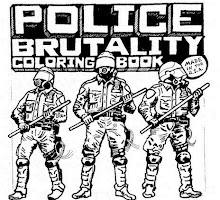
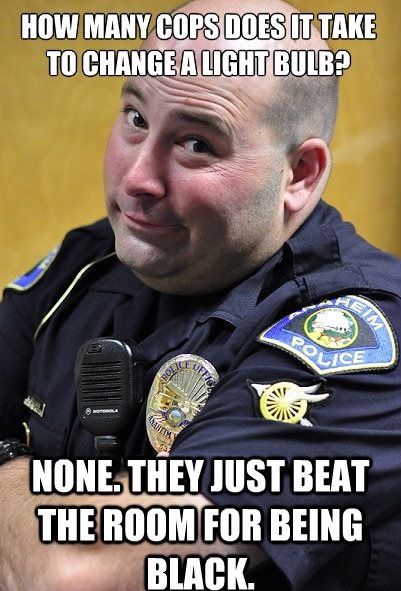
Racial bias isn't the problem...the quality of cops and the lack of mental wellness in cops is the problem
U.S. Justice Department to Release
Blistering Report of Racial Bias by Baltimore Police
By RICHARD A. OPPEL Jr., SHERYL
GAY STOLBERG and MATT APUZZOAUG. 9, 2016
The Justice Department has found
that the Baltimore Police Department for years has hounded black residents who
make up most of the city’s population, systematically stopping, searching and
arresting them, often with little provocation or rationale.
In a blistering report, coming
more than a year after Baltimore erupted into riots over the police-involved
death of a 25-year-old black man, Freddie Gray, the Justice Department is
sharply critical of policies that encouraged police officers to charge black
residents with minor crimes. A copy of the report was obtained by The New York
Times.
The critique is the latest
example of the Obama administration’s aggressive push for police reforms in
cities where young African-American men have died at the hands of law
enforcement.
The findings, to be released
Wednesday, are the first formal step toward the Justice Department’s reaching a
settlement with Baltimore — known as a “consent decree” — in which police
practices would be overhauled under the oversight of a federal judge. The
department started the inquiry at the invitation of Mayor Stephanie
Rawlings-Blake.
To show how officers disproportionately
stopped black pedestrians, the report cited the example of a black man in his
mid-50s who was stopped 30 times in less than four years. None of the stops led
to a citation or criminal charge. Black residents, the report said, accounted
for 95 percent of the 410 individuals stopped at least 10 times in the five and
a half years of data reviewed.
The most pronounced racial
disparities were in arrests for the most discretionary offenses: For example,
91 percent of those arrested solely for “failure to obey” or “trespassing” were
African-American, even though the city is 63 percent black, the report found.
In one telling anecdote from the
report, a shift commander provided officers with boilerplate language on how to
write up trespassing arrest reports of people found near housing projects. The
template contained an automatic description of the arrestee: “A BLACK MALE.”
“The supervisor’s template thus
presumes that individuals arrested for trespassing will be African-American,”
the report stated, describing the sort of detentions the language was intended
to facilitate as “facially unconstitutional.”
The report indicated that the
frequency of arrests without probable cause was reflected in the fact that
booking supervisors and prosecutors had declined to file charges, after arrests
by their own officers, more than 11,000 times since 2010.
Two weeks ago, Maryland
prosecutors dropped charges against the last of six officers charged in the
April 2015 death of Mr. Gray, who sustained a fatal spinal cord injury while in
custody. With that, Baltimore joined a growing list of cities where
police-involved deaths sparked outrage, and even riots, yet no one was held
accountable in court.
While no consent decree has been
reached, the report states that the city and the Justice Department have agreed
in principle to identify “categories of reforms the parties agree must be taken
to remedy the violations of the Constitution and federal law described in this
report.”
FINDINGS OF THE JUSTICE
DEPARTMENT REPORT
In its report, the Justice
Department concluded that the Baltimore Police Department “engaged in a pattern
or practice of conduct” that was unconstitutional or violated federal law,
including:
• Making
unconstitutional stops, searches, and arrests.
• Using
enforcement strategies of stops, searches and arrests that unfairly target
African-Americans.
• Using
excessive force.
• Retaliating
against people engaging in constitutionally-protected expression.
“I don’t think at this point,
it’s about justice for Freddie Gray anymore,” said Ray Kelly, a director of the
No Boundaries Coalition, a West Baltimore group that provided its own report on
police abuses to the Justice Department. “Now it’s about justice for our
community, for our people.”
City Councilman Brandon
Scott,vice chairman of the council committee that oversees the department, said
the next fight could be over how to pay for the police overhaul.
Baltimore is among nearly two
dozen cities that the Obama administration has investigated after they were
accused of widespread unconstitutional policing. Using its broad latitude to
enforce civil rights laws, the Justice Department has demanded wholesale change
in how cities conduct policing. In several cities, including Seattle;
Cleveland; and Ferguson, Mo., those investigations began in the aftermath of a
high-profile death that sparked protests and in some cases riots.
Police chiefs, prosecutors and
experts say the investigations have forced cities to address longstanding,
entrenched issues far beyond the targeted cities.
“Chiefs are constantly looking at
these reports, not just to learn lessons and best practices from each other,
but also what pitfalls we can avoid,” said Scott Thomson, the police chief in
Camden, N.J., who is also the president of the Police Executive Research Forum.
But court-ordered reform can take
years, which does little to ease the frustration of activists who say that
police officers too often go unpunished for deadly encounters with unarmed
people.
Sheriff Raids House to Find Anonymous Blogger Who Called Him Corrupt
Naomi
LaChance
AFTER
A WATCHDOG BLOG repeatedly linked him and other local officials to corruption and fraud, the Sheriff of
Terrebone Parish in Louisiana on Tuesday sent six deputies to raid a police
officer’s home to seize computers and other electronic devices.
Sheriff
Jerry Larpenter’s deputies submitted affidavits alleging criminal defamation
against the anonymous author of the ExposeDAT blog, and obtained search
warrants to seize evidence in the officer’s house and from Facebook.
The
officer, Wayne Anderson, works for the police department of Houma, the county
seat of Terrebone Parish — and according to New Orleans’ WWL-TV, formerly
worked as a Terrebone Sheriff’s deputy.
Anderson
was placed on paid leave about an hour and a half after the raid on his house,
Jerri Smitko, one of his attorneys, told The Intercept. She said that he has
not yet been officially notified about why.
Smitko
said Anderson denies that he is the author of ExposeDat.
But
free speech advocates say the blogger — whoever he or she is — is protected by
the First Amendment.
“The
law is very clear that somebody in their private capacity, on private time, on
their own equipment, has a First Amendment right to post about things of public
concern,” Marjorie Esman, director of the ACLU of Louisiana, told The
Intercept.
Larpenter
told WWL: “If you’re gonna lie about me and make it under a fictitious name,
I’m gonna come after you.”
Esman
said the Sheriff and his deputies were forgetting something. “The laws that they’re sworn to uphold
include the right to criticize and protest. Somehow there’s a piece in the
training that leads to them missing that.”
ExposeDAT
calls itself a “watchdog group,” posting articles that use public records to
identify institutional corruption in the Parish. Since it launched in late
June, it has accused various public officials and business owners of nepotism,
tax evasion, polluting and misuse of government funds.
It
promises to “introduce articles that explore the relationship between certain
Public Officials and the flow of money in South Louisiana.”
The
Sheriff’s office, in order to obtain the warrants, said the blog had criminally
defamed the Parish’s new insurance agent, Tony Alford, WWL reported.
One
ExposeDAT blog post titled “Gordon Dove and Tony Alford’s Radioactive Waste
Dumping,” briefly describes the relationship between Alford and the parish’s
president, who jointly own a Montana trucking company that has been cited for
dumping radioactive waste in Montana. That citation was originally reported in
the Missoula, Mont., newspaper The Missoulian.
In
a post titled “You Scratch Mine and I’ll Scratch Yours,” the blog uses public
records to call attention to the fact that Sheriff Larpenter gave Alford a
parish contract despite that fact that his wife manages Alford’s office.
“When
decent, law abiding citizens try to speak out on matters of public importance,
they’re treated like criminals,” Smitko said. “If this is what happens to a
police officer with 12 year of impeccable service what the hell kind of justice
do criminals get?”
The
Sheriff’s office, the police department and the district attorney’s office did
not return requests for comment.
This
isn’t the first time that Louisiana law enforcement officers have challenged
those who criticize them. In 2012, Bobby Simmons, a former police officer, was
arrested and jailed on a charge of criminal defamation for a letter he wrote to
a newspaper regarding another police officer. The charge was later dropped, and
Simmons filed a civil suit alleging that his civil rights were violated.
California Deputies Shoot Man Recording Them with Phone

Fearing for their lives, California deputiesopened fire on a man who wasrecording them with a cell phone from the garage of his home, claiming they thought it was a gun.
Sacramento County sheriff’s deputies then searched the man’s home, finding no guns, before they apologized and went on their way.
Fortunately, Danny Sanchez survived the shooting, ending up with only bullet fragments in his legs. And although deputies apologized to Sanchez,
they are pretty much unapologetic for their actions because, you know, officer safety.
The incident took place in Rancho Cordova as Sacramento County deputies were arresting Sanchez’s next-door neighbor after a two-hour standoff.
Let’s not forget that the only person accused of a crime in that situation was Ledford, whom they were already taking into custody when they shot Sanchez.
Gosh, is there anything that the cops AREN’T afraid of? I mean, rly, they only saw a damn CELL PHONE and started shooting… How are they meant to protect, if they’re getting feared so easily?
The problem is that cops aren’t held accountable for their actions, and they know it. These officers violate rights with impunity. They know there’s a different criminal justice system for civilians and police. Even when officers get caught, they know they’ll be investigated by their friends, and put on paid leave. My colleagues would laughingly refer to this as a free vacation. It isn’t a punishment. And excessive force is almost always deemed acceptable in our courts and among our grand juries.— former cop Redditt Hudson, “ The Washington Post
Give this clerk a medal
Police Union President Demanding
Boycott after Officer is Denied Service
The President of Broward County’s
largest police union has called for a national boycott of Sunoco gas stations
following an incident during which a uniformed officer from the Miramar Police
Department was refused service by the sales clerk at one of the company’s
locations.
“On a day when three officers are
slain in Baton Rouge, La., and a fourth is fighting for his life, how can
anyone deny service to a uniformed police officer?” said Broward County PBA
President Jeff Marano.
In his incident report, the
officer, who was wearing his full police uniform, said that on Monday, he walked into the
Sunoco Gas Station located at 1700 S Douglas Road around 2 p.m., and as he was
attempting to get a drink from the refrigerated area, a black male, wearing a
gray shirt with gray pants, walked up to him and asked why they arrested his
“boy”. He asked the man who he was referring to, to which he said, “Ya’ll got
my boy in the back of that car outside the gas station.”
The officer told him that the man
was arrested and he couldn’t give him any further information. The man then
walked away.
The officer then proceeded to
walk towards the cashier in order to pay for his drink. The same individual
that walked up to him earlier was standing behind the cash register without a
name tag and closed his cashier’s window.
The officer then knocked on it in order to get his attention, however,
the man looked at him and didn’t say anything. The officer asked, “Hey can you
ring me up? I need to pay for my Gatorade.” The man then stated “No.” The
officer asked him what he meant. The man said that he wouldn’t ring him up and
said, “You know why.”
The officer asked him again to
ring him up, and the man once again refused.
During the same time, the man
said, “Get out of my way, I need to attend to customers.” The officer looked
behind him and there was a line of four people trying to pay for their items.
He moved out of the way, so they could pay, and after they were done, he again
asked to pay, and was once again refused.
He then asked the man for his
name and his manager or boss’s name, and he replied that he doesn’t have to
give out his name or his boss’s name. The officer asked why he was refusing to
ring up a police officer trying to buy a drink, to which he answered, “Because
I don’t have to, that’s why.”
Marano is demanding the immediate
termination of the Sunoco employee, however, a police search for the owner’s
information was met with negative results.
Be careful. This program is a sham.
Be careful. This program is a
sham. If the cops suspect they screwed up on a domestic violence case, the “Advocates”
allow them to sit in on meetings with the victims.
Domestic violence victims use
Fairfax Co. program to find help
FAIRFAX, Va. — New figures show
that over the past year, domestic violence victims have been using a program in
Fairfax County, Virginia, that is meant to help provide victims withpotentially
lifesaving services.
Under the Lethality Assessment
Program — launched in July 2015 — police officers who respond to domestic
violence incidents sit down with victims and ask them a series of questions
about their situation. Victims deemed to be in a “high-danger” situation are
then given the option of talking on the phone with a victim advocate who can
give them more information about what to do and where to go to receive services
they may need to stay safe.
“The program is intended to
connect victims immediately with victim advocates upon the scene of a law
enforcement incident,” said Sandy Bromley, the countywide domestic violence
coordinator.
According to new figures, police
have dealt with 555 high-danger victims since the program began, or about 46
every month. When given the option to do so, 80 percent of the victims agreed
to speak with an advocate.
“When victims engage in those
services, they are safer,” Bromley said.
The program has also shed light
on the severity of such situations, with 51 percent of high-danger victims
saying they believed their offender might try to kill them.
“Domestic violence in Fairfax
County is a big problem,” said Fairfax County Police Chief Ed Roessler.
He added, “We are just blessed
that every single Fairfax County police officer, along with our advocates, has
embraced this program and we have made a difference.”
Sharon Bulova sells out the people of Fairfax County AGAIN
Fairfax County: Support for
Police Auditor, Civilian Review Panel
Supervisors discuss independent
oversight recommendations from Ad Hoc Commission.
By Tim Peterson
Neither the independent
auditor nor civilian review panel would conduct an independent investigation of
the complaint, but would refer the case to the Chief of Police and he to the
Internal Affairs Bureau for investigation. Or as Board of
Supervisors Chairman Sharon Bulova put it: “It’s another portal complaints can
come from.”
Details of an independent auditor
for Fairfax County police and a civilian panel to review cases of alleged FCPD
abuse of authority or misconduct are still being hammered out. However there
was general agreement among County Supervisors at the July 19 Public Safety
Committee meeting that they are in favor of moving forward with the recommendations
from the Ad Hoc Police Practices Review Commission to create both entities for
accountability.
The meeting was held to discuss
the recommendations from the commission’s Independent Oversight and
Investigations subcommittee so that a formal board matter accepting them can be
drawn up in time for a vote this fall.
Public Safety Committee chair
Supervisor John Cook (R-Braddock) opened the meeting with a moment of silence,
and then a perspective on the need for reforms to aspects of the County’s policing.
“We need to be bringing people together,” Cook
said. “How do we further connect the community and our law enforcement, have
that dialogue.”
In reference to creating a
civilian review panel, Cook added Fairfax County would “do what other
jurisdictions are doing, and hopefully do it better.”
TO GIVE AN OVERVIEW of
independent and civilian review of law enforcement, Independent Monitor
Nicholas Mitchell with the City and County of Denver Office of the Independent
Monitor spoke to the crowded Fairfax County Government Center conference room.
Mitchell also spoke as a board member of the National Association for Civilian
Oversight of Law Enforcement.
“There’s the proposition as citizens we’re
obligated to ensure powers are being consistent with the Constitution and our
system of laws,” Mitchell said. “And the proposition with granting of power,
comes respect and accountability to the community.”
Mitchell said there is no one
model for civilian review boards, and that most large cities and an increasing
number of medium and smaller-size cities are forming them. Some are formed
preemptively, others in the wake of critical incidents involving police.
Jack Johnson, chair of the
Independent Oversight subcommittee, reviewed the recommendations word for word.
He explained they were voted through unanimously, including the representatives
from law enforcement and FCPD.
Under the recommendations,
independent oversight of Fairfax County Police would be undertaken by an
independent auditor and civilian panel. The auditor would handle use of force
cases that resulted in death or serious injury. The civilian panel would look
at other alleged FCPD abuse of authority or misconduct. Residents could bring a
complaint directly to the Civilian Review Panel, which would refer the case to
the FCPD for investigation.
In each case, the reviewing party
would not conduct an independent investigation of the complaint, but would
refer the case to the Chief of Police and he to the Internal Affairs Bureau for
investigation.
Or as Board of Supervisors
Chairman Sharon Bulova put it: “It’s another portal complaints can come from.”
Fairfax County Chief of Police
Edwin Roessler said the recommendations are fully supported by his department.
Roessler embraced independent oversight as an important part of trust with the
community. “We’re on the same page. There is no conflict,” he said.
Det. Sean Corcoran, president of
the Fairfax Coalition of Police Local 5000 and a member of the Ad Hoc
Commission, said despite the unanimous commission vote for an auditor and
civilian review board, there are more details that need to be taken into
account before moving forward with the recommendation.
“There’s concern about fiscal costs,” Corcoran
said. “Our internal affairs is strapped as it is right now.”
The Supervisors reviewed a draft
job description for the auditor, who would be a full-time County employee, and
language that would formally set the scope, organization and process of the
Police Civilian Review Panel.
Supervisor Pat Herrity (R-Springfield)
echoed Corcoran in calling for the group to take more time dealing with the
“devil in the details” rather than rushing forward with the recommendations.
“Can we get there in a fiscally responsible
way?” Herrity asked. “What’s this going to cost us? In distraction? Time taken?
Someone needs to make some estimates.”
Herrity questioned whether both
an auditor and civilian review panel were necessary, and if there might be a
better way to “get transparency without creating bureaucracy.”
Randy Sayles of Oak Hill was a
member of Ad Hoc Commission Use of Force subcommittee and attended the majority
of the full meetings. He sat in the front row of Tuesday’s meeting.
Sayles said he thought the day’s
discussion did a “good job” capturing the work of the commission on independent
oversight.
With regard to the composition of
the civilian review panel, Sayles said he would like to see language requiring
a law enforcement representative have a seat at the table. They could be
retired, just not from Fairfax County.
“To speak up and give that perspective,” he
said would be an important addition. “That’s a recommendation I’m standing by
to this day.”
The next Public Safety Committee
meeting is scheduled for Sep. 13 at 3 p.m. at the Fairfax County Government
Center, located at 12000 Government Center Parkway in Fairfax.
This a fucking lie made up by the cops to see if it would fly
Outpouring
of support from community to police
EST
LEESBURG, VA. (WUSA9) - The fatal
shootings of three officers in Baton Rouge yesterday has promoted Fairfax
County Police in Reston to postpone a public event tonight called Cops on a
Corner.
But, police stations everywhere
are seeing support from the community.
People have been showering the
Leesburg Police Department with gifts and cards.
They've given flowers, bottles of waters, boxes of
donuts, even a cake.
"It's non-stop," said
Lt. Jeff Dube, public information officer with Leesburg Police. He
says the support makes them feel better about coming in and doing their
jobs knowing the public appreciates them
and "has our back."
The gifts started coming in after
the fatal shootings of five officers in Dallas and more sentiments came in
today since the three officers were killed in Baton Rouge on Sunday.
The largest gift to the Leesburg
police department came in Monday. It's a
$1000 anonymous gift to a local seafood restaurant...to be split into gift
cards for Leesburg's 70 officers.
The police tragedies, on both
sides, highlight the importance of the Junior Police Camp which Leesburg has
been holding it for years.
Master Police Officer Russ Bolden
says the kids see them as normal people, dads, brothers, sons, daughters. He hopes those connections will carry through
into their adult lives.
Linnea Delhoyo has made sure each
of her kids come to the camp. She said
that she know police care for them, and wants her children to care about them.
Just… don’t make eye contact
Alarming Racial, Disciplinary Data in Use of Force Report
Blacks make up only 8 percent of
the population, but 41 percent of the subject in use of force incidents, says
Fairfax County Police report.
Burke, VA
By Skip Wood (Patch Staff) - July
19, 2016 7:18 pm ET
A study released Monday by the
Fairfax County Police Department examining use of force by police shows that of
of 539 such incidents examined in 2015, only one resulted in disciplinary
action -- a verbal warning.
But the study, done in part
because of the fatal shooting of John Greer by police while standing in the
doorway of his home in 2013, also revealed a more eye-opening bit of data.
Namely, that black suspects
accounted for 41 percent of the use-of-force incidents, compared to 52 percent
being white and 4 percent being Hispanic.
Black residents make up just 8
percent of the county's population.
In a statement Tuesday, the
police department noted, "The data sets are intended to engage a
discussion between the great community we serve and the leadership of the
Department as we continue to re-engineer our use of force training, policies,
and culture."
Among other findings:
• Residents
had no weapons in 98 percent of the incidents.
• Police
fired a gun just once in the incidents.
• Physical
contact was the most common type of force.
In the Greer case, former Fairfax
cop Adam Torres was sentenced in June to a year in jail after pleading guilty
to involuntary manslaughter.
Fairfax police release use of force data as board takes up civilian oversight
By Max Smith | @amaxsmithJuly 19, 2016 5:15 am
Fairfax County police have not
identified a suspect or motive in the death of Tarreece Sampson (WTOP/Dave
Dildine)
WASHINGTON — As Fairfax County
leaders prepare to take up new civilian oversight for police in the wake of the
2013 shooting of John Geer in the doorway of his Springfield home, the police
department has released information about more recent use of force incidents
and the racial disparities in whom that force is used against.
Of 539 use of force incidents
investigated by at least one supervisor in 2015, a new report released late
Monday shows 57 proceeded to administrative investigations. In one of those
cases, a use of force violation was found, and the report shows that an oral
reprimand was issued.
Police say the use of force in
2015 was predominantly against males, with just 89 of the 539 incidents
involving females. The report says 282 of the incidents (52 percent) involved
subjects police identified as white, 222 subjects identified as black (41
percent), 18 identified as Hispanic (4 percent) and 17 identified as Asian (3
percent).
Only 8 percent of Fairfax
County’s 1.1 million residents are estimated to be black, 16 percent are
estimated to be Hispanic and 63 percent are estimated to be white.
Reflecting the demographics of
the department as a whole, the officers involved in use of force incidents were
largely white men, representing 740 of the 985 officers involved in incidents.
Of sworn Fairfax County police officers, 83 percent are white, 7 percent are
black and 5 percent identify as Hispanic.
On Tuesday afternoon, the Board
of Supervisors’ Public Safety Committee will take up recommendations for
increased civilian oversight of the police department issued by a commission
formed after a police officer shot and killed Geer and information in the case
was slow to emerge.
The committee, which all board
members typically attend, has a draft document before it that would create a
new, independent police officer who would report to the Board of Supervisors in
cases of police use of force that lead to serious injury or death, and a new
civilian review panel that would respond to community concerns about “alleged
incidents of abuse of authority.” The draft document would not endorse the
recommendation for an ongoing police commission like the one formed in the wake
of Geer’s death.
That draft is far from final,
though, as several supervisors expressed concerns about some of the
recommendations last week.
Supervisor John Cook, who chairs
the Public Safety Committee, said the Tuesday meeting should focus on what the
civilian oversight panel would be responsible for, and how members would be
appointed.
In addition to members of the
commission that made the recommendations, representatives from the National
Association for Civilian Oversight of Law Enforcement are expected to be
included in the meeting to offer advice.
Supervisor Pat Herrity was among
those raising financial concerns about the cost of parallel oversight between
the auditor and review commission.
“I’m trying to figure a way to
get the transparency we’re looking for and the review we’re looking for without
creating two new bureaucracies instead of one,” Herrity said at the board’s
meeting last week.
In the separate police department
report released Monday, the agency said the largest number of disciplinary
actions last year were tied to operation of police vehicles. Only six officers
resigned or were fired in connection with disciplinary actions: one for custody
of property, one over ethics and integrity, one for insubordination and three
over standard of conduct.
The most use of force reports
came out of the Mount Vernon (87) and Mason districts (85), followed by the
McLean District (64) and Criminal Investigations Bureau (61).
Separate from use of force
incidents, the report also includes information on the recorded demographic
breakdowns of “field contacts,” in which officers interact with people in the
community in matters such as complaints, suspicious people or vehicles, or
warning tickets.
In those instances, the
department said, about two-thirds of the interactions were with males while
one-third were with females. Two-thirds of the interactions were with people
officers identified as white, 25 percent with people officers identified as
black, 5 percent with people officers identified as Asian and 2 percent with
people officers identified as Hispanic.
Fairfax County favors independent police reviews amid concern over black arrests
The Washington Post July 19th,
2016
Fairfax County's Board of
Supervisors on Tuesday signaled support for creating more civilian scrutiny of
instances where officers use force, a day after a report revealed that African
Americans in the county are disproportionately affected in such cases.
Proposals to create a civilian
review panel for police abuse investigations and to hire an independent auditor
in cases involving death or serious injury stem from recommendations made by a
police advisory commission created in response to controversy over the 2013
fatal shooting of an unarmed Caucasian man.
However, tensions nationwide over
how African Americans are treated by the police spilled into a Tuesday meeting
about the proposals, which the county board will likely vote on in the fall.
"Black lives matter!"
an activist shouted, while others held signs that referred to the report
released this week that showed more than 40 percent of use-of-force cases in
the county last year involved African Americans, who represent about 8 percent
of Fairfax's population of 1.1 million residents.
Supervisor John C. Cook
(R-Braddock) chaired the meeting, which started with a moment of silence to
honor police officers killed this month in Dallas and Baton Rouge. At one point
he threatened to have the activists kicked out.
"We won't stand for
that," Cook told the activists.
County officials were already
rattled by the controversy surrounding the death of John Geer, a Springfield
man shot by a county police officer at the doorway of his home three years ago.
A Fairfax County officer pleaded guilty to manslaughter in April.
The ongoing protests over police
shootings around the country underscored their support for more oversight,
several county officials said.
A proposal to create a civilian
review panel would give that appointed body authority to refer complaints of
abuse by officers to county police and to review those investigations for
thoroughness. The panel could also request a follow-up investigation if the
first one appeared problematic.
Meanwhile, a proposal to hire an
independent auditor would allow that person to monitor police department
investigations into cases that caused death or serious injury, and to report on
cases where there were questions about whether police acted appropriately.
Supervisor Linda Q. Smyth
(D-Providence) said the new oversight would help assure residents that
officials are serious about reviewing instances where officers use force or are
accused of misconduct.
"It's just to be sure that
we have done as much as we can to be as fair as possible," Smyth said.
Fairfax County police chief Edwin
C. Roessler Jr., who attended the meeting, said such external review is
"greatly needed in the law enforcement profession."
"We need to restore the
confidence and public trust from our community members to be effective as a
community," he said.
Some county police officers,
however, criticized the ideas.
Joseph Woloszyn, president of the
Police Benevolent Association of Virginia, said the Board of Supervisors
already had oversight of the department, so there was no need to add the
auditor or civilian review panel.
He questioned whether civilian
review panel members would have the policing expertise to properly review
complaints and whether their decisions might be subject to political pressures
because they would be appointees.
"Depending on the
qualifications for picking the auditor or civilian review panel, that could
make policing more politicized in the county," Woloszyn said. "Look
at panels like this in Chicago, Baltimore and Atlanta. It hasn't worked out so
well."
The ideas for increased oversight
are among 202 reforms proposed in response to the Geer shooting that county
officials estimate would cost $35 million to implement.
Many of the changes — including
requiring police cadets to undergo training in de-escalating hostile situations
before learning to fire their weapons — are already underway.
Last month, the board debated
heavily over whether to release the name of an officer involved in an incident
causing death or serious injury within 10 days before endorsing that policy.
A decision to require county
police officers to wear body cameras was put off until the fall of 2017 to give
county officials time to research concerns over privacy related to those
devices.
Tuesday's discussion came a day
after Fairfax County police released their first comprehensive assessment of
the use of force by its officers, another move for increased transparency that
stems from the Geer controversy.
The accounting concluded that 985
officers had been involved in using force on 539 occasions in 2015.
Physical contact, stun guns and
vehicle intercepts were the most common types of force deployed. An officer
discharged a firearm in one case.
The data revealed that in 98
percent of use-of-force cases, civilians were unarmed. Police officials found a
violation of department policy in just one of the cases reviewed in 2015.
The report also found that
African Americans civilians were disproportionately involved in use-of-force
cases and field stops. More than 40 percent of use-of-force cases and 25
percent of field stops involved black residents.
Shirley Ginwright, the president
of the Fairfax County NAACP, said she was surprised by the sheer number of
use-of-force incidents in the county last year and the proportion that involved
African Americans.
"It is a concern when a
disproportionate number of these cases involve minorities," Ginwright
said. "We are working to see how we can correct things like these in
high-crime areas."
Roessler said the percentage of
African Americans involved in use-of-force cases does not indicate that black
residents are being targeted by police.
"We as a department are
going where the crime is," he said. "Obviously, I will not tolerate
any profiling or discrimination. These calls are all generated through
engagement with the community."
With pressure mounting to better
handle police incidents in Fairfax, some supervisors were nonetheless worried
about the cost of doing so.
"I want to understand what
the rush is to get this done," said Supervisor Pat Herrity
(R-Springfield,) who expressed concern about the cost of hiring an auditor and
the possibility of creating more work for police department officials who would
have to respond to requests from the civilian review panel.
"We're not rushing to
address a problem, we're rushing to address the issue of accountability and
transparency, and we want to do it right," he said.
This article was written by
Antonio Olivo;justin jouvenal
Subscribe to:
Posts (Atom)