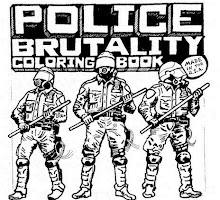
on sale now at amazon

on sale now at amazon
"I don't like this book because it don't got know pictures" Chief Rhorerer

“It’s becoming a disturbingly familiar scene in America - mentally unstable cops”

“It’s becoming a disturbingly familiar scene in America - mentally unstable cops”

Social media is doing what our elected officals won't do in dealing with the national police problem

Cleveland Leaders Bypass Prosecutors to Seek Charge in Tamir Rice Case
By MICHAEL S. SCHMIDT and MATT APUZZOJUNE

WASHINGTON — Community leaders in Cleveland, distrustful of the criminal justice system, said Monday that they would not wait for prosecutors to decide whether to file charges against the police officers involved in the fatal shooting of 12-year-old Tamir Rice last year. Instead, they will invoke a seldom-used Ohio law and go directly to a judge to request murder charges against the officers.
The highly unusual move is the latest sign that some African-Americans in Cleveland and around the country have lost confidence in a system that they see as too quick to side with police officers accused of using excessive force against blacks.
The investigation into Tamir’s shooting was handed to the county prosecutor last week, but local leaders are skeptical because of how similar cases have ended. In New York, a grand jury did not indict in the death of Eric Garner, who had been put in a chokehold by a police officer. State and federal authorities said there was no evidence to charge Officer Darren Wilson in the fatal shooting of Michael Brown in Ferguson, Mo. Last month, prosecutors said a white police officer in Madison, Wis., would not be charged for killing an unarmed 19-year-old man.
 “The writing is on the wall,” said a lawyer for Tamir’s family, Walter Madison, who worked with the community leaders as they planned to seek charges. “If you look at every other instance, it ends up unfavorable to the families.”
The community leaders said they intended to file their request on Tuesday morning in municipal court. One of them provided The New York Times with copies of six affidavits they planned to file, which outline the crimes they say were committed.
Ohio is one of a handful of states that allow residents to request an arrest without approval from the police or prosecutors. It is difficult to know how the case will play out because there is little precedent for a citizen to request an arrest in such a contentious, high-profile case.
Mr. Madison said that he knew of no instance in which an Ohio judge had ordered the arrest of a police officer based on a citizen complaint, but that most previous complaints had been frivolous.
Shooting deaths by officers over the past year have prompted the most significant national discussion on policing since the 1991 beating of Rodney King in Los Angeles. The debate has highlighted, among other things, the differences in how prosecutors handle cases involving investigations of police officers.
In a typical murder case, prosecutors often present only their best evidence to a grand jury in order to get an indictment. Arguments that a shooting was justified are typically not made until much later, at trial.
In cases involving police officers, prosecutors are more likely to let grand jurors hear conflicting testimony or see evidence favorable to the officer. Critics say that has established two standards for bringing charges: a high one for police officers, and a much lower one for everyone else.
A task force appointed by President Obama recommended in March that all cases involving the use of force by police officers be handled by independent prosecutors to “demonstrate the transparency to the public that can lead to mutual trust between community and law enforcement.” In the Cleveland case, however, Cuyahoga County prosecutors will decide whether to bring charges. Those prosecutors work regularly with Cleveland police officers, a closeness that activists have said is a conflict of interest.
After Death of Tamir Rice, Pain Lingers
Family and friends of Tamir Rice, 12, struggle with their loss five months after a Cleveland police officer fatally shot the boy as he played with a toy gun in a park.
By Brent McDonald and Michael Kirby Smith on Publish Date April 22, 2015.
By going directly to a judge, community leaders are trying to circumvent that process. Ohio law allows anyone with “knowledge of the facts” to file a court affidavit and ask a judge to issue an arrest warrant. If approved, the arrest would be followed by a public hearing, and community members said that was preferable to allowing prosecutors to make the decision in secret.
“Here we are taking some control of the process as citizens,” Mr. Madison said. “We are going to participate without even changing the law.”
Tamir was fatally shot in November while he played in a park. A 911 caller had reported that the boy was waving a gun that was “probably fake.” When officers arrived, they pulled their car into the park, next to the boy. Within two seconds, an officer, Timothy Loehmann, shot Tamir in the abdomen. The boy’s gun, it turned out, was a toy replica of a Colt pistol and fired plastic pellets.


Ex-South Carolina Officer Is Indicted in Shooting Death of Black Man
By ALAN BLINDER and TIMOTHY WILLIAMS
Prosecutor Scarlett Wilson, Rodney Scott and the Scott family’s lawyer spoke after Michael T. Slager, a former police officer in South Carolina, was indicted in the fatal shooting of Walter L. Scott.
By Associated Press

A former police officer in North Charleston, S.C., was indicted Monday by a grand jury on a murder charge in connection with the April shooting death of Walter L. Scott, which was recorded by a passer-by and became a resonating symbol in the national debate about police behavior.
The former officer, Michael T. Slager, had been jailed on a murder charge since April 7, when the video became public. Mr. Slager’s lawyers have so far made no request for bail, and his indictment in Charleston County had been widely expected.
The North Charleston Police Department fired him after the shooting, which city officials criticized in stark and unsparing terms.
Despite the intensive publicity surrounding the shooting, Scarlett A. Wilson, the local prosecutor, said Monday that she believed a local jury could be impaneled and would be able to arrive at an unbiased verdict. A trial date has not been set.
Under South Carolina law, there is only a single murder charge, which Ms. Wilson described as being an “unlawful killing with malice aforethought” — with the premeditation required to exist for only a few seconds before a killing in order to gain a conviction.
Mr. Slager was indicted by a grand jury on a murder charge on Monday in connection with an April 4 shooting. Credit Charleston County Detention Center
“As long as malice is proven in the heart and mind, the state has proven its case,” she said.
The case was presented to the grand jury on Monday morning, and the panel returned the indictment within a few hours.
“The prosecutors’ work has just begun,” she said.
Rodney Scott, a younger brother of Walter Scott, said the Scott family was satisfied with the indictment.
“We are happy and pleased about that right now,” Mr. Scott said.
Video Shows Fatal Police Shooting
In video provided to The New York Times, a police officer in North Charleston, S.C., is seen shooting an apparently unarmed man after a scuffle following a traffic stop.
Publish Date April 7, 2015.
Andrew J. Savage III, the lawyer representing Mr. Slager, said in a statement Monday that he had not yet received material related to the case from prosecutors.
“The grand jury is a formal step, but just another step in the criminal process,” Mr. Savage said. “Until we have an opportunity to fully evaluate the state’s case and to compare it with our own investigation, we will not be commenting on any aspect of the case.”
The fatal encounter on April 4 began when Mr. Slager, who is white, stopped Mr. Scott, who was black, for a broken taillight while he was driving in North Charleston, South Carolina’s third-largest city. A dashboard camera in Mr. Slager’s patrol car recorded the first minutes of the stop, and the video showed a mostly routine interaction between a driver and an officer.
But Mr. Scott, 50, soon fled on foot — his family believes that he ran because of outstanding child-support obligations that he feared would lead to his arrest — and Mr. Slager gave chase. Once the officer caught up with Mr. Scott, there was apparently a tussle over the officer’s Taser.
When Mr. Scott turned and ran, Mr. Slager fired eight times; some of the bullets struck Mr. Scott in the back.
A pedestrian recorded the shooting and some of its aftermath on a cellphone and provided the video to Mr. Scott’s family, which turned it over to the authorities. After the video became public, many observers focused on a moment in which Mr. Slager appeared to drop an object, possibly his Taser, near Mr. Scott’s body.
Critics have also accused Mr. Slager and Officer Clarence W. Habersham, who was the first officer to arrive after the shooting, of providing insufficient medical attention to Mr. Scott.
Mr. Scott’s death became a rallying point for critics of police conduct after months of protests about the deaths of black men at the hands of officers in Ferguson, Mo., and on Staten Island. People staged peaceful demonstrations in North Charleston, a city of about 104,000 people, after Mr. Scott’s death.
Mr. Slager, a former member of the Coast Guard, joined the North Charleston force in 2010. Before Mr. Scott’s death, Mr. Slager had been the subject of two formal complaints, including one for excessive force after he used his Taser while he pursued a burglary suspect.
The city cleared Mr. Slager of wrongdoing in that 2013 case, but the man involved in the episode, Mario Givens, has been among those to announce since Mr. Scott’s death that he would pursue civil litigation against the former officer and the North Charleston authorities.
Police records obtained by The New York Times show that Mr. Slager was involved in 19 use-of-force episodes during his tenure as a police officer, including the shooting death of Mr. Scott and the encounter with Mr. Givens.
Of those 19 episodes, the records show, at least 14 involved Mr. Slager’s using his Taser in some manner. Mr. Scott’s shooting was the only time that Mr. Slager fired his handgun while on patrol.
A version of this article appears in print on June 9, 2015, on page A12 of the New York edition with the headline: Ex-South Carolina Officer Is Indicted in Shooting Death of Black Man. Order Reprints| Today's Paper|Subscribe


Jarring Image of Police’s Use of Force at Texas Pool Party
By CAROL COLE-FROWE and RICHARD FAUSSETJUNE 8, 2015
Protesters gathered Monday at a swimming pool in McKinney, Tex., where a police officer last week was recorded throwing a teenage girl to the ground. Credit Cooper Neill for The New York Times

McKINNEY, Tex. — No lives were lost. The incident played out at a suburban pool party, not an urban neighborhood struggling with crime and drugs.
But perhaps it was that suburban setting that helped make the images so powerful and disturbing. Now a video of a police officer pointing a gun at teenagers in bathing suits and shoving a young black girl’s face into the ground has become the latest flash point in relations between the police and minorities.
The cellphone video, taken at the community pool in Craig Ranch, a racially diverse subdivision north of Dallas, has set off another debate over race and police tactics, with activists calling for the officer to be fired and others arguing that the blame should fall at least in part on the teenagers.
The video appears to show the officer, David Eric Casebolt, briefly waving his handgun at young partygoers who approached him as he tried to subdue the teenage girl on Friday. The officer ultimately immobilized the girl by putting her facedown on the ground and placing a knee on her back.
A video shows a police officer detaining a 14-year-old girl on Friday and pulling a gun on other teenagers after a disturbance at a neighborhood pool party in McKinney, Tex.
Chief Greg Conley of the McKinney Police Department said that the video had prompted an internal affairs investigation and that Officer Casebolt, a patrol supervisor, had been placed on administrative leave.
One adult man was arrested on charges of interfering with the duties of a police officer and evading arrest, Chief Conley said. The 14-year-old girl who had been immobilized by Officer Casebolt was “temporarily detained” but ultimately released to her parents, he said.
Benét Embry, the host of an Internet-radio talk show, lives in the neighborhood and said he had seen the party grow out of control. Mr. Embry said as many as 130 young people had attended the party.
He said some of them scaled the pool’s fence after being turned away from the entrance by a security guard, who eventually called the police.
“As an African-American male, of course I had a concern seeing a 14-year-old African-American female in a swimsuit on the ground,” Mr. Embry said in a phone interview on Monday. “Of course I had concerns when I saw the officer pulling a gun. That’s when I started thanking God that nobody got hurt. But I don’t believe that the officer was coming out to pick on black kids.”


Texas Police on Pool Party Incident
Greg Conley, the chief of police in McKinney, Tex., said Sunday that a police officer had been placed on leave after video surfaced showing him pushing a girl during a pool party on Friday.
McKinney, with around 150,000 people, is a fast-growing, mostly middle-class suburb with deep racial and economic divisions. In 2009, according to an article in The Atlantic, the city settled a lawsuit in which it was accused of hindering the construction of affordable housing in the western part of the city, which is more white and more affluent.
The pool party took place on the west side, in a neighborhood that residents said is usually marked by friendly relations among black, white, Hispanic and Asian residents.
In a statement, the Police Department said officers arrived at the pool around 7:15 p.m. on Friday, responding to a call about a “disturbance involving multiple juveniles at the location, who do not live in the area or have permission to be there, refusing to leave.” The department, the statement added, received “several additional calls related to this incident advising that juveniles were now actively fighting.”
Mayor Brian Loughmiller said in a statement that he was “disturbed and concerned by the incident.”
On Monday evening, a diverse group of several hundred people gathered at an elementary school for a peaceful protest, waving signs reading, “Don’t tread on me or my kids” and “Stop Police Brutality.”
Speakers used a bullhorn to call for the respect all citizens, and for sensitivity training for the McKinney police.
Earlier in day, activists outside Police Headquarters said the youths had been subjected to racial bias, and demanded that Officer Casebolt be fired. Dominique Alexander, the president of the Next Generation Action Network, a civil rights group, said it was an “illusion” that youths had been jumping the fence. “They had every right to be there,” he said.
After the video spread quickly online, criticism poured in from around the country. The American Civil Liberties Union of Texas said that it while it did not have all the facts about the party, “what we do know is that the police response, as seen on the video, appears to be a textbook case of overuse of force.”
In a video posted to YouTube on Sunday, a black teenager named Tatiana said her family was hosting a cookout for friends when a woman insulted them, prompting a 14-year-old family friend to respond. Tatiana said a white woman had then told her: “You need to go back to where you’re from” and to “go back to your Section 8 home.”
Tatiana said that she had replied, “Excuse me,” and that then another white woman hit her in the face and “both women attacked” her.
Mr. Embry, the neighbor who saw the party, said he had not seen a fight involving blacks and whites.
He described a party that began with a D.J. playing music in a nearby park, but that soon grew out of control as the security guard began turning away more teenagers than were allowed in the pool area.
The video of the police response shows Officer Casebolt using profanity and shouting at teenagers as he and others officers try to round up some of them and shoo others away from a chaotic scene. He appears to grab the girl in frustration when she does not leave the area.
In an interview with KDFW-TV, the girl identified herself as Dajerria Becton. She told the television station that she had been invited to the party and had not been involved in a fight.
Brandon Brooks, 15, who shot the video, told a TV station that Officer Casebolt had not confronted him, one of the few white teenagers at the party.“I was one of the only white people in the area when that was happening,” he told the station. “You can see in part of the video where he tells us to sit down, and he kind of like skips over me and tells all my African-American friends to go sit down.”

Carol Cole-Frowe reported from McKinney, and Richard Fausset from Atlanta.

Thank you John Foust, Sharon Bulova and the Fairfax County Police, we made another brutality list thanks to your efforts

Help build a definitive guide to every unreleased video of police brutality

By Shaun KingFollow

Across the country, videos of extreme police brutality and murder exist, but are being concealed by police departments, prosecutors, and even media organizations. For nearly nine months, a deeply disturbing video of the Salt Lake City, Utah, police killing of Dillon Taylor existed, but was concealed not only by police and the district attorney, but even by the Salt Lake City Tribune.
In the video, we learned that Taylor, unarmed and committing no crime, posed no real threat to the officer and was listening to music on his headphones. We also witnessed the gruesome aftermath of what it truly looks like when someone is shot at point blank range by the police and then summarily treated like a criminal. It's one of the worst things you'll ever see in your life and should inform how you feel about the true impact of police brutality.
Ultimately, it's my strong belief that every video of police brutality and murder should be released immediately—not after prosecutors decide not to do anything, not after all charges are dropped, but as soon as it is humanly possible to load them to YouTube. The videos are public property, paid for by tax dollars, and inform the public far better than fictional press releases ever will.
Sadly, the Taylor video was not the only video being concealed by police and prosecutors. Below we will include a list of every police violence video that we know exists that people in power refuse to release.
In the comments section, please add more links and details and we will update this post to include them.

Natasha McKenna was killed by police in Fairfax County, Virginia, on February 3. The police have confirmed that a video exists but refuse to release it.

Matthew Ajibade was killed by law enforcement on January 1 in Savannah, Georgia. The police have confirmed a video exists but refuse to release it.
Laquan McDonald was shot 16 times and killed by Chicago police on October 20, 2014. His family received $5 million in a settlement, but officials refuse to release the video of his killing. It has since been reported that police deleted 100 minutes of video from a nearby Burger King.
Ernest Satterwhite was shot and killed by police in South Carolina, but police refuse to release the dashcam footage.
Jonathan Ferrell was shot and killed by a police officer in Charlotte, North Carolina, but police refuse to release the video.
Kashad Ashford was killed by New Jersey police, but they refuse to release the video.
Lawrence Graham III was shot—apprently three times in the back—and killed by police in Fayetteville, North Carolina, but police refuse to release the video.
Ricardo Diaz Zeferino was completely unarmed when police in Gardena, California, shot and killed him, but they refuse to release the video. His family was given a $4.5 million wrongful death settlement.
Brandon Tate Brown was shot and killed by police in Philadelphia in December 2014, but officials refuse to release several videos of the shooting.
If you know of any additional cases in which police refuse to release videos, please post them in the comments section below or email them to shaun@dailykos.com and we will add them to the list.
ORIGINALLY POSTED TO SHAUNKING ON THU JUN 04, 2015 AT 08:47 AM PDT.
ALSO REPUBLISHED BY BARRIERS AND BRIDGES, POLICE ACCOUNTABILITY GROUP, AND DAILY KOS.


And then there's this guy....................

Man ran fake DUI checkpoint while drunk: cops

SOMERSET, Pa. (AP) — Police say a man who set up a drunken-driving checkpoint complete with road flares while pretending to be a Pennsylvania state trooper was drunk.
Troopers say 19-year-old Logan Shaulis, of Somerset, parked his vehicle diagonally across state Route 601 and set up road flares at about 4 a.m. Saturday.

A motorist who stopped says Shaulis claimed he was a trooper and demanded to see a driver’s license, registration and insurance papers.

When real troopers arrived, police say Shaulis tried to hand a BB pistol to the car’s passenger and said, “I can’t get caught with this.”

He faces charges including drunken driving, impersonating a public servant and unlawful restraint. He remained jailed Tuesday. Online court records don’t list an attorney for him.

A preliminary hearing is set for June 9.


This is direct result of Penis issues. Parents beat down their boys, the boys grow up with "Short penis syndrome" and become cops and try to prove to themselves that the don't hav penis issues and then they kill people


Graphic Body Cam Footage Shows Killer Cop as He Murders an Innocent Unarmed Man

By Matt Agorist on June 3, 2015

Salt Lake City, UT — On August 11, 2014 Dillon Taylor was gunned down in broad daylight by Officer Bron Cruz.

The confrontation happened because Cruz confused Taylor with a possible criminal in the area.

Taylor, his brother, and his cousin were exiting a 7-Eleven in an area where police were searching for a suspect who had allegedly been waving a gun around.  These uninvolved young men allegedly matched the description.

When the three men exited the convenience store they were surrounded by officers and ordered to show their hands.  Two of the men stopped and complied, Dillon Taylor, listening to music, kept walking.

Barely 40 seconds go by from the time Dillon is approached until he is shot by Cruz.
The body cam footage was released in September of last year, however, it stopped just after the shots were fired. Apparently the department did not want you to see what happened after as the full video was not released until this week. It shows the disturbing moments before and after this innocent man was gunned down by police.

“He couldn’t hear them, so he just kept walking. Then … they had guns pointed at his face. That’s when he turned off the music,” Taylor’s brother Jerrail Taylor told the SLC Tribune. “I saw them point guns at my brother’s face, and I knew what was going to happen.”
One officer told Taylor to get on the ground, while another told him to put his hands on his head.

“He got confused, he went to pull up his pants to get on the ground, and they shot him,” Jerrail Taylor said.

A report by the Daily Kos provides a detailed breakdown of the 7-minute video:
Now that the full video has been released, it’s disturbingly clear that nothing about this police shooting was justified. Nothing at all.

At 0:17, Officer Bron Cruz gets out of his vehicle. You will notice people confused by his presence.

At 0:22, Officer Cruz walks past two men who were friends with Dillon Taylor.

At 0:24, Officer Cruz walks behind Taylor, who has on a white T-shirt and is listening to music.

At 0:33, we see the officer has his gun drawn and is yelling at Taylor, who’s holding his sagging pants up and does not appear to hear Cruz.

At 0:36, the officer shoots Taylor. It would be fatal.
Starting at 0:41, you will notice the headphone cord coming out of Taylor’s pocket.

At 0:48, you will see that the headphones were clearly going up to Taylor’s ears.

At 0:52, the officer asks Dillon to “give me your hands,” but Taylor is already near death. His friends begin screaming and crying in the background.

At 1:03, the officer handcuffs Taylor.

At 1:48, the officer turns Taylor over, the headphones are visible, and the officer states “it’s clear”—meaning that Taylor was actually unarmed.

At 2:54, the officer turns Taylor completely over, keeping him handcuffed, and begins talking to him and trying to get him to talk. Taylor appears nearly dead and is completely covered in blood.

At 4:56, the officer is rummaging through Taylor’s pockets instead of providing any first aid.
It seems that after the officer discovered Taylor was unarmed, he pretended to care and provided a nice show for his body cam. However, he never once attempted to simply apply pressure to the gaping hole in Taylor’s chest.


WARNING: The video below is graphic and disturbing.

Does this actually surprise anyone? Fairfax attorney who faced firing over Geer case will stay employed after all

I was wrong. This isn't about the arrogance and brutality of the Fairfax County Police, this is about the COMPLETE inability of   Sharon Bulova and her mob on the Board of Supervisors to their jobs.

You get the government you deserve.  


Documents show that Tianti counseled the Fairfax police to withhold internal affairs files from the county prosecutor investigating the August 2013 shooting of John Geer. Geer was killed, according to four cops on the scene, while his hands were in the air.


Fairfax attorney who faced firing over Geer case will stay employed after all

By Antonio Olivo June 1   

The Fairfax County deputy county attorney who faced being fired over how she handled a case involving the police shooting of an unarmed man will keep her job after all, officials said Monday.

Cynthia L. Tianti had been placed on administrative leave in March in the wake of a public outcry over several aspects of the investigation into the 2013 shooting of John Geer.

On Monday, a lawyer representing County Attorney David P. Bobzien in the termination proceedings said Tianti will keep her job, but will focus only on matters related to the county Community Services Board, which provides services for people with mental illnesses and substance abuse problems.

“She is assigned to handle Community Service Board matters exclusively,” Sharon Pandak said.
Bobzien declined to comment. Tianti did not respond to an interview request.

Sharon Bulova (D), chairman of the County Board of Supervisors, said the county decided not to fire Tianti to “avoid litigation and a challenge to termination ... She will not be working in the area that involves police issues.”

E-mails obtained by The Washington Post show that Tianti counseled Fairfax police to withhold internal affairs files from the county prosecutor investigating the shooting, which occurred during a response to a domestic dispute at Geer’s Springfield townhouse.

The county attorney’s office also did not tell supervisors that prosecutor Raymond F. Morrogh had requested a meeting with Bulova and the rest of the board to discuss the case. Several board members pushed for Bobzien and Tianti to be fired after learning they had been kept out of the loop.

Bobzien agreed to retire in June 2016 — nine months earlier than he had planned — and initiated a reorganization of his staff that included eliminating Tianti’s position. On Monday, Supervisor Pat Herrity (R-Springfield) expressed frustration that Tianti would remain on the county payroll — and said supervisors had not been informed about the decision.

“This is probably another case where I question the judgment of the county attorney,” Herrity said.

Bulova, who created an ad-hoc police commission to deal with some of the questions raised by the Geer investigation, said she hopes to move past the controversy sparked by the case.

“While this situation has been disappointing and frustrating, I think we’re going to see some positive changes result from it,” she said.

Antonio covers government, politics and other regional issues in Fairfax County. He worked in Los Angeles, New York and Chicago before joining the Post in September of 2013.

Staff writer Tom Jackman contributed to this report.


Implications of Rodriguez v. U.S. on traffic stops, Virginia law

Implications of Rodriguez v. U.S. on traffic stops, Virginia law
(as originally published on Virginia Lawyers Weekly on May 27, 2015)

By Rob Poggenklass, Tony Dunn Legal Fellow

Generic traffic stopA new Fourth Amendment decision by the United States Supreme Court may significantly alter traffic stop interactions with state and local law enforcement in Virginia.  The case has also abrogated two decisions by the Virginia Court of Appeals, paving the way for new suppression arguments by criminal defense attorneys.

In Rodriguez v. United States,1 the court considered whether an officer, having completed a valid traffic stop, could extend the encounter for a few more minutes to pursue a criminal investigation. The 8th U.S. Circuit Court of Appeals had held that the officer’s seven- or eight-minute delay – which allowed him to employ his canine – constituted a permissible, “de minimis intrusion on Rodriguez’s personal liberty.”2

In a 6-3 decision written by Justice Ginsburg, the Supreme Court reversed. The Court had held a decade earlier (over Justice Ginsburg’s dissent) that a dog sniff did not constitute a Fourth Amendment search.3 But while the facts of Rodriguez include a canine, the decision hinges on two other points: (1) the initial stop for a traffic infraction and (2) the officer’s extension of that stop to pursue a criminal investigation.

Some traffic stops are better characterized as Terry stops4 because they are based on reasonable suspicion that criminal activity is afoot.5 But many stops, including the one in Rodriguez, are made ostensibly because a civil traffic infraction has occurred. The 8th Circuit and the Virginia Court of Appeals have allowed officers to pursue criminal investigations during stops for traffic infractions. In Rodriguez, the Courtputs the focus back on traffic safety by explaining, “On-scene investigation into other crimes, however, detours from that mission.”6

Recent Virginia Court of Appeals case law demonstrates how that court has strayed from Fourth Amendment principles in the traffic stop context. In Coleman v. Commonwealth,7 a Chesterfield County officer stopped a car for an inoperative license plate light, a civil traffic infraction. After running a warrant check, the officer noticed that a passenger in the car had a recent felony drug arrest. This prompted the officer to pursue a drug investigation that took between 10 and 12 minutes and led to Coleman’s arrest for possession with intent to distribute marijuana.

Citing its own precedent and a case from the 8th Circuit, the Virginia Court of Appeals found that “an officer does not violate the Fourth Amendment by asking a few questions about matters unrelated to the traffic violation, even if this conversation briefly extends the length of the detention.”8 The officer’s 10- to 12-minute detour into a drug investigation cannot survive the U.S. Supreme Court’s principal holding in Rodriguez: “Authority for the seizure thus ends when tasks tied to the traffic infraction are—or reasonably should have been—completed.” Coleman has been abrogated.

The rationale for Coleman came from a case decided a year earlier and on much closer facts. A Virginia Beach officer stopped Gloria Ellis for an inoperative brake light.9 Intending to give her a summons, the officer requested her license and registration and ran a warrant check. While waiting for the record check, the officer recalled that Ellis had a narcotics history. The officer walked to Ellis’ vehicle and asked if she would consent to a search of the vehicle. Ellis said no. He asked if he needed to get a drug dog and Ellis said go ahead and get the dog. This interaction, which occurred solely because the officer chose to pursue a criminal investigation during a civil traffic stop, took approximately one minute.10 On the walk back to his car, the officer called for a canine unit, which arrived before he could complete the traffic summons. Following a canine alert, Ellis consented to a search of her person, where drugs were found.

Though Ellis is a closer case factually than Coleman, its holding11 cannot survive Rodriguez. Brief extensions of stops for civil traffic infractions are not de minimis intrusions on a person’s liberty. They are Fourth Amendment seizures, not based on reasonable suspicion or probable cause.

The Rodriguez case should also empower drivers and passengers to assert their rights during traffic stops. Officer Struble pulled over Dennys Rodriguez because he saw Rodriguez’s car “briefly veer” onto the shoulder before returning to the road.12 When Officer Struble asked Rodriguez if he would mind if Struble’s canine performed a walk-around of Rodriguez’s vehicle, Rodriguez said no. This prompted the officer to call for backup, further delaying a stop based on a traffic infraction. From the time Struble stopped Rodriguez until a warning was issued, 19 minutes had elapsed. Rodriguez’s assertion – saying “no” to Officer Struble’s drug investigation – forced the Fourth Amendment issue and increased his chances for victory on appeal.

After Rodriguez,the battle lines for argument at suppression hearings have shifted.13 In cases that involve stops for civil traffic infractions, defendants can argue that questioning unrelated to the initial reason for the stop unnecessarily prolonged the interaction. A record check is OK.14 But every minute spent by law enforcement pursuing a criminal investigation during one of these traffic stops is a detour that implicates the Fourth Amendment.
--------------------------------------------------------------------------------

ENDNOTES

1 Rodriguez v. United States, 2015 U.S. LEXIS 2807 (Apr. 21, 2015).
 2 United States v. Rodriguez, 741 F.3d 905, 908 (8th Cir. 2014).
 3 Illinois v. Caballes, 543 U.S. 405 (2005).
 4 See Terry v. Ohio, 392 U.S. 1 (1968).
 5 See, e.g., Folly v. Commonwealth, 2014 Va. App. LEXIS 273 (Va. Ct. App. Aug. 5, 2014) (upholding an investigatory traffic stop based on an officer’s reasonable suspicion that a driver was in possession of cocaine with the intent to distribute).
 6 Rodriguez at *14.
 7 2009 Va. App. LEXIS 431 (Va. Ct. App. Sept. 29, 2009).
 8 Id. at *7 (quoting Ellis v. Commonwealth, 52 Va. App. 220, 227 (Va. Ct. App. 2008)).
 9 Ellis v. Commonwealth, 52 Va. App. 220, 223 (Va. Ct. App. 2008).
 10 Id.
 11 See supra note 8 and accompanying text.
 12 United States v. Rodriguez, 2012 U.S. Dist. LEXIS 123426, *2 (D. Neb. Aug. 30, 2012).
 13 Before Rodriguez, the Virginia Court of Appeals drew its own line at the moment when an officer produces a ticket or a warning. See Commonwealth v. Crooks, 2012 Va. App. LEXIS 364 (Va. Ct. App. Nov. 15, 2012).

 14 Rodriguez v. United States, 2015 U.S. LEXIS 2807, *12 (Apr. 21, 2015).