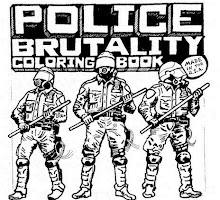
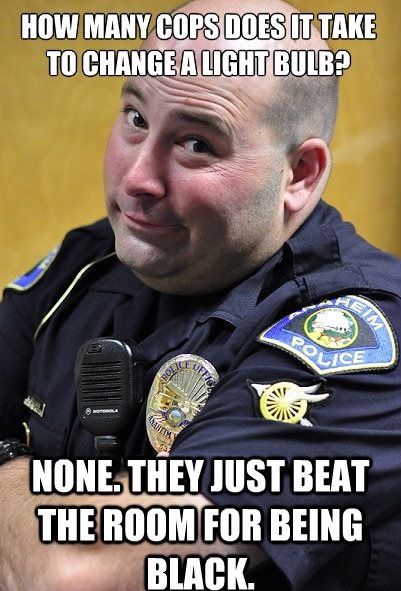
We called the Fairfax County police for help....the punks they sent threatened to arrest us. One cop tells my wife that if she keeps crying he'll arrest her and the other cop, La Forge or something, says to me "You call the police this what you get"
I said that was wrong and he said
"Go ahead, say more fuck'n thing prick" and I thought "Well if you insist".
on sale now at amazon
"I don't like this book because it don't got know pictures" Chief Rhorerer
“It’s becoming a disturbingly familiar scene in America - mentally unstable cops”
“It’s becoming a disturbingly familiar scene in America - mentally unstable cops”
Michael R. Houston has had a
lot of run-ins with law enforcement.
And early Monday morning, he
was arrested again. But this time, he found himself at a hospital with a minor
gunshot wound to his thigh as the result of an accidental firearm discharge by
one of the men sent to take him into custody.
According to a press release
from the Fort Wayne Police Department, members of the FWPD’s vice and narcotics
squad, as well as members of the Emergency Services Team, went to a home in the
300 block of East Branning Avenue at 6:40 a.m. Monday.
They were there to arrest
Houston, this time on four charges of dealing cocaine or heroin and three
additional charges of dealing cocaine. As they were taking him into custody, an
officer’s weapon fired accidentally, striking Houston in the thigh, according
to the press release.
Officers gave him immediate
assistance and rushed him to a hospital, where he was treated and released.
Houston remains in the Allen
County Jail on the aforementioned charges.
The unnamed officer who
accidentally shot Houston has been put on paid administrative leave, as is
department protocol.
SALT LAKE CITY — A dog was shot
and killed by Salt Lake City police in June of this year, and now the dog’s
owner says he is suing the police department for $1.5 million in damages.
Sean Kendall said police
violated his Fourth Amendment rights when an officer entered his backyard and
had a fatal encounter with Kendall’s dog, Geist. The dog was shot by the
officer, who said he felt threatened by the animal.
“Geist was my best friend for
two and a half years,” Kendall said.
Police said in the past they
believe they were justified in entering the yard, as they were searching for a
3-year-old child with disabilities who had been reported missing. That child
was later located inside the child’s home.
Kendall said the search was poorly executed and led to a violation
of his rights as well as in Geist’s
death.
Kendall had previously been
offered a settlement in the case, which he declined as he said he wanted to
focus on lobbying for change in the way officers are trained in encounters with
animals. He has been active in numerous protests regarding the way police
respond to animals.
Salt Lake City Police Department
officials declined to speak regarding the pending litigation.
FOX 13 News’ Caroline Connolly
has more on this story, see the video above for her report.
Adam Arroyo was at work on June
3, 2013, when he heard the news. "Adam, I'm sorry," he recalled his
landlord telling him. "They killed your dog."
Arroyo's landlord wasn't
talking about burglars. "They" were the Buffalo, New York, police,
and they had barged into his apartment, torn through his belongings, and killed
Cindy, his two-year-old pit bull, during a botched raid.
When he got home, he said,
"it looked like a tornado hit. My dog was missing, and there were bullet
holes and blood all over the walls."
Police later said that Cindy
had been "aggressive." But Arroyo, a 30-year-old Iraq war veteran,
insists the dog was chained when he left for work that day. It also turned out
that police may have hit the wrong apartment — Arroyo believes they were
targeting a neighbor who allegedly sold illicit drugs.
"That dog, everywhere I
went, she wanted to go with me. Those police, they don't know what they
did."
Arroyo and Cindy are not alone.
The Buffalo Police Department shot 92 dogs between January 2011 and September
2014, 73 of which died from their wounds, according to a recent story from
local news station WGRZ. Twenty-six of those shootings were the work of one
officer — and nearly all of those dogs died. For many critics, including
Arroyo, these shootings are a symptom of a larger problem in law enforcement.
"These police officers think
they're above the law," he said.
Since the summer, a national
discussion about the way officers use force on the job and whom they use it
against has dominated the news, sparked by the killing of several unarmed black
men by police — long a deep concern among civil rights activists. The deaths of
Michael Brown in Ferguson, Missouri, Eric Garner in Staten Island, and, most
recently, 12-year-old Tamir Rice in Cleveland, at the hands of local police
have sparked a roiling, emotional debate about the latitude police are given to
take lives, even when it is later discovered that a situation did not warrant
it. Police officers say this latitude is essential for their safety and the
ability to perform their jobs effectively.
This human toll is the primary
concern in protesting a system that gives law enforcement what many believe is
too much freedom to take lives and property. But for years, one of the ways
this multilayered story has played out is in the killing of dogs by police.
Police kill an untold number of
dogs a year
It's hard to know how many dogs
are shot by police — we don't even have a firm idea of how many people are shot
by police. But it's not just Buffalo. According to a 2011 report presented to
the US Department of Justice, a majority of shootings in most of the surveyed
police departments involve animals, particularly dogs. And based on media
reports, hundreds of dogs are shot by police each year.
Police in Milwaukee killed
roughly 48 dogs per year between 2000 and 2008, according to the Associated
Press. Officers in southwest Florida shot 111 dogs between 2009 and 2012, the
News-Press found. In metro Atlanta, according to a WSB-TV investigation, police
were responsible for the deaths of nearly 100 dogs from 2010 to 2012. And
Chicago police killed approximately 90 dogs per year between 2008 and 2013, the
Chicago Tribune reported.
The Washington Post's Radley
Balko has written extensively about police-involved dog shootings — including
dogs that are leashed and unleashed, puppies and seniors, and big and small,
with breeds ranging from chihuahuas to Labradors. The topic has a blog,
Facebook page, and subreddit dedicated to it. Reports from advocates or people
who lost their dogs at the hands of police flow into these repositories on a
daily basis. Here are a few examples:
According to an email sent to
the blog Dogs that Cops Killed, Megan Hood's dog, Blossom, was killed by police
in Jonesboro, Texas. But Hood said she wasn't told about the police shooting
until later, after a private investigator contacted her. Instead, she said, the
city government initially told her that her dog had been hit by a car and that
the Texas Department of Transportation had incinerated the body.
Sean Kendall got a call one day
that Salt Lake City police had entered his yard and killed his Weimaraner,
Geist. Police officers said they were investigating a missing child report and
the dog acted aggressively, but Kendall said officers could have backed out of
the yard and closed the gate to protect themselves.
In one case caught on a body camera, a police
officer in north Texas called a dog over to him and then shot it multiple
times. The officer claimed the dog showed signs of aggression, but that is not
visible in the available footage.
Los Angeles County Sheriff's Deputies on
December 5 shot and killed a family's pregnant pit bull, even though they went
through a gate with a "beware of dog" sign, reported CBS Los Angeles.
The dog's owner said the dog never attacked the deputies and that the deputies
either hit the wrong home or were responding to a prank call.
Arroyo, now a manager at a
cleaning company and member of the National Guard, said he still mourns Cindy.
He moved out of his previous apartment, which was stained with bad memories and
Cindy's blood, and currently lives with his uncle. He feels like no one is
being held accountable for the shooting.
For Arroyo, Cindy's friendship
was a way to cope with his loneliness after serving in Iraq. Arroyo bought
Cindy from someone who intended to put her in dog fights. His initial goal was
to save Cindy, but he quickly fell in love with the dog.
"I feel like I rescued
her," Arroyo said. "But at the same time, she rescued me."
Buffalo Police officials didn't
respond to multiple inquiries about an internal investigation into Arroyo's
case. They previously refused to provide an update to WGRZ.
In an interview with WGRZ,
Buffalo Police Chief of Detectives Dennis Richards said the dog shootings made
up a small fraction of the thousands of calls Buffalo Police officers respond
to each year.
"Officers generally shoot
to live. We don't shoot to kill," Richards said. "It goes to the
officer's safety and the safety of other people."
When can police shoot dogs?
Cynthia Bathurst, co-founder
and director of animal advocacy group Safe Humane Chicago, said there's not a
noticeable pattern in these dog killings. She said she's heard of it happening
in domestic dispute cases, SWAT raids, and even traffic stops in which a dog is
in the car.
Almost all of these shootings
were later found to be justified. But animal activists believe that part of the
issue is that cops are allowed, under the law and department policy, to use
deadly force too easily. If an officer merely thinks a dog is going to bite or
attack him, he's allowed to shoot — even if a dog doesn't pose a threat to the
life of the officer or others. And since dogs are considered property under
most state laws, the legal standards of probable cause and objectively
reasonable belief that apply to human shootings don't apply to dogs and other pets.
Based on media reports,
hundreds of dogs are shot by police each year
Even an unjustified shooting
likely won't land a police officer in jail or prison. But dog owners can and do
resort to civil lawsuits to claim damages for shootings, under the argument
that killing a dog unlawfully is akin to illegally seizing or destroying
property. There have been reports of proposed settlements as high as $10,000 in
Salt Lake City; $30,000 in Riverside, California; and even $225,000 in
Minneapolis, in a case that involved two dead dogs.
Arroyo is now pursuing a
federal lawsuit against the city of Buffalo for the raid and his dog's death.
He said the city offered him $1,000, which he decided wasn't enough. But he
also insisted the lawsuit has nothing to do with money. His concern is holding
the city and police accountable for their mistake, he said, and the only way to
do that may be to force a big payout.
"To me, it's not about the
money," Arroyo said. "I'm not the only person going through
this."
Advocates want better police
training and standards
The Buffalo Police Department
doesn't train for encounters with dogs, WGRZ reported. Just two states —
Colorado and Illinois — require such training, said Bathurst, although police
departments in other states might do so voluntarily or under local laws. The
hope for reformers is to get more cities, states, and police departments to
adopt similar standards.
Arroyo said he believes it's
only a matter of time until things change. "This is going to break,"
he said. "There's too many incidents for nothing to happen."
One barrier to change, Bathurst
said, is that police overestimate the threat posed by dogs. The number of
reported dog bites has decreased by as much as 75 to 90 percent, depending on
the city, since the 1970s, according to data compiled by the National Canine
Research Council (NCRC). And dog bite fatalities are extremely rare, resulting
in 32 deaths in 2011, NCRC reported.
"We don't want to
understate the importance of decreasing this number [of fatal dog bites],"
Bathurst said. "But they are, in general, minor."
The National Canine Research
Council and Safe Humane Chicago developed a series of videos that educates
police officers on how to read different breeds' body language, ways to get out
of a situation without resorting to force, and tools — such as Tasers, batons,
fire extinguishers, and chemical sprays — that can be used to stop a dog
without shooting.
At the very least, animal
proponents say police departments should begin better tracking their encounters
with dogs. Currently, federal and state data is spotty and scant on
police-involved dog shootings.
Dog shootings further distrust
between communities and police
"When [these shootings]
occur, they get more and more attention, and there's more and more concern in
the community," said NCRC spokesperson Janis Bradley. "It leads to
dog owners mistrusting the police, which is bad for everybody — it's bad for
the police, bad for the community, and, of course, bad for the dog."
Police officers are found to be
legally justified almost every time they kill a dog, according to police
shooting watchers and various media reports on dog shootings.
But a legal argument does
nothing to repair community mistrust when police actions make people feel that
the law is either not on their side or only on the side of a chosen few. Police
are also found to be legally justified nearly every time they kill a person,
and yet the Pew Research Center found that about 61 percent of all Americans —
and 93 percent of black Americans — score police "only fair" or
"poor" on "using the right amount of force for each
situation."
For Arroyo, there is little
police could do to give him back what he lost.
"She was my best friend.
That dog, everywhere I went, she wanted to go with me. It breaks my heart,"
Arroyo said. "Those police, they don't know what they did."
MISSOURI CITY, Texas (FOX 26) -
He violated not a single law but got grenaded, shot, stunned, beaten, jailed
and unjustly prosecuted for offenses that could have left him a felon.
The botched and unwarranted
2011 SWAT team raid in Missouri City left Chad Chadwick financially devastated
from legal expenses and living with both post-traumatic stress and permanent
hearing damage.
"It just sickens me that
these people can do what they are doing day after day and they have no
remorse," said Chadwick. "They don't care. They use their shield to
say we're here to protect you, but we may destroy your life in the
process."
"It's beyond race
now," said community activist Quanell X, who is helping Chadwick share his
story with the media. "Police misconduct is about power, the abuse of
power,"
But lingering outrage is where
the quest for accountability often stops.
FOX 26 legal analyst Chris
Tritico says Texas residents who suffer the consequences of misconduct by law
enforcement officers and overzealous prosecution have little or no recourse
because state lawmakers in Austin have granted blanket protection to both.
"Municipalities and their
employees are immune from action in state civil court for most things that we
would file against private individuals," said Tritico.
And prospects for justice get
little better at the federal courthouse where Tritico says those who claim
violation of their civil rights by police and prosecutors have to meet a very
difficult burden.
"Unfortunately, where we
live in the 5th Circuit Court of Appeals, the law is that you have to prove
it's the policy pattern and practice of the entire municipality to violate
someone's civil rights, not just that this officer violated your civil
rights," explained Tritico. "It's an almost impossible
standard."
It is a threshold a U.S.
District Court Judge in Houston says Chad Chadwick's case does not reach.
Chadwick has filed an appeal.
"All I really cared about
was what my kids thought of me," said Chadwick.
"If you are investigating
a possible suicide, there is no need to blow up two compression grenades and
beat the living crud out of someone,"said Tritico. "That's where this
fell off the map,"
A demonstration is scheduled on
Tuesday at 5 p.m. at the Missouri City Police Department in support of Chad
Chadwick and against misconduct by law enforcement officers.
After grand juries opted not to
indict police officers in the deaths of Michael Brown and Eric Garner, calls
increased among activists and some members of Congress to require special
prosecutors — not local district attorneys — to investigate cases of police
using deadly force.
Such requirements could be
difficult, but not impossible, to push from the federal level, according to a
Congressional Research Service legal analysis.
Demonstrators march in New
York, Saturday, Dec. 13, 2014, during the Justice for All rally and march. In
the past three weeks, grand juries have decided not to indict officers in the
chokehold death of Eric Garner in New York and the fatal shooting of Michael
Brown in Ferguson, Mo. The decisions have unleashed demonstrations and
questions about police conduct and whether local prosecutors are the best
choice for investigating police.
Demonstrators march in New
York, Saturday, Dec. 13, 2014, during the Justice for All rally and march.
Grand jury decisions not to indict police officers in the deaths of Eric Garner
and Michael Brown have unleashed demonstrations and questions about police
conduct and whether local prosecutors are the best choice for investigating
police. (AP Photo/John Minchillo)
Proponents of such a federal
law contend that the symbiotic relationship between prosecutors and the police
they work with in fighting crime creates a conflict of interest when a police
officer is suspected of misconduct.
“In the twin cases United
States v. Morrison and United States v. Lopez, the Supreme Court rejected the
argument that local crime had a sufficiently substantial effect on interstate
commerce to bring it within the scope of Congress’s Commerce Clause authority,”
the CRS analysis said. “It would appear that a similar argument that police
shootings substantially affect interstate commerce would be equally
unavailing.”
The Morrison case from 2000
found that some provisions of the Violence Against Women Act were
unconstitutional because Congress exceeded its power under the Commerce Clause.
The 1995 Lopez decision was a gun case in which the high court similarly
determined Congress misapplied the Commerce Clause.
Christopher Adkins, a criminal
defense attorney in Huntersville, North Carolina, said it’s rare that special
prosecutors are ever used. He admits as a former Charlotte police officer for
seven years, he’s conflicted because he wants what’s best for the officer, even
though he thinks the relationship with police and prosecutors is too close.
“Whenever there is a prosecution of police,
there most certainly is a conflict of interest,” Adkins told TheBlaze. “These
folks work together every single day and develop a relationship. A lot of time
things are either swept under the rug or it’s a small penalty. States do
whatever they can do to avoid prosecuting police.”
Special prosecutors have been
used at the state and local level for some time, well before the term became
better known for national cases during Watergate.
“Historically, special
prosecutors have been appointed to try criminal cases in two instances: first,
when the case poses a conflict of interest or some other disqualification for
the prosecuting attorney (such as when he himself is a criminal defendant),
and, two, to handle political or controversial prosecutions that government
officials fear will not be prosecuted absent a special counsel,” the CRS report
said.
A petition by the liberal group
MoveOn.org gathered more than 117,000 signatures that called for a special
prosecutor in the Ferguson, Missouri, case of Michael Brown.
Potentially, the most likely
way for Congress to intervene in a local investigation would be the use of the
purse strings, the CRS said.
“Congress might rely on the
Spending Clause to condition the acceptance of federal law enforcement grants
upon the states’ adoption of special prosecutor laws,” the analysis said. “This
route might alleviate concerns that Congress is interfering with the states’
criminal justice processes as the states can choose whether to adopt the
proposed changes.”
The proposed Grand Jury Reform
Act, sponsored by Rep. Hank Johnson (D-Ga.) would make federal law enforcements
funds contingent on the appointment of a special prosecutor to conduct a
probable cause hearing if there is a police misconduct case that led to
someone’s death.
The bill would essentially use
federal funds to nationalize the various state laws that already exist
regarding special prosecutor laws.
The state of New York allows
the governor to appoint a special prosecutor in such a case. Democratic
Attorney General Eric Schneiderman has called for Democratic Gov. Andrew Cuomo
to name a special prosecutor to reexamine the Garner case, who was killed
following a confrontation in Staten Island with a New York City police officer.
Missouri, where Brown was shot,
permits the appointment of a special prosecutor by the court presiding over the
case. Several other states allow a court to appoint a special prosecutor.
Connecticut is the only state
that automatically requires the appointment of a special prosecutor after
someone dies as a result of police using deadly force, according to the CRS
analysis. In California, the grand jury has the ability itself to appoint a
special prosecutor.
One other unlikely avenue for
Congress to intervene is through Section Five of the Fourteenth Amendment,
which allows the federal government to remedy constitutional violations. The
section says, “The Congress shall have power to enforce, by appropriate
legislation, the provisions of this article.”
“Under this theory, Congress
must identify a pattern of constitutional violations by state actors, but it is
far from clear whether the unconstitutional use of deadly force has been
pervasive enough to trigger Congress’s Section 5 remedial power,” the CRS said.
A veteran Edwardsville police
officer faces multiple charges after he has been accused of burglarizing homes
and businesses while on duty and in uniform.
Officer Brian Barker, 41, of
Moro was initially charged with burglary, a Class 2 felony, and official
misconduct, a Class 3 felony. He was accused of entering Reality Salon in
Edwardsville on Sunday and stealing money from the register while on duty.
Prosecutors since have added another 12 charges: 10 counts of burglary,
targeting Edwardsville businesses since 2012; one count of residential burglary
of a home in Moro, a Class 1 felony; and one count of aggravated possession of
stolen firearms, a Class X felony.
Madison County State’s Attorney
Tom Gibbons said Barker was found in possession of seven stolen firearms, which
had been stolen from individuals and from businesses. The businesses listed in
the indictments include Edison’s Entertainment, multiple law offices, The
Little Gym, Extreme Vapor, Edible Arrangements, Headstrong Hair, Afsanehs
Alterations and Pedegos.
Once the salon reported the
burglary and Edwardsville Police determined that the suspect was one of their
own, Gibbons said, Chief Jay Keeven immediately turned it over to the Madison
County Sheriff’s Department for an independent investigation.
Barker was being held on
$175,000 bail but he has since posted bond, Gibbons said. Barker has been
placed on administrative leave without pay.
Barker could not be reached for
comment Friday. Gibbons said he is not sure whether Barker has hired an
attorney.
Gibbons said the situation was
“really awful.” He was not sure how long Barker has been a police officer, but
believed it was at least 20 years.
“We put all this trust, faith
and power in police officers, but with that comes gigantic stresses,” he said.
“When they breach that trust, it’s so much worse ... The magnitude of this
breach of public trust necessitates a very harsh penalty, and we will be
seeking prison time.” The charges of residential burglary and possession of
stolen firearms cannot carry probation, and the latter carries a minimum
six-year sentence up to 30 years, Gibbons said. The burglary charges carry
penalties ranging from probation up to 15 years.
It is only the latest in a
series of problems at the Edwardsville Police Department. Last year, another
15-year veteran officer pleaded guilty to a felony count of unauthorized
recording after he was caught videotaping women at a tanning salon with his
department cellphone. He received a sentence of probation and lost his police
pension. Earlier in 2013, former police chief James Bedell pleaded guilty to
four counts of embezzlement and theft after he was caught stealing more than
$138,000 from city towing fees to support his gambling habit. Bedell is
currently serving a sentence of 18 months in federal prison.
Gibbons said that Edwardsville
Police, the sheriff’s department and Mayor Hal Patton had been fully
cooperative. “The moment they got notice of this, they’ve been all over it,”
Gibbons said. “They did everything they could possibly do under these bizarre
circumstances ... It’s really sad to see someone who’s supposed to be the good
guy go wrong. But the measure of character of leadership is what they do when
it happens. In this case, they absolutely did the right thing.”
Keeven said that police were
contacted by Reality Salon on Sunday evening, and on Monday morning, he asked
Sheriff John Lakin to take over the investigation. “It isn’t that I don’t have
faith in my investigators, but for the public trust, it’s best to have an
independent agency investigate your agency,” Keeven said. He said he had full
faith that Lakin and Gibbons would conduct a “fair and thorough” investigation
and prosecution.
Cynthia Van Patten, owner of
Reality Salon and Spa located at 4 157 Center, said in prepared remarks that
she called 911 after her security system detected motion in her business. She
meet with a police sergeant at her salon and they discovered a burglary had
occurred.
“I gave a statement to the
sergeant and I’m fully cooperating with the investigation,” Van Patten said.
“We are extremely disappointed that the person charged is a police officer but
are pleased that the small business owners that were affected by this will now
have resolution and justice.”
Keeven said the department was
“blindsided” by the allegations. “We feel like we’ve been kicked in the gut,”
he said. “It was a complete shock. I hate the fact that many officers are going
to be suspect now, just for the fact that they’re a police officer. The victims
are across the board: the families, the victims of the crimes, the police
department, the community as a whole ... Nobody wins.”
“I understand that human beings
are human beings and they are going to make mistakes and do bad things,” Keeven
said. “But it’s very hurtful when our officers work so hard to build trust
within our community, with all the things they do throughout the year ... Those
things are forgotten when someone causes embarrassment to our department.”
Patton apologized to those
impacted by the burglaries, and vowed that the city would fully cooperate with
the investigation. “We want to emphatically state that our community has been,
and will continue to be, a safe place to live and raise a family,” Patton said.
“I have great confidence in the current leadership team of our police
department and many of the officers known to me personally.”
Patton said an internal review
will go forward to ensure integrity is restored and maintained within the
department, and to encourage better communication between officers and
administrators to identify individuals who may have personal issues requiring
intervention or assistance. Both Patton and Keeven lauded the police officers
who volunteered their time with the recent Shop With a Cop program for
underprivileged children and worked with the Edwardsville NAACP to support
local children. “Please stand by me in support of our officers who do so much
good for all of us,” Patton said. “We would greatly appreciate the community’s
support as we work through this difficult time.”
Keeven said he did not believe
that Barker’s alleged actions reflected on the department. “The actions of one
individual are not indicative of the service that we provide to this community
on a daily basis,” he said. “Hopefully people can see that as it is: one person
making bad decisions ... versus the good work that many of our officers do
every day.”
Gibbons said investigators do
not suspect any other person to be involved. “But they are digging hard because
the chief wants to be sure,” Gibbons said. “Nobody is above the law.”
Posted by: Carlos Miller in Bad
Cop, No Donut, Citizen Journalism, Court Settlements, PINAC News, PINAC News
Top 3, Police Abuse, Recording the Police, The Blue Line December 26, 2014 47
Comments
A Florida man who was arrested
last year for video recording Orlando police making an arrest received a
$15,000 settlement this month.
His lawyers, however, might end
up making three times that much for working his case.
And the cop who arrested him,
seizing his phone as “evidence” as well as seizing another bystanders’s phone
remains on the job as if nothing had happened.
The only difference is that
Orlando police officer Peter Delio is now expected to follow a new departmental
policy requiring officers to respect the rights of citizens to record them in
public.
In other words, he is now
mandated by the department to follow the law.
But Delio has a long history of
complaints against him for being rude and abusive, so we shouldn’t expect him
to change his ways.
At least Alberto Troche is
$15,000 richer after having spent 15 hours in jail and having to wait three
weeks for them to return his phone last December.
According to the Orlando
Sentinel:
Troche and the city agreed to a
$15,000 settlement several weeks ago, according to federal court records.
Now, his lawyers have asked a
U.S. magistrate to make the city pay another $44,000 for the hours they worked
on the case.
The Orlando Police Department
has also changed its policies on how to handle people who video-record them in
action, said Troche’s attorney, J Marc Jones.
Officers may not order members
of the public to stop video-recording them or arrest or try to stop them, so
long as they are in a public place, have not crossed a police line and are not
interfering, according to a policy directive signed by Police Chief John Mina
two months after Troche filed suit.
Officers also may not demand
that a person recording them identify themselves, may not demand to know why
they are making the recording and may not intentionally block or obstruct their
camera, according to the directive.
“A bystander has the right
under the First Amendment to observe and record … (police officers) in public
discharge their duties,” the directive says.
Arbitrator orders Warren to
reinstate cop fired for cutting off woman's hair weave during arrest
WARREN, Mich. (WXYZ) - A Warren
Police officer who was caught on videotape hacking off a woman's hair is
getting her job back.
An arbitrator ordered that
Officer Bernadette Najor be reinstated. She had been fired following the
incident that occurred in November 2013.
7 Action News first reported on
the incident in January.
Many jails remove an inmate's
hair extensions because they could be used as a weapon, but Charda Gregory
didn't have extensions. Her weave was sewn into the braids on her scalp.
The firing stemmed from the
arrest of Gregory, a 22-year-old hair dresser who had been taken into custody,
accused of trashing a room at the Suez Motel on 8 Mile. At the time her lawyer,
Paule Misukewicz, said, "She had a couple of drinks, then woke up in a
strange place. Didn't know how she got
there, completely disoriented."
By the time she was brought in
to the jail lock-up on the top floor of the Warren Police Department, Gregory
had been pepper sprayed, but she appears calm.
However, it's clear in the
video that Gregory can barely stand as she comes face-to-face with Officer
Najor.
"She took it upon herself
to get the scissors. And for whatever
reason, decided that she was going to butcher my client," said Misukewicz
in January.
Video shows that as Officer
Najor pats Gregory down, the officer pushes Gregory against the wall twice.
Suddenly Najor starts going for
Gregory's hair. The officers struggle with Gregory, dragging her over to a
restraining chair to tie down her arms and legs.
Officer Najor starts yanking
Gregory's head from side-to-side, chopping out chunks of hair. It takes 3 full
minutes before Najor gives one final yank and removes what's left of Gregory's
weave.
Najor reportedly told police
officials that she had to remove Gregory's weave because of alleged threats of
suicide. For our original report, police officials said that was an explanation
that made no sense.
At the time of our original
report, officials also said this was not Najor's first discipline problem, but
they could not go into details, citing restrictions on what he can legally say
about a former employee.
7 Action News obtained Officer
Najor's personnel records – they show she was suspended without pay for 10 days
in 2010 for being "untruthful."
Despite several attempts to
reach Najor by phone for our original report, she refused to talk to us when we
caught up with her, instead screaming at 7 Action News Investigator Heather
Catallo as she tried to get Najor's side of the story:
"If that camera is on me I
will call the police! Call 911 right now!"
Because of what happened in the
jail, all of the criminal charges against Charda Gregory were dismissed.
Warren Police have issued the
following statement regarding the arbitrator's decision:
The City of Warren is in
receipt of an arbitrator's decision reinstating a police officer involved in a
highly-publicized incident in our jail.
The City strongly disagrees
with the arbitrator's decision. The
actions taken by the Warren Police Department were appropriate and required.
Despite that, this is a nation
of laws, and even where we believe that an arbitrator's decision is plainly
wrong, we will follow it.
This unfortunate set of
circumstances should not in any way detract from the brave police officers in
our police department who put their lives on the line every day. The City will continue to strive to make this
excellent police department even better.
Charda settled her lawsuit
against the city in February . Under the settlement agreement, the city of
Warren paid Gregory $75,000 and Gregory agrees to release the city, police
department and Najor from any future claims.
MILAN, N.M. —A local police
officer is facing serious charges after a night of drinking over Christmas took
a disturbing turn, according to investigators.
Milan police Officer James Watters,
25, is accused of getting an underage woman drunk and forcing her to perform
oral sex. The officer's mother swears her son is innocent.
"He goes, 'I promise, I
promise.' He goes, 'This is my life, this is my job.' I don't know, I don't
know what to think. This isn't James," Angela Hedrick said. "A part
of me wants to have so much faith in James, but then something happened because
why would he be in there?"
According to New Mexico State
Police agents, it all happened Christmas Eve.
Watters, Grants Police Sgt.
Jessie Nieto and Jessie Terrazaz -- a former court security officer for the
Cibola County Sheriff's Department -- picked up a 20-year-old woman.
All four allegedly drove to
Grants High School and drank alcohol.
The victim told investigators
the men kept asking her to perform oral sex or possibly have a threesome or
foursome. She told the men she didn't want to do it.
Agents said that at one
point the word rape was used and that's
when Nieto asked to be taken home. They dropped him off, but investigators said
the night didn't end there.
According to the statement of
probable cause, the victim told police she was brought to the New Mexico State
University Grants Campus, she was given more alcohol and told police she was
sexually assaulted.
Investigators said Terrazaz
made the woman sexually touch him and Watters then forced her to perform oral
sex on him.
Both men spent Christmas Day
giving their side of the story to state police and both ended up behind bars.
"I honestly feel that my
son didn't do it. But, only time will tell. The truth will come out. That's
what I am waiting for," Hedrick said.
Watters has been with the Milan
Police Department for about five months. His mother tells Action 7 News before
that he was a firefighter for about four years and has three small children.
As of Friday night, Watters was
still behind bars.
The Cibola County Sheriff's
Department said Terrazaz was fired from the department years ago for
misconduct. It was related to a domestic violence incident.
In a bit of news that will
shock citizens based on the recent trend around the nation, a former Atlanta
police officer was sentenced to 10 years in prison for using excessive force.
But before you start throwing babies
up in the air in celebration, the White officer was convicted of police
brutality against a White victim. In fact, the victim says he was “attacked for
being White in a Black neighborhood,” the AJC reports.
A jury found former officer
Nick Dimauro guilty on four of five charges, including aggravated battery,
guilty of aggravated assault and guilty of two counts of violation of oath of
office.
As a consequence for his
belligerent disregard for the laws he was supposed to uphold, the judge sentenced Dimauro to 10 years, with
five to serve in prison.
Here’s the lowdown: Dimauro
reportedly stopped Robert Wormley in a northwest Atlanta neighborhood at 2:30
a.m. four years ago.
Shortly after questioning,
Wormley allegedly took off, but Dimauro caught up with him in a backyard in the
neighborhood then beat him with his baton, severely injuring him. Wormley spent
four days in the hospital with broken teeth, broken ribs, a concussion and
other injuries.
Dimauro said Wormley fought
him, and he used his training to detain him.
One of Dimauro’s former partner
was near tears as he told the judge it’s easy to condemn officers for mistakes
the make in split-second decisions, WSBTV reported.
“What he did was his job. The
fact that some people can sit around in an office and make it look like he did
something else will only hurt what other officers are going to do in the
future,” said the officer.
The judge was unmoved by the
testimony.
“My sentence is going to be 10
years, to serve 5 years in custody,” said the judge.
Rome police officer will spend
six months in jail for sexually assaulting his 17-year-old babysitter.Jason
Paul was sentenced to 10 years of probation.
He will also have to register has a level one sex offender for 20
years. Paul pleaded guilty to third degree
rape in September after admitting he had sex with the baby sitter after she
said no. Before he was sentenced Paul started to cry when he said he was sorry
from the bottom of his heart.
YUBA CITY (CBS13) – One of the
top police officers in Sutter County is behind bars tonight on child abuse
charges.
Yuba city police arrested
Sutter sheriff’s Captain Lewis McElfresh, Jr. on Tuesday afternoon. Police say
the victim is a female teenage family member.
We learned of the arrest just
hours ago, and tonight, detectives are still doing interviews.
McElfresh went from running the
Sutter County Jail to sitting behind bars himself next to some of the very
suspects he helped arrest.
“My concern is too many parents
wanting to facilitate alcohol parties,” said McElresh during an interview with
CBS13 in May.
Now he’s the subject of a child
abuse investigation.
“Our investigators did look
into the allegation and subsequently made the arrest at the Sutter County
Sheriff’s Department,” said Yuba City Police Department spokesperson Ofc.
Shawna Pavey.
Police took the report Monday.
By Tuesday, McElfresh was facing charges.
Authorities released few
details, echoing something McElfresh told us in 2011: “If I give you the
specifics, it can compromise what we’re doing.”
A woman who answered the door
at his last-known address in Yuba City said she just bought the place a week
ago.
Neighbors say he’s married with
a daughter, but kept to himself.
“He was pretty much all
business, but nice, you know? He always said hello,” said Judy, a former
neighbor.
According to his bio, Captain
McElfresh is a military veteran who served in Operation Desert Shield and
Desert Storm.
He was hired by the sheriff’s
office more than two decades ago, and today is one of its highest-ranking
members.
McElfresh’s bio also says he
spends his free time with his daughter. Police would not say what relationship
he has with the alleged victim, confirming only the teen girl — over the age of
14 — Is a relative.
We’re told by police the victim
is OK and did not require hospitalization.
It will be up to the Sutter
County sheriff whether to keep McElfresh at the county jail or transfer him
elsewhere. He is being held on $5 million bail.
A Dalton Police Department
officer arrested for child molestation was placed on administrative leave nine
days ago after allegations surfaced and is expected to be fired.
Daniel Harrison Tolbert, 32,
was arrested today and booked into the Whitfield County jail.
Tolbert was placed on
administrative leave “immediately after being informed by the Whitfield County
Sheriff’s Office and Georgia Bureau of Investigation (GBI) that he was being
investigated on suspicion of child molestation,” according to a press release from
the Dalton Police Department.
While Tolbert is currently on
administrative leave, the city will begin the process of his termination
immediately.
“I am very disappointed to hear
about this allegation, and upset about the discredit this will surely bring on
our department, and officers,” Dalton Police Chief Jason Parker said in the
press release. “We would never condone or support the kind of behavior that
would warrant this charge ... the men and women of this department hold
ourselves to a very high standard of behavior, and we know the community we
serve expects our behavior to be beyond reproach.”
Tolbert has served the Dalton
Police Department for three months after completing the police academy in
September. He was sworn in on Sept. 16. At the time of his suspension, Tolbert
was still in the department’s field training program. Because of his status as
a trainee, Tolbert was never unsupervised or alone while on duty as a Dalton
officer. Probationary trainees ride with an experienced training officer for
three phases of field training for at least four months after completing the
police academy.
Tolbert is a native of
Fayetteville, where he graduated from Lovejoy High School, according to
information on the Dalton Police Department blog. Tolbert continued his
education, graduating in 2006 with a bachelor’s degree in political science
from Fort Valley State University. In 2012, he received a master’s degree in
criminal justice from Georgia College and State University.
Before Tolbert joined the
Dalton Police Department, he had a law enforcement background. He worked for
the U.S. Border Patrol in California and was a jail deputy with the Clayton
County Sheriff's Office. Tolbert served in the U.S. Army from 2006 to 2008.
Prosecutor says he was blocked
in Fairfax County police shooting probe
FAIRFAX, Va. (AP) — Fairfax
County's top prosecutor says he was thwarted in his criminal investigation of a
fatal shooting by a county police officer by the county's refusal to release
records to him.
Commonwealth's Attorney Ray
Morrogh, in a letter to a U.S. senator made public Tuesday, said county
attorneys refused to release internal affairs records of the officer who shot
46-year-old John Geer of Springfield in August 2013.
The Geer shooting has attracted
the attention of U.S. Sen. Charles Grassley, R-Iowa, and others because no
decision has been made on whether to charge the officer nearly 18 months after
the shooting.
Morrogh said the refusal of the
county attorney — a separate office — to cooperate forced him to refer the case
to federal prosecutors.
Geer's family has filed a civil
lawsuit.
Fairfax Co. will comply with
order, release fatal shooting evidence
By Megan Cloherty |
@ClohertyWTOP
WASHINGTON – Fairfax County
will not appeal to a judge’s order to turn over evidence related to the fatal
police shooting of a Springfield man more than a year ago.
In August 2013, an unnamed
Fairfax County police officer, responding to a 911 call, shot John Geer, who
was unarmed, in the doorway of his home after a more than 40-minute standoff.
The case had idled until Monday
when Judge Randy Bellows ordered police to turn over evidence related to the
shooting, including the name of the officer who shot Geer.
In a short statement from the
county, Tony Castrilli with the Fairfax County Public Affairs Department, says
the county will comply with Bellows’ order and will not appeal the decision.
Geer’s long-time partner Maura
Harrington sued the county in September for $12 million in order to get answers
for herself and Geer’s two daughters, she said at the time.
“(The family) can finally see a little light
at the end of the tunnel,” says Michael Lieberman, the Geer family’s attorney.
“Soon they’ll know why a loved one was lost.”
Based on the order, the police
department has 30 days to turn over evidence from the case to the Geer family
attorneys.
Want to change the way the Fairfax County Police act?
Fire the people who hire the cops and watch how quickly things change....star with the worst of the lot, Sharon Bulova. She refuses to take a stand against the brutality of the Fairfax County Police. Throw her out of office.
God bless this man
Make this national
Total Pageviews
.
Morrogh finds cop he doesn’t love. In other news, hell freezes.
Probe of fatal police shooting goes to federal authorities
By Justin Jouvenal/Post
The Fairfax County prosecutor has turned over the investigation of a fatal police shooting of an unarmed Springfield man to federal authorities, citing complications with the five-month-old case.
Commonwealth’s Attorney Ray Morrogh said the U.S. attorney’s office for the Eastern District of Virginia has agreed to continue the probe into the death of 46-year-old John Geer, who was shot during a standoff with Fairfax County police in August. No one has been charged in the incident.
“There is a conflict of interest that has arisen in the case,” Morrogh said Thursday. “And there is a second potential conflict of interest that has arisen out of my office. . . . This is the prudent thing to do.”
Morrogh declined to describe the nature of the conflicts because the investigation is ongoing. The U.S. attorney’s office said Thursday that it could not confirm or deny any investigation or comment on pending investigations.
Police went to Geer’s Pebble Brook Court home on Aug. 29 because of a report of a domestic disturbance. Geer’s father, Don Geer, said his son was upset because his girlfriend, the mother of his two children, had decided to leave him.
John Geer had thrown his girlfriend’s belongings in the front yard. She called police and told them that Geer had a firearm. Police said they tried for about 50 minutes to persuade Geer to leave the home, but he refused.
Don Geer said he watched the climax of the encounter. He said that he could not hear what officers were saying to his son but that he saw him standing with empty hands resting on top of a screen door at the home’s entrance.
At some point, John Geer began to slowly lower his hands and an officer opened fire, hitting Geer in the chest, his father said. Geer retreated inside and closed the door. A SWAT team eventually entered the home and found Geer dead.
Don Geer said detectives later told him that his son did not have a gun on him at the time of the shooting but that there was a holstered handgun a couple of steps from the front door.
Don Geer said it appeared to him that the shooting was unjustified, but he was unsure what to make of the probe being turned over to federal authorities.
“I don’t know whether that’s good or bad — if I had a better idea of why they are doing it, I could form an opinion,” he said.
Geer and friends of his son have been critical of how long the investigation has taken, but Morrogh said police and prosecutors were working to explore all the evidence. He did not think federal prosecutors would have to start from scratch.
“No one wants these things to linger on,” Morrogh said.
White trash special
“Shazam and Yeha doggie! I betha they let me take this har little beauty home ma sister date me again!”
Our ink will outlast his career
Under the reign of former Chief of Police Rhorer the Fairfax County Police arrested a man for not wearing clothes in his house while he made coffee, set up an eye doctor on a gambling charge and then used the SWAT team to kill him. An investigation into the charge that the Doctor’s primary clients were cops has never been investigated. The police gunned down an emotionally unstable man because cop who shot him wrongly assumed the man was trying to escape. He wasn’t. The cops also shot dead four other citizens under highly questionable circumstances. The department under Rhorer was sued multiple times by citizens. So did they fire Rhorer? Naw they promoted him. According to news reports Rhorer draws a salary of $191,168 per year as Deputy Fairfax County Executive as well as a concurrent pension from the Fairfax County police of $173000 per year.
Occupation by force
According to the most recent U.S. Census figures, nearly one in five Fairfax residents (17.5 percent) is of Asian descent while Hispanics make up nearly 16 percent of Fairfax’s overall population. Those numbers drop considerably when applied to the Fairfax County Police Department, where only 4.3 percent of officers are Asian and 4.1 percent Hispanic. White officers make up 84 percent of Fairfax County’s 1,360-member police department, significantly higher than the county’s general population (54 percent white). Almost 90% of the force lives outside the county.
The Cops and AI, bad idea
-
The Fairfax County Police have, in recent memory, murdered innocent
citizen, and, generally speaking, the cops who pulled the triggers got away
with it....
Artikel Sudah Publish
-
*Link Judul Publis* Ini Kontent Awal Ini Kontent Awal Ini Kontent Awal Ini
Kontent Awal Ini Kontent Awal Ini Kontent Awal Ini Kontent Awal Ini Kontent
A...
The most amazing outcall escorts in London
-
Only with the wonderful services of Nyx Escorts will you be able to find
the most beautiful and amazing outcall escorts in London. We are the best
provider...
John Geer killing
-
Geer case has Fairfax supervisors taking another look at attorney
By Tom Jackman and Antonio Olivo February 27
Members of the Fairfax County Board of Superv...
Sex crimes by your local police
-
*Memphis police officer charged with solicitation of a minor*
Yolanda Jones
Memphis police officer Derrick Abdul-Wakil is due in court Monday after he
was a...
its out money, not the cops money
-
Fairfax County police have spent $1.3 million on weapons and protective
gear, $561,000 on buildings and improvements and $208,000 on electronic
surveillanc...
Metro police officer charged with rape
-
A Metro Police lieutenant was arrested on Friday after being indicted on
charges of raping a woman with whom he had a long-term relationship.
Police said ...
Toledo police officer charged in shooting plot Lt. Ramirez charged with felonious assault, obstruction, evidence tampering A Toledo po...
Okay you wanna hear it?
"Let us hear that concern. We are not hearing it from anybody except the media, except individual reporters." Fairfax County propaganda expert Mary Ann Jennings on why her department won't release the incident report on the Master's killing.
Okay Mary, here you go Babe.......................Any other requests?
Fairfax County Police: They have to much money and not enough to do
Fairfax County Police: They have to much money and not enough to do
Chief Roooarerer protecting us from us............it made more sense when he said it
Remember the lead singer from "Queen"? Is it just me or....


.jpg)