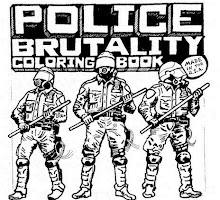
on sale now at amazon

on sale now at amazon
"I don't like this book because it don't got know pictures" Chief Rhorerer

“It’s becoming a disturbingly familiar scene in America - mentally unstable cops”

“It’s becoming a disturbingly familiar scene in America - mentally unstable cops”

Albuquerque's settlement costs rise in 2010, 2011

The Associated Press

ALBUQUERQUE, N.M. —

Over the past two years combined, the city of Albuquerque has paid out more than $8 million to settle police misconduct cases.

The Albuquerque Journal reports (http://bit.ly/yx9Fmk ) that in the previous eight years, the city had paid nearly $10 million to resolve such cases.

Mayor Richard Berry has done away with his predecessor Martin Chavez's policy of settling a limited number of cases.

Chavez, now running for Congress, in the past has defended his limited settlement policy and has said the city prevailed in almost every case instead of paying out.

But Rob Perry, Albuquerque's chief administrative officer, said the Chavez administration saddled Berry's team with a high number of unresolved cases and said that while payouts have gone up, the city could have lost more money in some cases if it had gone to trial.

All but five of the 60 payouts in 2010 and 2011 stemmed from cases that were initiated during Chavez's tenure as mayor, Perry said. The city felt it was in its best economic interest to settle some of the cases, he said.

A statement from the president and vice president of the Albuquerque Police Officers Association says the policy shift amounts to a lack of support for police officers from the city administration.

There are cases stacking up that were initiated since Berry took office.

There were 20 police shootings between January 2010 and August 2011, 15 of which were fatal, and they have spawned at least a half-dozen lawsuits.

Chavez's no-settlement policy wasn't hard and fast, especially toward the end of his time in the mayor's office.

In July 2009, the city agreed to pay $575,000 to settle a civil lawsuit brought by a woman who said she was taken out of a hospital and raped by an on-duty Albuquerque police officer.

Chavez's last year in office, 2009, saw a handful of cases settled. More than $2.7 million was paid out that year.

Meanwhile, it is not unusual to have cases carry over to a new administration.

When Chavez took office for the second of his three mayoral terms at the end of 2001, there were numerous police misconduct cases already sitting on his desk from former Mayor Jim Baca's term. All but one of the cases resolved during Chavez's first two years in office were filed under Baca.

Attorney Joe Fine, who has represented clients in police misconduct cases, said the no-settlement policy contributed to a lack of accountability among Albuquerque officers.

"Mayor Chavez's policy of not settling police misconduct cases might have saved the city money on a short-term basis, but if this penny-wise, pound-foolish policy had continued, it would have resulted in more needless injuries and, in the long-run, a greater financial loss," Fine said.

Perry said addressing the accountability issue was among the reasons for changing the policy, but that does not amount to a lack of support for officers.

"We support our officers, but when it comes down to financial decisions, those are not made by the officers," he said.

The city is likely to continue considering officer misconduct claims on a case-by-case basis, Perry said. After an onslaught of revelations involving police misconduct, the possible underreporting of crimes and secret undercover operations funded by a prominent businessman, Memphis Mayor A C Wharton said Saturday that an outside review of the force is imminent.

·         The mayor said he signed a contract with a Washington-based organization called Police Executive Research Forum (PERF) last month, and that it will be given free rein to review operations of the Memphis Police Department starting this week.

·         "We've been negotiating this for almost a year," said Wharton. "It's not a reaction to recent events, but maybe we need to expand that scope."

·         It's important to note that PERF doesn't come into a city with the intent to investigate corruption, Wharton said, but rather to look for systematic gaps or weaknesses in organization, personnel and employment.

·         With the first month of the year not even over, Memphis police officers so far in 2012 have faced charges of shoplifting, harassment, computer fraud, child sex and attempting to buy drugs.

·         Most recently, officer Melvin Robinson was arrested Thursday for allegedly putting what he believed to be 10 kilograms of cocaine in the back of his squad car. He faces federal drug charges and was relieved of duty with pay pending an investigation.

·         Wharton didn't mince his words on the subject.

·         "I can't tell courts what to do, but he should be fired with absolutely no possibility of reinstatement even if the charges are reduced," he said. "It should be done as quickly as possible and will be."

·         A month ago, another officer, Michael Sinnock, was charged for allegedly trying to buy marijuana and hydrocodone while on duty. In November, officer Tramaine Johnson was arrested in Nashville for possession of marijuana and drug paraphernalia during a routine traffic stop. And in October, officer Eric Johnson was indicted as part of a 25-person drug ring that trafficked more than 2,200 pounds of marijuana.

·         Part of the solution to the problem of police misconduct, Wharton said, is a more stringent screening process for prospective officers.

·         And Memphis Police Association president Michael Williams agreed.

·         "When they lowered the standards a couple years ago, they got a lot of officers that are not living up to what is expected of us," said Williams, referring to lessened education requirements that were later reinstated.

·         Still, most of the approximately 2,400 MPD officers "do what they are supposed to do," said Williams.

·         On the subject of the 79,000 crimes recorded in the last five years as "memos" rather than full police reports, Wharton's message was one of reassurance.

·         The Commercial Appeal quoted Police Director Toney Armstrong saying hundreds of the memos should have become "full-blown reports," which would have been included in statistics. But even if they had, Wharton said, crime statistics still would have shown a marked decline.

·         The mayor added that department officials had not been trying to manipulate numbers to show lower crime levels.

·         "If someone wanted to really juggle numbers, I think they could have found a better way than to write a memo and leave it for whole world to discover," he said.

·         Despite former police director Larry Godwin's assertion that the memo review was an attempt by the new regime to tarnish his name, Wharton said it wasn't personal.

·         "The Memphis Police Department can't run a city by looking backwards, trying to vilify someone," he said.

·         Yet Wharton was less specific when discussing findings from a recent audit of the department's undercover unit, specifically businessman Nick Clark's loans to the department amounting to hundreds of thousands of dollars for secret operations, as reported by The Commercial Appeal on Friday.

·         "Why I was not shocked by that operation is that as a former defense lawyer, I know it would be the epitome of naivete to think a big-city police department does not have a real sophisticated 'front' operation.

·         "I'm letting the police work. I don't think it's proper for a mayor to know all the inner workings of undercover operations. ... But if we need to do this going forward, it will be done with the right precautions."

Cranston police find 25 more unrecorded complaints

police officials say they've discovered another 25 complaints against officers that weren't properly recorded and they're trying to figure out why.

The Providence Journal reports ( http://bit.ly/x9WK0A) that the complaints include allegations of excessive force and misconduct that were not properly recorded between 2006 and 2009. That brings the number of missing complaints that have been found to 66. The additional 25 complaints were found in the two years since an audit of the police department's internal affairs office.

Col. Marco Palombo says police officials are searching for explanations.

Most of the complaints were made during the tenure of former Police Chief Stephen McGrath, who didn't respond to a request for comment by the newspaper.

Albuquerque Police Misconduct Payouts Soar

By Jeff Proctor
Albuquerque Journal, N.M.

The cost totaled $8 million in 2010 and 2011 combined compared with just shy of $10 million paid out in cop cases over the course of the eight years prior.

Police misconduct cost Albuquerque taxpayers more than $8 million in 2010 and 2011 combined.

That's compared with just shy of $10 million paid out in cop cases over the course of the eight years prior.

Shortly after taking office in December 2009, Mayor Richard Berry did away with his predecessor Martin Chavez's general policy of not settling police misconduct cases -- a practice harshly criticized by a federal judge. The change was condemned by the police union, but praised by lawyers who represent plaintiffs.

Chavez, now running for the congressional seat that represents Albuquerque, has been a strong defender of his limited settlement policy.

"We already know (the policy) has been incredibly successful financially for us," he said in 2005. "Instead of paying out on every case, we're prevailing in almost every case."

But Rob Perry, Albuquerque's chief administrative officer, said the Chavez administration saddled Berry's team with a high number of unresolved cases and said that while payouts have gone up, the city could have lost more money in some cases if they had gone to trial.

The city has spent at least $19 million on police misconduct cases in the past decade. That includes fees and costs for plaintiffs' attorneys, but not what the city has spent on its own lawyers. Those figures were not available.

Berry directed Perry, who was then city attorney, and others to review the nosettlement policy and decide whether considering officer misconduct claims on a caseby-case basis might work better.

"We had a lot of major cases in the pipeline," Perry said, adding that all but five of the 60 payouts in 2010 and 2011 stemmed from cases that were initiated during Chavez's time as mayor.

"We had hoped that the previous administration would've dealt with them, but it didn't. It appeared clear that the liability was going to be fairly strong against the city in a lot of these cases ... It was a difficult decision, but we thought it was in the city's best economic interest to settle."

Only two of those 60 cases went to court -- a 2002 civil rights claim in which a man was traumatized by police questioning him in his home about a crime he was never suspected of committing and a 2009 officer-involved shooting.

The latter resulted in a $4.25 million judgment against APD -- which was reduced to $417,000 because of a state law that caps payouts -- and a stern dressing down from a state District Court judge who said the department's policies are "designed to result in the unreasonable use of deadly force."

City Councilor Ken Sanchez said he favors considering each case on its merits, but settling 58 of 60 cases is "a problem," he said.

"It seems like we've just gone from one extreme to another," Sanchez said.

Perry acknowledged that the shift in policy is at least partially responsible for an increase in payouts under Berry.

A statement from the president and vice president of the Albuquerque Police Officers Association says the policy shift amounts to a lack of support for police officers from the city administration.

"We are trained to make life-altering decisions in an instant," says the statement, which is signed by union president Joey Sigala and vice president Felipe Garcia. "When that instant becomes clouded by the sensationalism of these claims and the feeling that (officers) will receive no support from the city administration, it can cause hesitation. This hesitation can potentially cost (officers) their lives and the lives of those they are sworn to protect."

There are cases stacking up that were initiated since Berry took office.

There were 20 police shootings between January 2010 and August 2011, 15 of which were fatal, and they have spawned at least a half-dozen lawsuits.

Perry said he couldn't comment on the pending lawsuits, but said the city will carefully consider each one.

"If they are close calls where reasonable minds could differ, those cases should be heard in open court," he said. "Because there have been a lot of serious allegations (made by critics of APD and the shootings) maybe that's something that's best decided in the full light of day."

Some exceptions

Chavez's no-settlement policy wasn't hard and fast, especially toward the end of his time in the Mayor's Office.

For example: In July 2009, the city agreed to pay $575,000, including attorney fees, to settle a civil lawsuit brought by a woman who said she was taken out of a hospital and raped by onduty Albuquerque police officer David Maes.

Deputy City Attorney Kathryn Levy said at the time that the settlement represented "an extremely limited exception" to Chavez's no-settlement policy.

Earlier that year, the city reached a $685,000 settlement in a lawsuit filed by the family of Randi Regensberg, a 21-year-old woman who was killed in a murder-suicide by her estranged boyfriend, Cory Kotrba, in 2006. At the time of that settlement, Levy said the policy didn't apply since the lawsuit was not alleging excessive force and it dealt with systemic issues.

In 2005 and 2006, the city paid more than $900,000 to settle claims of sexual assault brought by women against former APD officer Christopher Chase, who was convicted criminally of criminal sexual penetration. Chase's actions also cost the city more than $1 million after a federal jury verdict.

Chavez told the Journal in 2005, after the first settlement in the Chase case, that he was fine-tuning the nosettlement policy.

"That still brings to the fore the question of what happens when there's clear liability. I have no interest when you get a creep like Chase, making a victim go through the rigors of proving liability."

Chavez's last year in office, 2009, saw a handful of cases settled. More than $2.7 million was paid out that year.

Meanwhile, it is not unusual to have cases carry over to a new administration. When Chavez took office for the second of his three mayoral terms at the end of 2001, there were numerous police misconduct cases already sitting on his desk from former Mayor Jim Baca's term. All but one of the cases resolved during Chavez's first two years in office were filed under Baca.

Gumming up courts

CAO Perry said the most important factor in doing away with the no-settlement policy was "doing what's right for the taxpayer."

In contending some cases would cost taxpayers more if they went to trial, Perry pointed to the wrongful arrest of Gabriel Gonzales in 2005. Gonzales had confessed to murder, Perry said, but was later proven innocent. He sued the city.

In July 2010, the city agreed to a structured settlement that cost $1.2 million including attorneys' fees.

"If we had gone to trial there, we very well could've lost $2 million, plus another $500-$700,000," Perry said.

The city's reputation in federal court also weighed on the decision, he said.

In December 2008, U.S. District Judge M. Christina Armijo found that: "Refusing to make a good-faith effort to settle cases, while at the same time declining to devote the resources necessary to perform the additional trial work generated by this refusal, can be seen as an effort to avoid the burdens of litigation altogether so as to deprive the plaintiff of his day in court. Such a 'no-litigation' policy reflects a high degree of culpability, is unfairly prejudicial and interferes with the judicial process."

Armijo's 39-page opinion came in the lawsuit filed by Justin Graham over a March 23, 2004, incident at his home. A jury returned a verdict awarding Graham more than $35,000 in damages.

Armijo found that delays by the City Attorney's Office in preparing the case for trial, coupled with the city's "no settlement" policy in cases alleging police misconduct, left Graham with virtually no means of resolving his claims efficiently.

The policy of taking to trial any civil rights claim against APD inevitably means more pretrial legal work for the city, Armijo noted.

Chavez said at the time that: "The policy has served the dual purpose of avoiding the expenditure of tax dollars on frivolous lawsuits and shedding light on police practices."

No accountability

Albuquerque attorney Joe Fine, who has represented clients in police misconduct cases, said the no-settlement policy contributed to a lack of accountability among APD officers.

"Mayor Chavez's policy of not settling police misconduct cases might have saved the city money on a shortterm basis, but, if this pennywise, pound-foolish policy had continued, it would have resulted in more needless injuries and, in the long-run, a greater financial loss," Fine said. "While in the short-term the city is likely to pay less money by applying a 'no settlement policy,' in the long-term, the culture created would result in more unjustified police shootings and more money spent by taxpayers.

"Mayor Berry's policy of settling meritorious police misconduct cases and holding police officers responsible will erode the culture of non-accountability created by the (policy) and will result in fewer unjustified shootings and a substantial savings to taxpayers."

CAO Perry said addressing the accountability issue was among the reasons for changing the policy, but he said that does not amount to a lack of support for officers.

"We support our officers, but when it comes down to financial decisions, those are not made by the officers," he said. Perry said the city is likely to continue considering officer misconduct claims on a case-by-case basis.

He said it's too early to say whether the shift in policy has worked.

"We're continuing to learn, but it's hard to look at an objective decision about whether you should settle or try cases based on two years with backlogged case," Perry said. "If settlement vs. nosettlement works as a global approach? We would need more than two years to see."


California cops shoot and kill fellow officer suspected of sexual misconduct while trying to arrest him


The officer was manning a DUI checkpoint when the shooting occurred shortly after 1 a.m

By The Associated Press / NEW YORK DAILY NEWS


SANTA MARIA, Calif. — A police officer under investigation for sexual misconduct with a teenage minor was shot and killed while on duty by fellow officers Saturday as they tried to arrest him on California’s central coast, authorities said.

The officer was manning a DUI checkpoint when the shooting occurred shortly after 1 a.m. He was declared dead after emergency surgery at Marian Medical Center, Santa Maria police Chief Danny Macagni said in a statement.

The officer, a four-year Santa Maria department veteran, had just learned of the internal investigation of an alleged sexual relationship with a 17-year-old girl, and it became necessary to arrest him immediately, Macagni said.

“We had no choice,” Macagni said in video of an afternoon news conference posted by KCOY-TV. He said investigators had evidence “that demanded that we go out and take this officer off the street immediately.”

Supervising officers were sent to make a felony arrest, but he struggled with them when they arrived, first putting up a physical fight, then firing his gun but hitting no one, Macagni said.

“He chose to resist, he drew his weapon, a fight ensued, he fired his weapon,” the chief said.

Several officers came to help the police making the arrest, and one of them shot the suspected officer in the chest once, Macagni said.

Detectives had begun investigating the alleged relationship on Thursday night, and minutes before the shooting had confirmed that an “inappropriate” and “very explicit” relationship had been going on, Macagni said.

He said he could not give details because of the sensitivity of the investigation, but “there was some witness intimidation involved” and the arrest couldn’t wait for a more proper time or place.

“The information that we had in hand demanded that we not let him leave that scene, get in a car, drive somewhere, it would put the public at risk,” Macagni said at the news conference. “We just did not know what was going to happen, we did not expect him to react the way that he did.”

Macagni said police had expressed condolences to the officer’s family.

The officer who fired the fatal shot, an eight-year department veteran, has been placed on administrative leave, and the Santa Barbara County Sheriff’s Department was investigating the shooting, Macagni said.

The name of the officer killed has not been released because some family members were still being notified, and the name of the officer who fired the shot was withheld while the incident was under investigation, police said.

Santa Maria is a city of some 100,000 people about 60 miles northwest of Santa Barbara and 160 miles northwest of downtown Los Angeles.


Jail deputies investigated

FREMONT -- A city police detective is still looking into allegations of employee misconduct at the Sandusky County Jail, Chief Tim Wiersma said Friday.
Three corrections deputies -- Charlie Pump, Franklin Kaiser and Joshua Smith -- were placed on paid administrative leave Jan. 11, "pending the completion of an investigation for violation of work rules and policies," according to letters in their personnel files.
Two of the deputies have not been with the sheriff's office long and have relatively clean records, but the more senior of the three has a personnel file filled with reprimands and letters requesting he improve his performance.
Kaiser has received five official verbal warnings and three written reprimands for insubordination, alleged abuse of the sick leave system, sleeping on the job and other policy violations since his hiring as a corrections deputy in 2004.
In a 2008 letter, Capt. Diane Blue asked Kaiser to correct inappropriate behavior including reading when he should be working, passing gas in front of other employees and discussing his sexual behavior in front of co-workers.
"I am concerned about the nature of your attitude and laziness over the past few weeks," Blue wrote.
In a letter attached to the most recent written reprimand in October 2009, county jail administrator Maj. Tom Fligor wrote, "Your violations this year show a Progressive Discipline pattern."
In a May 2009 written reprimand for calling off sick the day before a scheduled day off, supervisors wrote, "You have a severe pattern of calling off sick in conjunction with days off." Another written reprimand was written in March 2009 after a supervisor reported twice overhearing Kaiser snoring during work hours.
In 2007, an inmate accused Kaiser of approaching him in an intimidating manner. He also was repeatedly cited for questioning and arguing with supervising officers on various occasions.
The deputy responded in writing to many of the reprimands, denying them or attempting to explain the incidents. Kaiser filed a union grievance in February 2009 regarding a verbal warning he was given for alleged inappropriate use of sick time.
In the file, Kaiser does have one positive item. Fligor wrote him a commendation in June 2005 for "professionalism" he displayed while dealing with an incident involving an inmate.
Pump was first hired as a corrections deputy by the sheriff's office in November 2008, though he was terminated in May 2009. In a letter to the deputy at that time, a "lack of funds" is cited as the reason for his termination.
Pump was rehired in July 2010 to the same position. He received only one verbal warning while at the jail.
In February 2009, Pump was warned for not following proper procedure in sending inmates back to their cells from the recreation area. Before working at the county jail, Pump worked as a Woodville police officer for two years.
Smith is the newest of the three deputies, hired in July. He received a good 120-day evaluation from Fligor in November and this is the first disciplinary matter in his personnel file.
Last week, Sheriff Kyle Overmyer and Fligor confirmed an investigation had begun and said the alleged misconduct was "not criminal in nature."
Since then, both have declined to comment further on who brought the issue to light or to give any details about the allegations themselves.
Sandusky County Prosecutor Tom Stierwalt said Friday afternoon he was redacting information from the Fremont detective's investigative file, for which The News-Messenger made a public records request this week. Stierwalt said the report may not be ready to be released until next week.

Arrested EHPD officer released on $250,000 bond

Updated: Thursday, 26 Jan 2012, 9:46 PM EST
Published : Thursday, 26 Jan 2012, 11:57 AM EST


Bridgeport, Conn. (WTNH) - One of the four East Haven police officers arrested Tuesday by the FBI on charges they abused Hispanic immigrants and covered it up has been released on $250,000 bond.
The U.S Attorney's office said Jason Zullo was released Thursday. Zullo, who is not permitted to travel into East Haven, was the only officer not released after their arrest Monday.
Federal authorities say the officers assaulted people while they were handcuffed and unlawfully searched Latino businesses. They also allegedly harassed and intimidated people, including witnesses and other officers who tried to investigate or report the misconduct or abuse the officers committed.
Zullo was arrested along with officers David Cari, Dennis Spaulding and Sergeant John Miller.

Both Miller and Spaulding were ordered not to enter the town without permission from the court.

All four say they're not guilty.

Wrong apology sought from East Haven's mayor

Rushing to condemn East Haven Mayor Joseph Maturo Jr. for political incorrectness or insensitivity, his critics have let him get away with a real offense: his complicity in the perjury committed by his town's police officers.

When Maturo told a reporter this week that his response to the Latino community's concerns about police misconduct might be to have tacos for dinner, he wasn't being racist, though he happily has been presiding over bigotry. Rather the mayor was expressing contempt for those concerns -- as he already had done immediately upon this week's federal indictment of four East Haven officers.

"We basically have a very good police department," Maturo told the New Haven Register. "I stand by our police department from top to bottom."

This is the department that, since March 2009, had been exposed for falsifying the written record of the arrest of a Catholic priest who was videotaping the harassment of Latinos by East Haven police. The officers charged the priest with threatening them with what they thought was a weapon at a Latino grocery store. But the audio on the priest's video recorded the officers as acknowledging that he had only a camera. In court the charge against the priest was dismissed quickly and his video of the lying cops was broadcast repeatedly throughout the state.


But no one in authority in Connecticut's government did anything about the perjury by the police -- not the judge who dismissed the case against the priest; not the prosecutor who handled the charges; not East Haven's police chief, later suspended by Maturo's predecessor as mayor but quickly restored to office upon Maturo's election two months ago; not then-Gov. Jodi Rell; not Chief State's Attorney Kevin Kane; and not Attorney General Richard Blumenthal, now U.S. senator, and other members of Connecticut's congressional delegation who now have gotten upset only about "tacos." Even Governor Malloy's first comment about the case, this week, was only a demand that Maturo apologize for "tacos" -- which the mayor already had done.

The East Haven police enjoy no presumption of innocence in the matter of the priest. While nearly everything else in the federal indictment remains to be proved, the priest's case was already fully documented and concluded. Anyone could compare the signed arrest report against the video and audio of the incident and the dismissal of the charge.

That case and the lying officers behind it are what Mayor Maturo should be apologizing for, just for starters. His "taco" remark is only a snide little manifestation of his refusal to acknowledge and correct what is wrong with the East Haven police. What's wrong there won't be corrected by the mayor's supporting the department "from top to bottom" when it is plainly corrupt from the top down, with a chief who endorses perjury by his officers.

But then everyone in authority in Connecticut who knew about the case of the priest and decided not to risk political trouble with police officers, their unions, and bigots throughout the state and leave justice to the U.S. attorney's office or to God should be apologizing too.

Former New Brunswick Police Sergeant Indicted on Internal Affairs Tampering and Misconduct Charges

The Middlesex County Prosecutor's Office announced Wednesday that former New Brunswick Police Department Sgt. Richard Rowe has been indicted by a grand jury on charges of mishandling 81 Internal Affairs complaints filed with the city police department from 2003 to 2008.
Rowe, 44, who resigned from the city police force on Aug. 4, was charged on Oct. 11 with "Official misconduct, tampering with public records or information, obstructing the administration of law, and committing a pattern of official misconduct by repeatedly closing internal affairs cases without properly investigating the complaints," according to a press release from the Middlesex County Prosecutor's Office.
The grand jury charged that Rowe knowingly made false entries in New Brunswick Police Department records, knowingly failed to thoroughly conduct and close out those 81 investigations, and that he removed, hid or destroyed files
According to the release, Rowe worked in the Internal Affairs Division from Sept. 23, 2002, to March 17, 2008.
An investigation and audit ensued, and the Middlesex County Prosecutor's Office and state Attorney General's office were called after it was discovered by the New Brunswick Police Department that files were missing, the release said.
Rowe was suspended without pay from the force on March 21, at which point he was earning $123,202 annually.
If convicted, he could serve up to 21.5 years in state prison, lose his pension and be banned from public employment, the release said.
In the wake of the charges against Rowe, the New Brunswick Police Department has implemented some changes to ensure that Internal Affairs complaints are better handled. All complaints filed between January 2003 and March 2008 were reviewed. If any cases were deemed incomplete or missing documentation, thy were reopened and re-investigated, the release said.
Additionally, the police department announced that going forward, all new Internal Affairs complaints will be sent for review by the Middlesex County Prosecutor's Office before they can be closed out

Austin police use of doctored DNA report in interrogation raises legal questions

ByTony Plohetski
AMERICAN-STATESMAN STAFF

Updated: 8:08 p.m. Saturday, Jan. 28, 2012
Published: 7:58 p.m. Saturday, Jan. 28, 2012
As his defense lawyers were working to free Michael Morton from prison because of a wrongful conviction that raised questions of prosecutor misconduct, Austin police doctored a crime lab report to use during the interrogation of a suspect in a related case, the American-Statesman has learned.
Austin police officials and Travis County prosecutors confirmed last week that they are looking into the techniques investigators used as they questioned Mark Alan Norwood during lengthy interviews in September.
The detectives used what Police Chief Art Acevedo called "an investigative prop" when seeking information from Norwood in the 1988 bludgeoning death of Debra Masters Baker in her home.
Officials at the state crime lab told Austin police cold case investigators that DNA tests had linked Norwood to the crime scene, officials said. But investigators did not yet have the written report, so they took a DNA report from a separate case, altered it to indicate it was from the Baker case and showed it to Norwood during the interrogation, officials said. Acevedo said the scientist who conducted the test also had authorized them to share the result.
Norwood didn't confess and has not been charged in Baker's death but remains a suspect, according to Austin police.
Norwood's lawyer and legal experts said they do not think the officers' actions will impede the case because Norwood did not confess, but several raised concerns about whether the detectives' actions may have violated laws on evidence tampering.
Acevedo said that investigators have since received the final report and that "the essence of the report is consistent with the prop used by the investigators."
Norwood is in the Williamson County Jail awaiting trial in the 1986 death of Christine Morton, whose husband served almost 25 years in prison for the crime but was declared innocent and released last year. A former prosecutor is facing allegations that he violated state law by hiding several pieces of evidence favorable to Morton.
Police are generally allowed to deceive suspects during interrogations in an effort to get a confession, but the creation of a false government document to use in such interviews raises legal questions. A March 2010 decision by the Texas Court of Criminal Appeals threw out the confession of a man in San Antonio after a detective obtained the statement by using a falsely created report showing the suspect's fingerprints were on a gun used in a homicide.
The ruling said the detective violated state document tampering laws, which are intended to help "maintain honesty, integrity and reliability of the justice system." Officials have said the detective in that case was not charged with a crime.
The court said, "Neither police nor private individuals have a license to fabricate documents or other evidence and then use them to affect a criminal investigation or proceeding. This is exactly the type of law violation that the Texas Legislature intended to prohibit when it enacted (certain laws concerning confessions) — conduct by overzealous police officers who, despite their laudable motives, break the penal laws directly related to gathering and using evidence in their investigations."
That ruling helped prompt Travis County District Attorney Rosemary Lehmberg to ask prosecutors in the Travis County attorney's office to review whether investigators may have violated the law by creating the altered DNA report.
A prosecutor from Lehmberg's office was present for Norwood's interrogation and was immediately troubled by the use of the altered document, she said. The prosecutor did some research on the legality of the technique and told his supervisors what had happened, Lehmberg said, adding that her office later informed Norwood's lawyer about the matter.
"It is important that the public have confidence not only in our conduct, but in the integrity of the evidence," Lehmberg said. "We will step up training to make sure officers understand what trickery and deception is allowed, and some is condoned, but that it has limits."
Travis County Attorney David Escamilla said he will review the information he received from Lehmberg's office and "take any appropriate action." Escamilla's office has been asked to oversee the inquiry because of the assistant district attorney's involvement in the case.

Victim in alleged sexual assault by Benton Harbor police officer files federal lawsuit

GRAND RAPIDS — A 25-year-old woman who says she was forced to perform sex acts on a Benton Harbor police officer under the threat of arrest has filed suit against the city and the officer's estate.
The 20-page action was filed Tuesday in U.S. District Court in Grand Rapids by Dominque C. Allen and her attorney, Albert J. Dib, of Royal Oak.
Allen's suit, announced in a press release issued by Dib, Fagan and Brault, P.C., comes more than a month after Jared Lorenzo Graves, 42, was charged with two counts of third-degree criminal sexual conduct and one count each of misconduct in office and delivery of marijuana.
Berrien County prosecutors alleged Graves forced a woman to perform oral sex on him and to have sex with him during two separate incidents in October and November and threatened to arrest her in connection with a drug case if she did not follow through.
Graves resigned from the police department after the allegations came to light and was found dead Jan. 12 inside his Benton Township home from an apparent suicide.
In her lawsuit, Allen alleges that Graves had been previously investigated for alleged sexual assaults while assigned as a school-resource officer with the Benton Harbor Police Department and that the city “is vicariously liable for Graves' conduct because it knew or should have known of Graves' propensities to sexually assault females before Graves committed the actions” against Allen.
Allen seeks a jury trial and asks for compensatory and punitive damages, as well as the payment of her court costs and attorney fees in the case.

Benton Harbor Police Face Federal Lawsuit

The Benton Harbor Police Department is facing a police misconduct and sexual assault lawsuit in federal court in Grand Rapids on behalf of Dominique Allen. Her attorney, Albert Dib, said they're filing the lawsuit due to the assaults the 25-year-old allegedly suffered at the hands of offer Jared Graves, who committed suicide earlier this month just before he was to go on trial.
Dib said they have not determined how much money they will seek in damages from the city and the police department. As for Benton Harbor's financial situation and its ability to pay any damages if they're found liable, the attorney said it's not his concern.
The lawsuit claims the department was aware of previous sexual misconduct by Graves and did not remove him from the force or take any other corrective action. The lawsuit was filed Tuesday.

Hiring Freeze Hinders a Fight Against Police Misconduct

There were some head-spinning developments on Wednesday at the Civilian Complaint Review Board’s first monthly meeting of 2012.
On the one hand, the board’s chairman, Daniel D. Chu, announced that financing for a new program to empower board lawyers to prosecute police officers in certain misconduct cases will continue to flow. Last summer, Mr. Chu had issued a sober warning that financing to keep the program — known as the Administrative Prosecution Unit — running was set to run out by the end of December.
On the other hand, there is a vacancy for the program’s sole lawyer position, and a hiring freeze on city agencies imposed by City Hall precludes filling that job, officials said.
“It is a perfect Catch-22,” said Christopher T. Dunn, the associate legal director of the New York Civil Liberties Union, who attended the meeting. “It is bureaucratic perfection; they have a line, it’s funded, but they cannot spend the money because of the hiring freeze.’’
“They can’t do any prosecution because they don’t have any staff,” Mr. Dunn added.
Until recently, Laura Edidin was the staff prosecutor for the board, which is an independent city agency that investigates allegations of officer misconduct. In May, Ms. Edidin carried out the board’s first solo lead prosecution in a police misconduct case – against two officers in the Bronx who faced internal disciplinary charges after the board substantiated a complaint by a man who claimed the police abused their authority.
But Ms. Edidin has since moved on to a new job, as deputy executive director for legal affairs and investigations for the review board, said Linda Sachs, a spokeswoman for the board.
In the case regarding the Bronx officers, Ms. Edidin won.
According to Ms. Sachs, the police commissioner, Raymond W. Kelly, last month meted out punishment against the two officers on trial, Richard Rodriguez and Miguel Alvarez. Each officer lost 10 vacation days, Ms. Sachs said, for abusing their authority in issuing a summons for disorderly conduct to Julius Lewis as he tried to cross a busy street with his wife, Yesenia, in February 2009. He said he had to jump out of the way to avoid being hit by a police van.
Mr. Chu, in a statement on the case’s disposition, said: “The confidence that the victim and his wife maintained in the complaint process made this guilty finding possible. Without their cooperation and willingness to testify, the officers would not have been held accountable for their actions.”
Mr. Chu also described his hopes for the board’s prosecution unit’s attaining an unimpeachable presence in the city.
“Transformation of the A.P.U. from a pilot project to permanent status is an important milestone in the history of civilian police oversight in New York City,” Mr. Chu said. “Having the C.C.R.B. prosecute misconduct cases can only strengthen public confidence in the disciplinary process.”
O.W.S. TALLIES
So far, the Occupy Wall Street demonstrations have generated around 850 contacts to the Civilian Complaint Review Board from people around the country who have lodged complaints about the city’s policing efforts – via e-mail or telephone calls or letters – about things they have seen on television or the Internet.
The board is keeping careful track of what has shaped up to be a sort of social media phenomenon, and is digesting who sent the complaints, as well as their insights into behavior by the nation’s largest police force in dealing with large-scale civil disobedience.
More narrowly, however, the demonstrations have generated a smaller number of actual cases for the board, an official said.
So far, there are 37 cases of alleged wrongdoing by officers stemming from the protests, said Ms. Sachs, the board spokeswoman. Those cases involve 78 protesters, she said, and involve allegations against 41 police officers.
“The majority of the allegations are for the use of force,” said Ms. Sachs, who said they encompass officers’ use of pepper spray or batons and cover issues like allegations that officers kept handcuffs on too tight or improperly used a vehicle or an animal, presumably a police horse.
Mr. Dunn, of the civil liberties group, who has been tallying the numbers, said that while 29 complaints had to do with force, 12 others had to do with officers allegedly abusing their authority. One case, Mr. Dunn said, was for an officer’s alleged offensive language.

New Denver Police Chief White promises transparency, review of internal affairs

DENVER — Police Chief Robert White said he'll be out front and provide as much information as possible on police misconduct cases that arise on his watch, while trying to speed up the disciplinary process.
White took over a department last month that has been plagued by repeated allegations of excessive force in recent years. Mayor Michael Hancock tapped the former Louisville, Ky., police chief to take over the 1,400-member department that Hancock said needs to work on restoring public confidence.
To that end, White said he'll be open with the community about whether an officer is right or wrong. And on internal affairs investigations, White said he's considering enacting a 90-day deadline to complete them, with time extensions granted for good reasons. Such investigations recently have taken several months, even years to complete.
"We've got to show the community that we are more than capable of managing ourselves and disciplining ourselves," White said in an interview Tuesday with The Associated Press. "We have to say, 'Hey, this officer did everything according to our policies or procedures,' or preliminarily, 'I have a lot of unanswered questions as related to the conduct of this police officer.'"
Just five weeks into his job, White said he is discovering a cumbersome and lengthy disciplinary process that he and his boss, Manager of Safety Alex Martinez said needs to be changed. The process includes the independent monitor, the Civil Service Commission, and the department's internal affairs investigation process that includes reviews by police supervisors and other department leaders.
"In five departments in 39 years of doing this, there are more layers in this disciplinary process than I've ever seen," White said. He started his career with the Metropolitan Police Department in Washington in 1972, worked as the public safety director for D.C.'s housing authority, and served as police chief in Greensboro, N.C., before taking the top post at Louisville's police department.
"I want to look at the time it takes to do those (internal affairs) investigations. I want to look at the number of people who are weighing in. Quality and the timing. Those are the type of things I'm looking for," White said.
Richard Rosenthal, head of the Office of Independent Monitor that was created in 2005 following a string of deadly police shootings in the early 2000s which included the death of unarmed man and a developmentally disabled teen, blasted the department for the length of time it takes to complete internal investigations. Rosenthal, in a scathing report issued before he left earlier this month for a similar position in British Columbia, suggested the department was purposely dragging its feet on investigations.
And on internal affairs investigations, White says he's considering enacting a 90-day deadline to complete them, with extensions granted for good cause.
PHOTO: FILE - This Dec. 15, 2011 file photo shows Denver Police Chief Robert White during a meeting with Occupy Denver protesters across from the Capitol in Denver. White said he'll be out front and provide as much information as possible on police misconduct cases that arise on his watch, while trying to speed up the disciplinary process. "We've got to show the community that we are more than capable of managing ourselves and disciplining ourselves," White said in an interview Tuesday, Jan. 24, 2012 with The Associated Press. (AP Photo/Ed Andrieski, File)
FILE - This Dec. 15, 2011 file photo shows Denver Police Chief Robert White during a meeting with Occupy Denver protesters across from the Capitol in Denver. White said he'll be out front and provide as much information as possible on police misconduct cases that arise on his watch, while trying to speed up the disciplinary process. "We've got to show the community that we are more than capable of managing ourselves and disciplining ourselves," White said in an interview Tuesday, Jan. 24, 2012 with The Associated Press. (AP Photo/Ed Andrieski, File)
Rosenthal also publicly called for a civil rights investigation.
In two high profile cases, the department and the manager of safety's office have fired the officers involved. Two officers shown on video throwing a man to the ground outside a downtown nightclub in 2009 were fired after a nearly two-year process. They were reinstated, which the city is appealing.
In April, two other officers were fired over allegations they lied about their actions during arrests caught on one of the city's surveillance cameras. The video from the July 2009 arrests shows one officer using a billy club to shove some women to the ground outside a downtown eatery. He is seen near a woman on her knees when a second officer sprays mace in her face and then sprays the crowd.
Those officers were reinstated this month by a Civil Service Commission panel, although that decision is also being appealed. One of the officers in that case was also involved in the beating of Alexander Landau, who suffered brain injuries and trauma during a 2009 traffic stop that resulted in a $795,000 settlement with the city.
Between 2008 and 2011, the city averaged about $900,000 each year in excessive force settlements.
In Louisville, White said he was consulted before cases were settled, sometimes in cases where the officer wasn't at fault. In those cases, city attorneys believed they couldn't win, he said.
"Sometimes you have to say this is an issue that we're going to fight," White said. "We might go into this losing but there is more value in taking this one through the process.
"I'm not the guy to make those decisions, but I think those decisions should be made with the understanding of the consequences of the outcome."
The Denver city attorney's office has said it settled the lawsuits without acknowledging liability in order to avoid lengthy and costly legal battles.

Village of Palmyra police chief fired over handling of cases

The village of Palmyra's police chief has been fired after village officials determined he handled several cases improperly.
Among the cases, according to officials: He parked his personal truck loaded with 89 confiscated marijuana plants on high school grounds; he refused to prosecute a volunteer suspected of exposing himself to third-grade boys several times; and he mishandled a drug case.
The Palmyra Police Department Committee voted 2-1 last week in favor of firing Chief Charles Warren after determining he performed his job unsatisfactorily. In doing so, the committee acted against the recommendations of the village's hearing examiner, attorney John Fuchs, who concluded after a hearing in November that Warren showed "room for improvement" but no misconduct.
Warren's attorney, Paul Bucher, called the dismissal "racially motivated" and said he plans to sue. Warren is black. He has been with the department for five years.
It was Palmyra resident and retired Milwaukee police detective Gary Byers who brought three cases to the attention of the Police Department Committee in a complaint, saying Warren didn't follow policy. In hearings Nov. 21-22, Byers outlined the cases.

Child enticement case

According to village records:
A third-grader told his teacher in October 2009 that he and four other special-needs children had played "truth or dare, be naked" at the home of a volunteer with the Big Brothers Big Sisters organization. The student said the man also exposed himself several times and showered where the boys could see him. School officials reported the case to police.
Warren called in former village Police Chief Scott Neubauer to help him because he had expertise in child abuse. The two determined no sexual assault had occurred. But Neubauer said he believed that the man was a "seductive pedophile" - someone who's likely to commit a sexual assault in a matter of time - so he recommended a search of the man's apartment and a referral of the case to the Jefferson County district attorney's office.
Warren disagreed, saying he thought there was insufficient evidence "that a crime had yet been committed."
"He (Warren) felt no charges would issue, but detrimental embarrassment of the adult would result," Fuchs' summary of the case said.
No one brought the case to the district attorney's attention.

Marijuana case

In another case, the chief had used hunting cameras to survey an area on the border of the village where marijuana plants were growing. He was unable to figure out who was growing or harvesting them. On Aug. 31, 2010, he knew a student activity was coming up and ordered two officers to tear up the plants.
While the officers harvested the plants, the chief coached football at Palmyra-Eagle High School. The officers realized the plants didn't fit in their police car. Having no truck in the department, they called the chief, who owns a truck. He left the football session and had the officers load the plants into his truck. He then drove back to the high school to help finish practice, parking the truck on school grounds.
A woman walking by noticed the odor of marijuana and the roots of the plants sticking out of the truck and helped herself to some. The chief noticed this and sent an officer, who gave her a ticket. Warren later advocated for dismissal of the ticket because he thought the embarrassment that the woman's innocent son would have experienced from media coverage was enough punishment.
The village did not have an evidence room big enough to store the marijuana plants, so the chief didn't inventory the marijuana for use as evidence but took it home. More than a month later, he borrowed a chipper, shredded the plants and buried them in his yard.
"The marijuana never grew and was never illegally used," Fuchs' document states. "Many days passed by the time the chief did this, but he had no shredder."
Byers argued that the marijuana is evidence of criminal behavior. Fuchs countered that the plants were not being used as evidence because there was no suspect. Besides, he said, the chief could not be punished for not following policies on handling evidence because the Police Department has no such policies.

Drug case

In a third case, involving the 2009 death of a 34-year-old woman, the Jefferson County coroner made a preliminary finding that she died of an accidental drug overdose. Before the Milwaukee County medical examiner - a doctor - issued his final ruling and toxicology report, the woman's mother called the police, saying the confiscated drugs were hers and she needed to get them back. She had a prescription for the drugs that her daughter had stolen.
Warren told her to contact her doctor, but when she said the doctor was unavailable, Warren agreed to release the drugs, fearing the department would be liable for damages if something happened to the woman. He did not wait for the medical examiner's report to determine whether foul play was a factor in the death of the woman.
Fuchs concluded that the drug overdose case and the marijuana case did not rise to the level of cause for suspension or removal. But he called the child enticement case "a disturbing situation."
"There seems something wrong here," he wrote in his recommendation.
Yet, because Warren didn't ignore the case, there wasn't cause for suspension or termination, Fuchs said.
He concluded: "I do not see misconduct. I do not see incompetence. I find merely room for improvement."

Committee's vote

The committee disagreed. It had the choice of suspending Warren with pay or firing him, committee member Cindy Bontempo said in an interview Sunday. The committee voted 2-1 in favor of termination for "unsatisfactory performance demonstrated by the failure, or either unwillingness or inability to perform assigned tasks, failure to perform work standards established for the officer's rank . . . failure to take appropriate action on the occasion of a crime, disorder or other conduct deserving police attention," Village Attorney Val Anderson explained after the vote.
Bontempo said that the chief is "a great guy" who's loved by a lot of people in the community, but that he has a hard time balancing those relationships with doing his job. Taken individually, she said, the three cases may have been addressed with discipline but cumulatively constituted a reason for dismissal.
"A lot of it felt sloppy. Somebody's going to get hurt on it," she said. "He's worried about what's going to happen to these people. I think he's torn between making sure that everything's covered or he doesn't embarrass somebody for the wrong reasons. . . . I think he has a hard time balancing that."
Warren's attorney, Bucher, said a committee member had made racial comments against Warren, one of very few black men in the village.
"The information we have is, at least one of the members had made a statement she didn't like the chief because he was black. That will be pursued. It's an outrageous decision," he said in an interview. "This is clearly, without a doubt, a racial issue. And we're going to respond in kind. There was no just cause to terminate. I don't think there's any court in the land that will look at this and find just cause."
Bontempo said she doesn't know of any racial comments anybody made.
Bucher said he planned to seek a temporary injunction to prevent the firing from taking effect and planned to sue the village.

Trooper may face additional penalties for drunken driving

When Robin Parker, a state police sergeant, was pulled over for driving drunk on the Maine Turnpike Dec. 18, he faced criminal penalties as well as a demotion and a two-month suspension from work.


But the potential sanctions don't stop there. Parker's privilege to be a law enforcement officer depends on a certificate awarded to him and some 5,000 other police and corrections officers in Maine by the board of trustees at the Maine Criminal Justice Academy.
Trustees can suspend or revoke the certification of any officer who commits a felony or class D misdemeanor -- such as as operating under the influence -- or who is involved in any theft, falsification in official matters, bribery or illegal drug use.
In the past four years, trustees have acted on 120 complaints of criminal misconduct by police and corrections officers in Maine.
Eighty-three of those officers were permanently decertified or gave up their certification before the board met, and 29 had their certifications suspended and later restored or were placed on aprobationary status.
The goal is to make sure that the people given power to enforce the law are worthy of the public trust, says Linda Smithers, a trustee from Starks who serves as a private citizen representative on the board's three-member complaint review committee.
"You don't want a drunken thief carrying a gun, going out and enforcing the law," Smithers said. "(A person like that) should not be in law enforcement."
The board was given decertification authority in 1991. Then-Attorney General Michael Carpenter advocated for the change after he learned a state police officer accused of using excessive force had been allowed to resign. The officer was then hired by a sheriff's department, but later resigned again only to be hired by a local police department, according to Brian MacMaster, the attorney general's representative on the board and its chairman.
Each agency let the officer resign rather than be fired or prosecuted, he said.
Now, local police chiefs and county sheriffs are required to notify the academy's board whenever an officer is accused of serious misconduct -- the report is then reviewed by the three-member complaint committee. The committee, which meets monthly, first decides whether it is an appropriate referral -- it does not rule on non-criminal violations of department policy.
Members then examine police reports and internal affairs investigations.
They often hold informal conferences with the officer and get feedback from his or her agency. The committee has the discretion to take several factors into consideration.
A person's record can be a factor, as is the level of support from the officer's agency, but the officer's conduct is given the most relevance, say committee members.
Members then make a recommendation to the full board, made up of 17 members representing local, county, state and federal public safety agencies as well as the public, an educator and a municipal official.
The complaint committee had not received all the material on Parker by its last meeting and meets next in February, when it is likely to make a recommendation.
It is unlikely Parker's certificate will be revoked or even suspended.
Historically, police charged with a first offense of operating under the influence have entered into a consent agreement with the board.
In several cases in 2011 involving drunken driving and other offenses, consent agreements require the officers to avoid new criminal conduct until the middle of 2014. Any new charges would lead to a certificate suspension pending a review by the board.
"If you look at the spirit of the decertification law, you want to decertify people who shouldn't be cops," said Maine State Police Sgt. Mike Edes, president of the Maine State Troopers Association. "(Parker) has taken steps to correct his behavior. There are no dishonesty issues here. It's all bad judgement."
Edes said the state invests a lot of time and money in training state troopers, and if an officer's behavior can be corrected, that person should remain an officer.
MacMaster said unions representing police officers have encouraged the board to make more use of suspensions, which carry a temporary loss of enforcement powers. That represents a middle ground between a consent agreement and decertification.
The board decided 34 cases of potentially disqualifying conduct in 2011, up sharply from the 24 decided in 2010.
There were 10 decertifications last year for conduct ranging from domestic violence to possession of child pornography to putting hot sauce in inmates' food.
Another 12 law enforcement and corrections officers voluntarily surrendered their certificates rather than go through board review. In those cases, the alleged misconduct is not described.
MacMaster said the board's records in decertification cases are confidential except for any final discipline.
The egregious cases that lead to decertification are the ones that get the attention, said Saco Police Chief Brad Paul, who has served on the complaint committee the past three years.
"The vast majority of what comes before us, we're able to resolve the issue, come to some kind of acknowledgment of conduct and talk about how we move ahead from here, often times in the form of a consent agreement," Paul said.
The board's review and its sanctions are not intended to be punishment, which is handled by the courts and a person's agency, said Paul.
The board entered consent agreements with 10 officers last year, at least three for drunken driving.
The agreements generally require an officer to avoid any new misconduct, or face immediate suspension of his or her certificate pending a board review.
"We want to know the issues have been addressed by the individuals," said Paul. "There's some acknowledgment of responsibility and a plan for avoiding any kind of repeat incident in the future."
MacMaster said he knows of only two cases in which an officer violated a consent agreement -- both were drunken driving cases in which the officer was again arrested for operating under the influence. One was 10 years ago, the other about five years ago, he said.
South Portland Deputy Chief Amy Berry, another complaint committee member, said that police misconduct is serious business, but only a small fraction of officers undergo board review.
There are 2,610 full-time and 1,020 part-time law enforcement officers in the state, and 1,578 full-time and 136 part-time corrections officers, said John Rogers, executive director of the criminal justice academy and staff person for the board.
In the cases reviewed by the complaint committee in 2011, about half involved corrections officers and half were law enforcement officers, Rogers said.
The committee tries to be consistent in its recommendations to the full board, and this is aided by the makeup of the committee, MacMaster said.
Smithers is a member of the public who does labor management consulting, and Paul and Berry are both police executives who have to deal with personnel issues in their own departments. Members recuse themselves when they know the officer under review.
"They have a keen awareness of due process and treating people fair and equal," she said. "There's usually going to be good reason behind why someone may not have made out as well as someone else for what appears to be similar conduct."
The board's approach to certification review has evolved from what was a panel prone to favoritism and tolerance to a board enforcing professional standards as well as any other in the state, Smithers said.
"When I first started, the old boys group, the thin blue line, all that stuff was there. It was pervasive. Personally, as a citizen, it was horrifying," Smithers said.
She said that approach is gone, and not just because the law requires that private citizens be members of the board.
"The law enforcement members of the board are professional people who want it to continue to be a profession and to improve it," she said.
"They're not going to cover for the bad boy any more ... We're evaluating whether or not this person is suitable for a career in law enforcement."