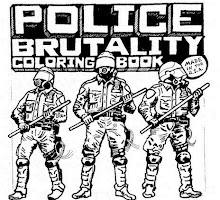
on sale now at amazon

on sale now at amazon
"I don't like this book because it don't got know pictures" Chief Rhorerer

“It’s becoming a disturbingly familiar scene in America - mentally unstable cops”

“It’s becoming a disturbingly familiar scene in America - mentally unstable cops”

Officer Accused of Brutality Subject of 14 Complaints In 7 Years


By DAVE ALTIMARI and MIKAELA PORTER, daltimari@courant.comThe Hartford Courant

The Enfield police officer recently accused of brutality has been the subject of 14 internal affairs investigations over the past seven years, department records indicate.
The citizen's complaints against Officer Matthew Worden range from his being "rude and discourteous" during traffic stops to allegations of racial profiling and ordering his dog to attack a man he mistakenly thought was a burglar.
The Courant reviewed more than 400 pages of internal affairs reports on eight complaints registered against Worden since 2010. In all of those cases Worden was either exonerated or the complaint was not sustained by the investigating officer from the Enfield police department.
Worden was suspended once, records show, when he got into a fight with a fellow officer in 2007 during a domestic dispute with his then-girlfriend. He was arrested on assault charges later dropped. Worden was suspended for 60 days by Chief Carl Sferrazza.
Enfield, a department with nearly 100 sworn officers, has had 26 civilian complaints in the past four years. One-third of those were against Worden, records show. In 2013, Worden had half of the six citizen's complaints against the department.
The Courant reviewed eight of the most-recent complaints. Six of the eight were made by either Hispanic or African American residents, some who live in or near the Thompsonville section of town. Three allege that Worden and other officers are racially profiling the complainants. Police have denied the allegations.
Sferrazza said because of the "sheer volume" of complaints against Worden he had his deputy chief last year review all of the previous internal affairs investigations to make sure they were all investigated properly. The conclusion was each case was properly investigated.
"Nothing jumped out as a pattern. We didn't see it as any particular group of people were being singled out," Sferrazza said. "If we can sustain that a department rule was violated we take corrective action. The mere fact that there are a lot of complaints against an officer doesn't mean anything."
Sferrazza said Worden was ordered to take a one-day class at the Hartford Police Department in 2012 that focused on dealing with the public and improving his attitude. The chief said because Worden is a dog handler he responds to more high risk situations than many other officers.
Worden is currently on paid administrative leave while the department investigates a complaint filed by Mark Maher of Windsor. Maher was arrested on April 1, 2014.
Maher alleges that Worden struck him several times in the face while he was handcuffed. Maher was charged with resisting arrest. His attorney has asked the court the dismiss the charges because of the on-going investigation into Worden's conduct. A hearing is scheduled in Enfield Superior Court for Aug. 18.
The town council met Thursday to discuss Maher's arrest but could not discuss the situation because there was a lack of a quorum.
Of the eight most recent complaints against Worden, three involve either a use of force allegation or that Worden, one of the town's K-9 officers, inappropriately unleashed his dog who severely bit a man in 2011.
That incident occurred on April 9, 2011 while Worden was working a DUI shift paid for by a federal grant. A call came in about a possible burglary at 133 Columbia Road and Worden left the DUI spot check area and responded to the call with his dog Falco.
Worden told investigators he turned his strobe lights off, parked down the street and approached the house by foot where he saw a truck in the back and flashlights illuminating the inside of the house.
As Worden walked toward the front of the house, two men came out the front door. Records indicate Worden ordered them to the ground. As he approached, he saw two others running in the back. Worden released the dog and commanded him to "get them," the report said.
The dog eventually trapped one of the men in a pickup truck and bit him numerous times. When other police arrived they determined one of the men, Anthony Deven, had just purchased the house and had permission from the Realtor to install a new furnace. The three other men were helping him.
A notice of intent to sue the town was filed in the case, but a lawsuit was never filed, according to Hartford attorney Eric Schoenberg.
"The officer claimed that he believed our client was teasing the dog but he only speaks Spanish so I don't know how that could have happened,'' Schoenberg said.
The case in which the investigating officer recommend discipline against Worden occurred on New Year's Eve in 2013 when Christopher Therrien and two friends were walking home from a party on Church Street. Worden was in his cruiser parked at nearby Sylvia's restaurant.
Worden rolled down his window and started talking to the three men when he claimed that Therrien spit at his cruiser and called him a racial epithet. Worden got out of the car, pulled out his baton and called after Therrian.
Worden brought him back to the cruiser. Therrien alleged Worden pushed him to his knees either with his hand or baton and threatened to "beat his ass." Worden denied hitting Therrien or using vulgar language.
Another officer arrived at the scene and when it was determined that Therrien had no outstanding warrants he was allowed to leave without being charged.
Sgt. Marianne Christenson concluded because of the discrepancies in witnesses' stories that the charges could not be sustained. Captain Jeffrey Golden reviewed her report and signed off on her conclusions, although he questioned Worden's initial stop and recommended more training.
"I believe Officer Worden did not have reasonable and articulable suspicion of criminal activity," Golden said.
Deputy Chief Gary Collins cleared Worden a week later and did not recommend any training. Collins wrote that he felt Worden was "justified in approaching Mr. Therrien" and that he had an obligation to investigate suspicious activity.
Many of the complaints about alleged racial profiling are from parents whose sons have been arrested multiple times by Enfield police.
Myrtis Foster wrote a seven-page letter to police in March 2012 about how Worden was rude and harassing her son Justin Foster.
"Justin is afraid to go anywhere because the Enfield police are always, and I say always harassing him. I refuse to have my child afraid to go down the street or the store because of rogue police officers on the beat," Myrtis Foster wrote.
Police interviewed Foster but found her allegations "unfounded." The final report indicates investigators reviewed call records and reports and determined "Justin is not always the most cooperative person when police arrive and if he is arrested there is resistance on his part."


This pig DID NOT lose his job for doing this


Mentally ill cops

  1. One April morning in 1973 a veteran police officer named Thomas Shea pulled his service revolver and blew away a young black boy on a street in Jamaica, Queens. He shot the kid in the back. There was no chance of survival. Afterward, no one could figure out why the officer had done it. There was no reason for the shooting, no threat to Officer Shea of any kind. The boy’s name was Clifford Glover and he was 10 years old. Officer Shea was charged with murder but of course he was acquitted.
    On Thanksgiving Day in 1976 an officer named Robert Torsney fired a bullet into the head of Randolph Evans, 15, outside a housing project in Brooklyn.
    No one could figure that one out, either. Officer Torsney would later claim he had been afflicted with a rare form of epilepsy that, remarkably, had never been noticed before the killing and was never seen after it.
    The ”epilepsy” defense worked. Officer Torsney was acquitted of any criminal wrongdoing.
    The bridge between those outlandish cases of the 1970’s and Monday’s demoralizing acquittal of Police Officer Francis X. Livoti in the killing of Anthony Baez is littered with the bodies of New Yorkers of all ages whose lives were summarily and unjustly taken by New York City cops who managed in virtually every instance to beat the rap.
    Eleanor Bumpurs is on that bridge, and Anibal
    Mr. Carasquillo, 21, was shot to death on a Brooklyn street by a police officer in January 1995. The worst the police could say about Mr. Carasquillo, who was unarmed, was that he had been peering into the windows of parked cars. There is reason to doubt the police on even that point inasmuch as they also said he had been shot in the chest. It turned out he had been shot in the back.
    The case went before a grand jury but no indictment was returned.
    There are many, many similar cases. Last summer I visited the grieving family of Nathaniel Gaines Jr., a 25-year-old Navy veteran of the gulf war who was shot to death by a police officer on a subway platform in the Bronx on the Fourth of July. Mr. Gaines was unarmed and had no police record. The shooting was inexplicable.
    Said Mayor Rudolph Giuliani, ”There does not seem to be any reason for it.”
    The Mayor apologized to the Gaines family. The police officer, Paolo Colecchia, was indicted for manslaughter. But the apology and the indictment were like whispers in a hurricane. Nothing has changed. The killings continue because no one has stepped forward to make it clear to the sadists and the sociopaths and the raging, howling racists in the Police
    Department that their murderous behavior will not be tolerated.
    Instead, the entire political and criminal justice establishment has gone out of its way to send the opposite message: Once you button up that uniform and strap on that sidearm you can brutalize certain types of people with impunity.
    Officer Livoti, acquitted of choking Mr. Baez to death in a confrontation over a touch football game, had been the focus of 14 prior civilian complaints, only one of which was substantiated. In that one, still pending, he is accused of slapping and choking a 16-year-old boy who allegedly had ridden a go-cart recklessly.
    That complaint was made by the boy’s mother in September 1993 but was not acted upon until after Mr. Baez was killed in December 1994.
    In recent years the department has gotten more brutal, not less, with civilian complaints up from 977 in 1987 to more than 2,000 in 1994, according to a study by Amnesty International.
    The study said the amount of money paid to complainants in settlements or judgments in police abuse cases had also risen, from $13.5 million in 1992 to more than $24 million in 1994.
    No one wants to pay much attention, but there is an awful sickness coursing through the N.Y.P.D., the only city agency that tolerates murder.
    —  Sickness in the NYPD, 1996, Bob Herbert: http://www.nytimes.com/1996/10/11/opinion/sickness-in-the-nypd.html

The problem isn’t police brutality, the problem is national epidemic mentally unstable cops and cops with below average IQ's and the federal government’s refusal to act against them.


Open Carry Advocate Wants to Fight Police Brutality By Threatening Cops With Guns

Posted by: John Prager  in Gun Nuts in Action, TEApublicans in Action, The Gun Control Debate July 18, 2014


It’s no secret that police brutality is an issue in America. Every day there seems to be a new instance of disgusting actions on the part of law enforcement, like when Indiana cops assaulted a paraplegic man because he accidentally ran over one officer’s foot with his wheelchair, or a California Highway Patrol officer was caught on tape brutally assaulting a woman who did not pose a threat to him, or two Duck Dynasty-lovin, Pat Robertson-worshipping Texas cops not only painfully twisted a man’s arm simply for switching seats with his wife but falsely cited him for two “crimes,” or Pittsburgh officers’ brutal and unwarranted beating of a gay teenager.

The NYPD asked residents to provide examples of positive interactions with police on Twitter earlier this year, but their hashtag was about as successful as Bristol Palin’s HobbyLobbyLove campaign. The NYPD was instead inundated with numerous examples of police brutality, like the brutal  beating of an elderly man for jaywalking.

Trevor Lyman, founder of right-wing blog LibertyCrier and Ron Paul supporter, has a solution to police brutality: a heavily armed populace that is sure to not only increase the risks associated with being a member of law enforcement, but also to increase tensions between police and citizens–or, as he describes it, “a way to stop it via peaceful means.”

Lyman, who has been arrested in Florida for resisting an officer, disorderly conduct, and obstruction, writes:

I believe that if the majority of the public were to open carry (which I would call “massive open carry”), police brutality would diminish greatly for two main reasons:

1.) More often than not the would-be victim of police brutality will be armed under these circumstances. Police are absolutely more considerate and careful when dealing with someone who is armed and who can defend themselves. This is the way all bullies behave. They prey on the weak, and in an environment of open carry there are simply fewer of the weak to prey on.

 
2.) Under massive open carry it is more likely that members of the public, who may be witnesses to police brutality, will be armed. A cop who is doing something that is clearly wrong and excessively violent and is surrounded by a crowd of increasingly angry people who are all armed is likely to stop what he or she is doing. And if necessary the members of the public can stop the police officer from continuing their brutality and save the would-be victim’s life.

In other words, if these angry, armed individuals think a cop is in the wrong, they should just murder the cop. Makes perfect sense.

“More guns” is hardly the solution to police brutality. The solution lies in Rialto, California, where cops wear body cameras. All seventy Rialto officers have been outfitted with cameras that almost forces them to conduct themselves with the integrity that their uniforms require. Since the cameras were introduced in 2012, public complaints against officers plummeted by eighty-eight percent when compared to the previous twelve months. Officers’ use of force decreased by sixty percent. Surely that’s more effective than an AK-47 on every shoulder.

“When you know you’re being watched you behave a little better. That’s just human nature,” said Rialto police chief Tony Farrar. “As an officer you act a bit more professional, follow the rules a bit better.” He added,  “With a camera they are more conscious of how they speak and how they treat people.”

Of course, another means of reducing police brutality would be if more citizens took the time to record and publicize officers behaving badly. We need to arm the populace (and police) with cameras, not dangerous weaponry with which to threaten the police.


The New York Police Department has launched an internal investigation

“The New York Police Department has launched an internal investigation into the death of a 43-year-old man whose final moments were captured in a video in which he can be heard gasping “I can’t breathe” over and over again after an officer is seen placing him in a chokehold, officials said.
The man, Eric Garner, died on Thursday afternoon as plainclothes officers tried to take him into custody on a street on Staten Island on charges of selling cigarettes… Because of the danger they can pose, chokeholds are forbidden by the Patrol Guide, a voluminous book that contains rules for officers. NYTimes

VIDEO: Man Dies After 5 Police Jump Him — Chokehold Him For Selling Untaxed Cigarettes


A Staten Island man died Thursday after police placed him in a chokehold as they attempted to arrest him for selling untaxed cigarettes.
According to authorities, Eric Garner, 43, went into cardiac arrest and died at Richmond University Medical Center following the arrest that was filmed by several witnesses.
In the video, Eric can  be seen telling police that he had not been selling cigarettes, repeatedly saying, ” I didn’t sell anything,” before insisting, “I’m minding my own business, please leave me alone.”
After a standoff, five officers tackled the 400-pound asthmatic Ericwith one placing him in a chokehold – and wrestled him to the ground as they attempted to put handcuffs on him.
As Eric lay on the ground, with one officer pushing his head into the pavement, he can be heard saying, “I can’t breath. I can’t breath,” over and over.
As the video ends, Eric appears to be unconscious as police clear onlookers while waiting awaiting paramedics.
According to his family, Eric, a married father with six children and two grandchildren, suffered from asthma.
“When I kissed my husband this morning, I never thought it would be for the last time,” Eric’s wife, Esaw, told reporters.
Police stated that Eric has been arrested multiple times for selling untaxed cigarettes, and records show he was due in court in October on three charges, including pot possession and selling untaxed cigarettes.
Witnesses at the scene claim Eric was breaking up a fight when police arrived, with Eric’s family stating that he didn’t have any cigarettes on him or in his car at the time of his death.
“They’re covering their asses; he was breaking up a fight. They harassed and harassed my husband until they killed him,” Eric’s wife said.
Within hours after Eric’s arrest and death, residents in the area hung handwritten posters on telephone poles near the scene with phrases like “no justice, no peace” and “Another innocent black man has been killed by police brutality. The NYPD must be stopped!”
http://noarmycanstopanidea.com/video-man-dies-after-5-police-jump-him-chokehold-him-for-selling-untaxed-cigarettes/


Bear fight!


Former East Carroll Parish Sheriff Sentenced to Three Years’ Probation


U.S. Attorney’s Office July 07, 2014        •           Western District of Louisiana (318) 676-3641

MONROE, LA—The former sheriff of East Carroll Parish was sentenced to three years of probation for hunting with a convicted felon who was sentenced prior to 2014 and barred from possessing a firearm, U.S. Attorney Stephanie A. Finley announced today.
Former East Carroll Parish Sheriff Mark Wayne Shumate, 52, of Lake Providence, La., was sentenced by U.S. District Judge Robert G. James for one count aiding and abetting a felon in the possession of a firearm. According to evidence presented at the guilty plea, on April 1, 2014, Shumate and the convicted felon went hunting on January 8, 2014. Shumate had full knowledge that the person accompanying him was barred from possessing and firing a firearm.

The FBI and ATF conducted the investigation. Assistant U.S. Attorney Joseph G. Jarzabek prosecuted the case.


Baltimore School Police Officer Pleads Guilty to Drug Trafficking Conspiracy


U.S. Attorney’s Office July 07, 2014        •           District of Maryland (410) 209-4800

BALTIMORE, MD—Napoleon McLain, Jr., age 31, of Randallstown, Maryland pleaded guilty today to conspiring to distribute and possess with intent to distribute cocaine base.
The guilty plea was announced by United States Attorney for the District of Maryland Rod J. Rosenstein and Special Agent in Charge Stephen E. Vogt of the Federal Bureau of Investigation.
According to his plea agreement, McLain is an officer with the Baltimore City School Police Force (BCSPF). BCSPF officers are granted police privileges to carry firearms and conduct arrests within the City of Baltimore.
From no later than December 2012 to August 2013, while he was employed as a BCSPF officer, McLain was a member of a conspiracy to distribute cocaine base. McLain bought multiple ounces of cocaine base at a time from his suppliers, which he sold to others. On four occasions between December 2012 and August 2013, McLain sold a total of approximately 150 grams of cocaine base to a confidential source for $9,800.
McLain faces a maximum sentence of 40 years in prison. U.S. District Judge Catherine C. Blake scheduled sentencing for October 15, 2014 at 9:15 a.m.
United States Attorney Rod J. Rosenstein praised the FBI for its work in the investigation and thanked Assistant U.S. Attorney David I. Sharfstein, who is prosecuting the case.


Cop charged with child abuse


Jeremy Yachik, the fired Berthoud police officer who pleaded guilty to one count of child abuse for abusing a 15-year-old girl, was sentenced Monday to 30 days in a jail work-release program and three years of probation.
Yachik also will perform 80 hours of community service and undergo a domestic violence evaluation.
Yachik was fired after he allegedly admitted to abusing a 15-year-old girl, and the case led to the resignation of the police chief.
According to an arrest affidavit, Yachik abused the victim almost daily for years, including tying her up with handcuffs or plastic zip ties and slamming her head into a wall.
The victim also told police Yachik beat her with ropes, restricted her food and locked her in a dark room for hours.


KKK

Fruitland Park, Florida:  Two police officers are no longer with the city department here after a law enforcement report tied them to the Ku Klux Klan, an official said Monday. Deputy Chief David Borst resigned and Officer George Hunnewell was fired last week, City Manager Gary La Venia said.


Top Ten Reasons Why You Should Not Talk to the Police


REASON #1: Talking to the police CANNOT help you.
If the police are talking to you, it’s because they suspect you have committed a crime. If they have detained you, it’s because they already have enough evidence to arrest you and they want to see if you will admit it and thus, give them an even stronger case against you.If they have evidence to arrest you for a crime, they will. If they don’t, they won’t. It’s as simple as that.Talking to them or not talking to them won’t make a difference! No one has ever “talked his way out of” an arrest. If the police have enough evidence to arrest, they will. If you deny that you committed the crime, they will not believe you. They already have evidence suggesting that you committed the crime. They’ll assume you’re just doing what every criminal does in denying the offense. It will not prevent you from getting arrested.This is completely contrary to popular belief. For some reason, many people think that they are savvy enough or eloquent enough or well educated enough to be able to talk to the police and convince the police not to arrest them. But ask any police officer if because of the eloquence and convincing story of the suspect, they have ever been convinced not to arrest somebody whom they had originally intended to arrest, and they will tell you no. They will tell you that in their experience, no one has ever talked themselves out of getting arrested. Talking to the police cannot help you. It cannot prevent you from getting arrested. It can only hurt. 
REASON #2: Even if you’re guilty, and you want to confess and get it off your chest, you still shouldn’t talk to the police.
People plead guilty in America every day. Probably over 90% of defendants in state court plead guilty at some point during their case. There is plenty of time to confess and admit guilt at a later stage of the proceedings. What’s the rush? Get a lawyer first. Let the lawyer set up a deal whereby you get something in exchange for accepting responsibility for the offense. A better plea bargain, or maybe even immunity. If you confess to the police, you get nothing in return. Zero. In fact, you probably get a harsher prosecution because the state’s case is now airtight, now that you have confessed.
REASON #3: Even if you are innocent, it’s easy to tell some little white lie in the course of a statement.
This kind of thing happens all the time. A person who is completely innocent and who is trying to vehemently assert their innocence will go overboard and take it a little bit too far and deny some insignificant fact, tell some little white lie, because they want to sound as innocent as possible. But if the police have evidence of that lie, it makes your entire statement look like a lie. The prosecutor will ask: “Why did he lie to the police? Why indeed would he lie to the police, unless he were guilty?”
That little white lie could be used to destroy your credibility at trial.
An example would be a man who is questioned about a murder. He wants to sound innocent. He wants to sound non-violent. He is, in fact, innocent. So he denies everything. He denies the killing. He denies being in the area where the killing occurred on the night that it occurred. He denies owning a gun, and denies that he has ever owned a gun in his whole life. But it Turns out that this last statement is not true, And the police can prove it. He did at one time during his life own a gun. Now he has told a lie and the police have caught him and things will only go downhill from there. Although he is innocent of the murder, he has told a lie that will be used to destroy his credibility at trial and could be the cause of his conviction.
REASON #4: Even if you are innocent, and you only tell the truth, and you don’t tell any little white lies, it is possible to give the police some detail of information that can be used to convict you.
For example, a suspect is being questioned about a murder. He is truly innocent of the murder. But in the course of explaining his innocence, he makes the statement that he never liked the victim, because the victim was not a nice guy. A statement like that could be used to prove motive.
Or in the course of the statement, the suspect might admit that he was in the area of town where the murder was committed at the time it was committed. Although he’s innocent and although this statement is true, the prosecutor could use that statement to suggest that the suspect had the opportunity to commit the crime, which looks very bad in front of a jury.
REASON #5: Even if you were innocent, and you only tell the truth, and you don’t tell any little white lies, and you don’t give the police any information that can be used against you to prove motive or opportunity, you still should not talk to the police because the possibility that the police might not recall your statement with 100% accuracy.
What if the police officer remembers something wrong? What if he remembers you said “X” when actually you said “Y”? If the police officer takes the witness stand and contradicts your statements at trial, it will kill your credibility. You can take the witness stand and say “I never said that!” But it’s your word versus a police officer. Who’s the jury going to believe? Who will the jury assume is lying to save his own skin? Who will the jury believe is lying because he’s really guilty? You guessed it. YOU!
REASON #6: Even if you’re innocent, and you only tell the truth, and your entire statement is videotaped so that the police don’t have to rely on their memory, an innocent person can still make some innocent assumption about a fact or state some detail about the case they overheard on the way to the police station, and the police will assume that they only way the suspect could have known that fact or that detail was if he was, in fact, guilty.
Example: Suppose a police officer is questioning A suspect about a homicide. And the suspect makes the statement “I don’t know who killed the victim. I’ve never owned a gun in my life. I don’t even like guns.” On it’s face, there’s nothing incriminating about that statement. But suppose at trial, the prosecutor asks the police officer if anything about that statement surprised him. The police officer answers “Yes, it surprised me when the suspect mentioned a gun, because I had never mentioned a gun before that. I merely told him that I was investigating a homicide.”
When the officer said there has been a homicide, the suspect may have simply assumed that the killing was done with a gun. Or the suspect may have overheard in the police station some other officer talk about the fact that it was a shooting. But if the officer taking the statement had never mentioned a gun or a shooting, and the suspect makes the statement that he had never owned a gun, you give the prosecution the opportunity to create some high drama, suggesting that suspect has had a Freudian slip, and has made a statement about a gun because he is, in fact, the murderer. And as the murderer, he knew that a gun was used.
REASON #7: Even if you’re innocent, and you only tell the truth in your statement, and you give the police no information that can be used against you, and the whole statement is videotaped, a suspect’s answers can still be used against him if the police (through no fault of their own) have any evidence that any of the suspect’s statements are false (even if they are really true).
Suppose the police have a statement from a witness who claims to have seen the suspect in the area where the crime was committed at the time of the incident. Suppose further that this witness is actually wrong, but has made an honest mistake. The suspect then gives a statement to the police in which he says he was nowhere near the area where the crime took place at the time of the incident. By giving the statement, the suspect has now created a conflict between his own statement and the statement of this witness. By itself, the statement of the witness that he or she saw the suspect in the area at the time the crime was committed is not that useful. But by giving this statement, and creating a conflict with this witness’s statement, the suspect has now made this relatively minor witness into the government’s star witness.
The jury will hear the conflict and will assume that the suspect is lying and wonder why.
So even if you tell the complete truth, you’re putting your cards on the table without first seeing what evidence the government has. And if the government has some bit of evidence which, through some honest mistake, contradicts part of your story, you set yourself up to be portrayed as a liar by giving a statement without first knowing what evidence the government has.
REASON #8: The police do not have authority to make deals or grant a suspect leniency in exchange for getting as statement.
People tell me all the time that they gave a statement to the police because the police told them that they would be better off if they confessed, better off if they admitted what they did wrong, better off if they cooperated. The police will make vague statements that things will go easier on the suspect if he simply admits what he did wrong. The police will also make vague statements suggesting that they will do what they can to help the suspect, that they will put in a good word for the suspect, if the suspect will just come clean.
Number One thing to remember: The police do not have authority to make deals, grant immunity, or negotiate plea agreements. The only entity with that authority is the District Attorney in state court and the U.S. Attorney in federal court. Despite their claim that they are trying to help you, the only help police are providing when they take your statement is giving you rope with which to hang yourself.
REASON #9: Even if a suspect is guilty, and wants to confess, there may be mitigating factors which justify a lesser charge.
Mitigating factors are rarely brought out by the police in an interview. Normally, police want to focus on the facts that will suggest the suspect has committed the most severe crime possible. In fact, the suspect may have committed a lesser grade of offense. And if given the opportunity to talk to an attorney first, the attorney may be able to explain to the suspect what facts are important in establishing that he is guilty of a lesser grade of an offense, and not a higher grade. A confession presented in this context to the District Attorney’s office might result in a lesser charge and a more appropriate and fair penalty.

REASON #10: Even for a completely honest and innocent person, it is difficult to tell the same story twice in exactly the same way.
If you tell your story one time at trial and you tell the truth and you’re innocent, there’s very little the prosecutor can do by way of cross examination. But if you’ve told your story twice, once at trial, and once previously in a statement to the police, many months apart, the chances are very high that, even if you are telling the truth, some little details in your statement are going to change.
A good cross examiner will pick up on these changes and will relentlessly question you about them in an effort to make it look like you are lying.
So for all these reasons, whether you are guilty or innocent, whether you want to confess or want to exonerate yourself, whether you’re poorly educated or the most eloquent speaker in the world, you should NEVER, EVER, under any circumstances, give a statement to the police when you have been detained as a suspect.
Note: Credit for some of the Top Ten Reasons goes to Professor Dwayne at Regent University Law School.

Read more at http://thefreethoughtproject.com/top-ten-reasons-talk-police/#Ch05hqmZPdxcMtoy.99


Eat em up


We thought she had a gun


Woman falsely arrested for DUI files federal lawsuit


by Chris Patterson

MILWAUKEE -- A woman is filing a federal lawsuit after a Milwaukee County Sheriff's deputy allegedly arrested her for drunk driving to cover up his fault in a car accident.
According to federal documents, Tanya Weyker was traveling south on Howell Ave. when Deputy Joseph Quiles drove through a stop sign resulting in an accident. Weyker's car spun out of control, and struck a tree in a median barrier.
The lawsuit filed in federal court claims three other Milwaukee County Sheriff's deputies, Scott Griffin, Byron Terry, and Sergeant Matthew Paradise, responded to this accident the night of February 20, 2013. The lawsuit alleges all officers conspired to cover up Quiles' role in the accident by having Weyker falsely arrested for driving while intoxicated.
The federal lawsuit says Griffin, Terry and Paradise failed to intervene or prevent Weyker's arrest. The lawsuit also says they all willfully "ignored or disregarded" evidence indicating Quiles was at fault for this accident. Attorneys say all responding deputies filed false and inaccurate information saying Weyker was driving drunk.
Milwaukee County Sheriff David Clarke is also mentioned in this lawsuit. It says Sheriff Clarke became aware of the video that proved Quiles was at fault in the February 20th accident. The video was made available to Sheriff Clarke within one week of the incident.
The Milwaukee County District Attorney's Office declined to issue any charges against Weyker after blood tests showed she was completely sober. Assistant DA Ron Dauge noted, "A MCSO squad t-bones the driver's car as she is heading south on Howell Avenue. The squad failed to stop/yield to an auto in the active traffic lane. Although the defendant admits that she was driving 45 in a 35 (mph) zone, that speed isn't excessive, just a violation of the speed limit. Defendant was cooperative with police and consented to blood test. Blood test shows no alcohol, no drugs at all. So no evidence of impairment. Ticket was also written for 'imprudent speed.' 45 in 35 might be in excess of posted limit, but doesn't appear to be "imprudent." Further, driver's car suffered significant damage, both driver and passenger suffered injuries and were admitted into Froedtert as a consequence of the collision."


Former police officer charged with DUI makes initial court appearance


Written by Kevin Robison

CEDAR CITY – Jed Prisbrey Imlay, 32, appeared for his initial hearing at the 5th District Court in Cedar City on Tuesday. Imlay resigned from the Cedar City Police Department June 16 after being charged with driving under the influence while off duty – allegedly with a child in the vehicle – and leaving the scene of an accident after crashing in the parking lot of a little league baseball complex.
Imlay entered not guilty pleas through his attorney, Douglas Terry, to charges of driving under the influence of alcohol with a minor in the vehicle, a class-A misdemeanor, and leaving the scene of an accident that involved property damage, a class-B misdemeanor.
Prosecution is being handled by the Beaver County Attorney’s Office in order to avoid a conflict of interest with Iron County.
A review hearing is set for Aug. 12 at 9 a.m.
Persons arrested or charged are presumed innocent until found guilty in a court of law or as otherwise decided by a trier-of-fact.


Former Isle of Palms cop charged with pawning evidence


By RACHAEL MYERS LOWE
CHARLESTON, SC — A former Isle of Palms police officer was arrested Tuesday and charged with misconduct in office and breach of trust, the State Law Enforcement Division announced in a news release.
Dawn Caldwell, 45, worked in the evidence room at the Isle Of Palms Police Department. Between 2009 and 2013, the SLED warrant charges, Capt. Caldwell took items from the evidence room worth more than $2,000 and pawned them at a local pawn shop. She was also charged with pawning her department issued Glock pistol on two occasions.
The SC Law Enforcement Division investigated the case at the request of the Isle of Palms Police Department.
Caldwell was being held at the Charleston County Detention Center on Tuesday.


Ex-cop tied to suitcase deaths suspended 3 times


WEST ALLIS, Wis. - Newly released records show that a former Wisconsin police officer charged with dumping two bodies stuffed into suitcases along a highway had a lengthy disciplinary record, including three suspensions and four reprimands.
Fifty-two-year-old Steven Zelich is charged with two counts of hiding a corpse in Walworth County. Authorities say he's also a suspect in the women's deaths, although no homicide charges have been filed.
Zelich worked for the West Allis Police Department from February 1989 until he resigned in August 2001.
Records obtained Wednesday by The Associated Press show he was suspended twice in 2001 for lying - for 20 days in May and two days in April.
He also received a one-day suspension in 1996 for failing to report an accident in which he was involved while on duty.
Highway workers discovered two suitcases containing female remains June 5 in the Town of Geneva, some 50 miles southwest of Milwaukee. Police identified one woman as Laura Simonson, 37, of Farmington, Minnesota. The second woman was identified through dental records as Jenny Gamez from Cottage Grove, Oregon.


Why Cops Get Away With Rape


By Paula Mejia

Truthout revealed last week that there is no organization keeping good data on sexual violence perpetrated by police. Universities are being pressured by students, alumni and human rights groups for more transparency regarding sexual assault cases on campuses, but sexual misconduct committed by on-duty police officers goes vastly underreported. Truthout also says that when police-perpetrated sexual violence is reported, shorter sentences or dismissed cases are more common.
Cases of police-perpetrated molestation, harassment sexual assault, rape and molestation have been all over the headlines recently. A former Washington, D.C., officer admitted that he forced teenagers to work as escorts out of his apartment, while a former Wisconsin police officer was arrested for murdering two women and stuffing them into suitcases. An officer in Texas was arrested on domestic violence charges and was recorded saying that his wife would benefit from being “cut by a razor, set on fire, beat half to death and left to die.” A former Georgia officer was sentenced to 35 years on child molestation charges after he forced himself on two girls and a woman while on duty.
Jennifer Marsh, vice president of victims services at the Rape, Abuse and Incest National Network, told Truthout that her organization receives multiple reports of police-perpetrated sexual crimes each month via its anonymous hotline. Marsh is unsure how many of these cases result in an arrest, and how many times charges are dismissed because the officer’s word is taken over the victim’s, partly because of the power dynamics in such situations and partly because of how the rapists select their targets.
 “[Officers] tend to choose victims who would lack so-called credibility in the eyes of other law enforcement, whether it was somebody who was engaged in sex work or whether it is somebody who was intoxicated or who was using drugs, and then they use that justification for why that person cannot be believed,” Marsh said.
“Unfortunately, this is more the norm than the exception,” she continues. “It’s hard to do research and find reliable statistics on a topic that nobody wants to speak about.” An unofficial study by the Cato Institute’s National Police Misconduct Reporting Project found that sexual misconduct is the second greatest of all civilian complaints nationwide against police officers, at 9.3 percent in 2010. The organization noted that 354 of the 618 officers under investigation for sexual offenses were accused of engaging in nonconsensual sexual acts, and just over half of the 354 cases involved minors.
Within the criminal justice system, sex offenders are difficult to prosecute, but officers accused of sexual crimes are even tougher to convict. According to a U.S. Department of Justice survey, 60 percent of sexual assaults go unreported, only 3 percent of rapists will serve time in prison, and the numbers for cops are nonexistent. The study notes that these cops are typically unsupervised and, if arrested, often have to recount the crime to, well, other cops. The truth is that little accountability exists for law enforcement officials.
Consider the case of Nicole Smith. In a report, she describes in graphic detail the horrible violence she endured when a police officer raped her over 20 years ago. “He just started beating the shit out of me, and he had a gun,” she said. “I remember him telling me, ‘You’re never going home’.... I could feel the gun on my face.” The officer was off duty when the rape happened (the two were briefly dating at the time). But a study conducted by Bowling Green State University finds that more than half of reported police-perpetrated rapes between 2005 and 2007 occurred when an officer was on duty.
Smith isn’t sure if she would have talked to the police at all had a friend not taken her to the hospital after the attack. “My paranoia was beyond belief when I was talking to the police,” she said. When Smith pressed charges, the officer was already standing trial on charges of raping and assaulting another woman. That case was dropped, and Smith’s case ended in a plea bargain for a life sentence. Smith’s rapist was deemed eligible for parole after an initial five years, then again every three years, although she said he has a good chance of getting out as early as September 2015 due to recent changes in the state’s parole board operations.
The Department of Justice’s Office on Violence Against Women funded an initiative by the International Association of Chiefs of Police to develop policies and training standards to prevent police-perpetrated sexual misconduct. The American Prospect reports, however, that the organization fails to track progress within its local departments. In 2000, the Department of Justice and the International Association of Directors of Law Enforcement Standards and Training unveiled the National Decertification Index, a database compiled to prevent decertified officers from becoming rehired due to misconduct. The most recent version of the index contains reports from only 37 states.


Spokane International Airport police officer accused of child rape


SPOKANE, Wash. -- The Spokane County Prosecutor’s Office is pursing incest and child rape charges against an Airport Police officer.
Spokane Airports released a statement Wednesday. It said the officer had been suspended without pay pending the outcome of an investigation.    
Airport officials said the part-time reserve commissioned Airport Police officer, had been employed since 2002.

KREM 2 News has not released the suspect’s name in order to protect the identity of the victim. 


Wife had accused killer policeman of rape


By Jenny Johnson, Salt Lake City
A Utah police officer who killed his wife, their two children, his mother-in-law and then himself received text messages from his wife just hours earlier threatening to leave him and take their children and confronting him for raping her, documents show.
A Spanish Fork Police report shows Joshua Boren and his wife exchanged heated texts the night and morning before the January killings.
In them, Kelly Boren confronted her husband about raping her and told him their marriage was over. The couple had been separated.
Joshua Boren’s therapist told authorities that Boren drugged his wife and videotaped himself sexually assaulting her on more than one occasion.
Kelly Boren learned of the assaults when she discovered the tapes in 2013, said Spanish Fork Police Lt. Matt Johnson. She did not report the assaults to police because she didn’t want to ruin her husband’s career, the report says.
The night before she was killed, Kelly Boren brought up the alleged sexual assault again, texting the word “rape” to her husband four times, the documents show.
The next morning, Kelly Boren told her husband she would take the children, prompting Joshua Boren to reply by text: “Don’t involve the kids, they are innocent.”
Joshua Boren had worked for the Lindon Police Department for only three months. Before that, he was a Utah County sheriff’s deputy for seven years. He used the service weapon when he killed his family members and himself, authorities said. Toxicology reports show he had no drugs or alcohol in his system.
Police said the state medical examiner confirmed what investigators believed: Joshua Boren shot his wife Kelly Boren, 32, his 55-year-old mother-in-law, Marie King; and his two children, 7-year-old Joshua “Jaden” and 5-year-old Haley, before killing himself.

The shooting happened at the family’s home in Spanish Fork, a city of about 37,000 located 80km south of Salt Lake City.